
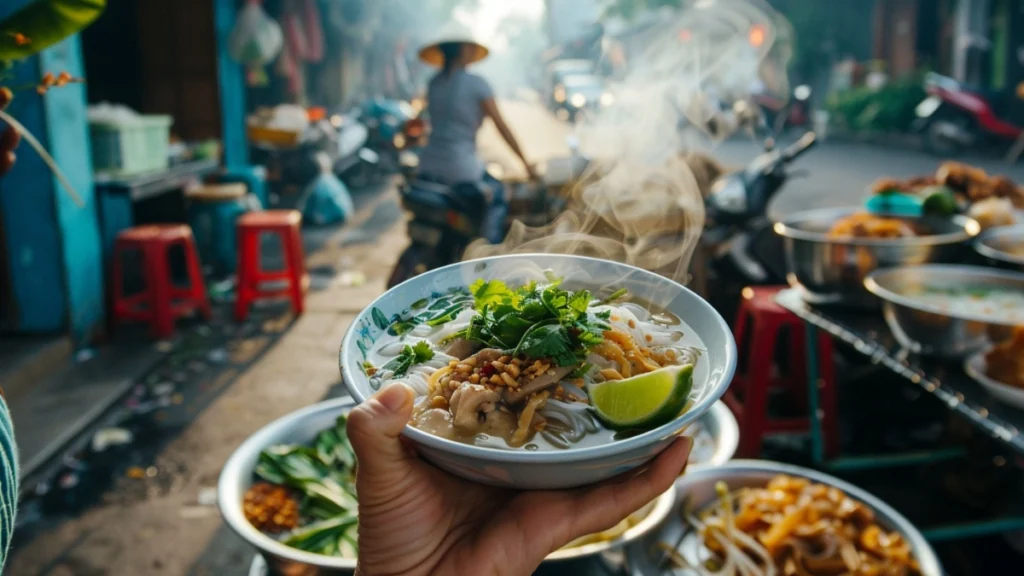
Eating Well with Dietary Restrictions on the Road
The panic hit me somewhere over the Pacific Ocean, about three hours into my flight to Bangkok. My wife Emma had just been diagnosed with celiac disease two weeks earlier, and I was replaying our doctor’s warning in my head: even trace amounts of gluten could damage her intestines. I’d spent a decade eating my way through Thailand, building relationships with noodle vendors and street food cooks, memorizing the back alleys where the best pad see ew sizzled in carbon steel woks. And now? Now I was staring at the soy sauce packet on my airline meal tray, realizing I had no idea if it contained wheat. Spoiler: it did. Most soy sauce does.
That trip changed everything about how I approach food travel. Not because the food got worse, but because I had to get smarter. I had to learn a new language beyond the conversational Mandarin and Spanish I’d picked up over the years. I had to learn the language of ingredients, of cross-contamination, of asking the right questions in the right way. And here’s what surprised me most: the food actually got better. When you’re forced to slow down, to research deeper, to communicate more clearly with the people cooking your meals, you end up having more meaningful food experiences, not fewer.
Over the past six years, I’ve traveled with Emma to 34 countries while managing her celiac disease. I’ve also spent considerable time with travel companions managing nut allergies, veganism, diabetes, and religious dietary requirements. I’ve screwed up more times than I want to admit. I’ve watched Emma get sick in Portugal because I trusted a waiter who didn’t understand my question. I’ve also discovered incredible meals we never would have found if we weren’t forced off the beaten path. This is everything I’ve learned about eating well with dietary restrictions on the road, the failures and the victories, the resources that actually work and the ones that sound good but fall apart when you need them most.
Table Of Contents
- The Research Phase: What I Do Before I Even Book the Flight
- Learning to Communicate: Beyond the Translation Card
- Vegans on the Road: It's Both Easier and Harder Than You Think
- The Allergy Question: When Your Restriction Could Kill You
- Gluten-Free Around the World: A Country by Country Reality Check
- Religious Dietary Requirements: Kosher, Halal, and Beyond
- Technology That Actually Helps
- When Things Go Wrong: Managing Mistakes and Illness Abroad
- The Unexpected Gifts of Restricted Eating
- Frequently Asked Questions
The Research Phase: What I Do Before I Even Book the Flight
Let me be clear about something: eating safely with dietary restrictions while traveling is not something you can wing. I know that sounds like I’m sucking the spontaneity out of travel, and maybe I am a little. But I’ve learned the hard way that the best spontaneous food moments happen within a framework of preparation. You can still wander down an unfamiliar street and discover an amazing meal. You just need to know what questions to ask when you get there.
My research process for a dietary restriction trip takes about 15 to 20 hours before departure, spread over a few weeks. That might sound excessive, but consider this: I once spent 12 hours researching the best tacos in Mexico City for a five day trip. Dietary restriction research isn’t extra work. It’s just different work, and the payoff is being able to actually eat those tacos without ending up in a foreign emergency room.
The first thing I do is assess the baseline difficulty of my destination. Some countries are naturally easier for certain restrictions than others. Japan, for example, is notoriously difficult for gluten-free travelers because soy sauce is in virtually everything, dashi often contains wheat-based products, and the concept of celiac disease isn’t widely understood. But Japan is relatively easy for people avoiding nuts or managing diabetes because portions tend to be smaller and nuts aren’t a common ingredient in traditional cooking. Meanwhile, Thailand is challenging for people with peanut and tree nut allergies because nuts appear in unexpected places, but it’s surprisingly manageable for vegans because Buddhist cuisine has created an entire parallel food culture based on plant foods.
I build a spreadsheet for each trip. In one column, I list traditional dishes from the destination. In the next column, I break down their typical ingredients. In the third column, I note potential hidden dangers. For Emma’s gluten issue in Thailand, my spreadsheet revealed that while rice noodles are naturally gluten-free, many vendors add soy sauce during cooking. Pad thai usually contains fish sauce and tamarind, which are fine, but some recipes include a splash of soy for color. Curries are typically safe because they’re coconut milk based, but some restaurants thicken them with flour or use premade curry pastes that contain wheat as a filler.
I spend hours on local food blogs, not the English language ones written for tourists, but the actual local blogs. Google Translate has gotten good enough that I can read Thai food blogs, Spanish recipe sites, and Japanese restaurant reviews with reasonable comprehension. I’m looking for how dishes are traditionally made, what substitutions are common, and what regional variations exist. A dish that’s safe in Bangkok might be prepared differently in Chiang Mai. A Roman pasta recipe might include ingredients that the Neapolitan version doesn’t.
I also join Facebook groups specific to my restriction and destination. There’s a group called Gluten Free Tokyo with over 8,000 members, and the collective knowledge there is staggering. People post about specific restaurants, share photos of safe menu items, warn about places that claim to accommodate restrictions but don’t understand cross-contamination, and recommend which convenience stores stock which products. I’ve found similar groups for vegan travelers in Portugal, nut allergy families visiting Disney parks internationally, and kosher travelers in Southeast Asia. The information in these groups is more current and more detailed than any guidebook could ever be.
Learning to Communicate: Beyond the Translation Card
Every article about traveling with dietary restrictions tells you to carry a translation card explaining your needs in the local language. I’m not going to pretend that’s bad advice, because it’s actually essential. But I need to talk about why translation cards fail and what to do about it.
During our first gluten-free trip to Portugal, I had a beautifully designed card in Portuguese explaining celiac disease, listing unsafe ingredients, and requesting that Emma’s food be prepared on clean surfaces with clean utensils. I handed it to a waiter at a seafood restaurant in Lisbon with complete confidence. He glanced at it, nodded enthusiastically, and walked away. Twenty minutes later, Emma’s grilled fish arrived on a bed of couscous. Couscous is wheat. The waiter hadn’t understood the card at all. He’d seen a foreign tourist with a piece of paper and assumed it was a compliment card or a special request for extra bread.
Here’s what I’ve learned about making translation cards actually work. First, keep them short. My original card was three paragraphs long because I wanted to be thorough. Nobody is reading three paragraphs during a dinner rush. My current card for Emma is exactly four sentences: “I have celiac disease. I cannot eat wheat, barley, rye, or oats. This includes bread, pasta, soy sauce, and beer. Even a small amount will make me very sick.” That’s it. Short enough to read in five seconds, specific enough to communicate the severity.
Second, always follow the card with a conversation. Don’t just hand over the paper and assume you’re done. Watch the person read it. Ask if they understand. Ask specifically about the dish you want to order. In my terrible Italian, I’ll ask “Questo piatto ha farina?” even though I know the card already addressed flour. The redundancy matters. It shows you’re serious and gives them a chance to think through the actual preparation of the actual dish.
Third, learn the words for your specific restrictions in the local language, not just through translation apps but through actual pronunciation practice. In Mandarin, “I cannot eat gluten” translates to something like “wo bu neng chi mian jin,” but the tones matter enormously. I practiced with a language tutor before our China trip, and the difference in comprehension was dramatic compared to reading from my phone.
Fourth, learn to identify safe and unsafe ingredients in their written form. This has saved us countless times at grocery stores and convenience shops. I can now recognize the characters for wheat, barley, soy sauce, and flour in Japanese, Chinese, Thai, and Korean. It takes about an hour of focused memorization per language, and it means I can read ingredient labels and menus even when no English is available.
I’ve also learned to seek out restaurants where the owner or chef speaks English, not because English speakers are inherently more trustworthy, but because nuanced conversations about food safety are nearly impossible through translation apps. In Tokyo, I found a tiny yakitori restaurant where the chef had lived in San Francisco for eight years. My broken Japanese wouldn’t have been sufficient to explain cross-contamination concerns, but his fluent English meant we could have a real conversation. He showed me exactly which skewers were brushed with soy sauce during grilling and which were seasoned only with salt. Emma ate safely and spectacularly that night, and we returned three more times during that trip.
Vegans on the Road: It’s Both Easier and Harder Than You Think
I’m not vegan myself, but I’ve traveled extensively with vegan friends and have spent considerable time researching plant-based eating in various countries. My friend David is a vegan chef from Portland who joined me for a food research trip through Southern India, and that experience reshaped how I think about vegan travel entirely.
The conventional wisdom is that India is a vegan paradise because vegetarianism is so common. This is both true and misleading. Yes, vegetarian food is everywhere in India. Yes, many dishes are naturally plant-based. But here’s what nobody tells you: Indian vegetarian cooking relies heavily on ghee, which is clarified butter, and on paneer, which is a fresh cheese. A dish can be completely vegetarian while still being completely unsuitable for vegans. When David asked for his dosa without ghee at a restaurant in Chennai, the cook looked at him like he’d requested a pizza without cheese. The concept of avoiding all animal products, not just meat, required lengthy explanation.
What actually made India work for David was focusing on specific regional cuisines and specific types of establishments. South Indian temple food tends to be vegan because some Hindu traditions avoid both meat and dairy. We sought out temple-adjacent restaurants serving traditional prasadam-style meals. Gujarati thali restaurants often have clearly marked vegan options because Jainism, which is prevalent in Gujarat, has its own set of dietary restrictions that sometimes overlap with veganism. David’s spreadsheet before the trip identified 47 restaurants across our route that either explicitly advertised vegan options or served cuisines likely to accommodate him.
The happyiest surprise of David’s vegan travels came in Thailand, which I’d assumed would be difficult because of fish sauce and oyster sauce being fundamental to Thai cooking. But Thai Buddhist cuisine, called jay or jae, is entirely plant-based. During vegetarian festivals, many restaurants convert to jay menus, but even outside festival times, you can find jay food stalls in most markets. The jay symbol, which looks a bit like a red Chinese character on a yellow background, marks vegan-friendly vendors. Once David learned to spot this symbol, he ate extraordinary food throughout Bangkok and Chiang Mai. One morning at Or Tor Kor Market, he had a jay version of pad krapao, made with mushrooms instead of meat and seasoned with soy sauce instead of fish sauce. He claimed it was one of the best things he ate on the entire trip, and I tried it myself and understood why. The mushrooms had been cooked until they’d developed a slight char, and the holy basil was so fresh it was almost peppery.
For vegan travelers, the biggest challenge isn’t usually finding food. It’s finding good food. You can survive almost anywhere on french fries, plain rice, and sad salads, but that’s not eating well. Eating well as a vegan traveler requires the same depth of research I’d put into any food trip, just with different parameters. I tell vegan friends to research these categories: traditional plant-based cuisines in their destination, explicitly vegan restaurants that have opened in major cities, vegetable-focused dishes at mainstream restaurants that can be modified, local produce markets where they can buy ingredients for self-catering, and Buddhist, Jain, or other religious food traditions that happen to align with vegan principles.
The Allergy Question: When Your Restriction Could Kill You
I approach food allergies differently than I approach other dietary restrictions, because the stakes are different. Emma’s celiac disease will make her sick if she eats gluten, genuinely miserable for days, but it won’t send her into anaphylactic shock. My friend Rebecca has a severe tree nut allergy that could kill her within minutes if she’s exposed and doesn’t have access to her EpiPen. These are not the same category of concern, and I’ve learned to plan accordingly.
Rebecca joined Emma and me for a week in Barcelona a few years ago. Before the trip, I watched her research process, and it was more intensive than anything I’d seen. She contacted restaurants directly via email, weeks in advance, explaining her allergy and asking detailed questions about their ingredient sourcing and kitchen protocols. She crossed several highly-recommended places off her list because their responses were vague or dismissive. One restaurant, widely praised on food blogs, replied that they “couldn’t guarantee anything” because they used nuts in multiple dishes. That’s actually a useful response because it’s honest. Rebecca knew to avoid that place entirely rather than hoping for the best.
The restaurants Rebecca ultimately chose had responded with specificity. One tapas bar explained exactly which dishes contained nuts, which were prepared in shared oil, and which were made in a separate area of the kitchen. The chef offered to prepare a custom selection of safe dishes if Rebecca gave them 24 hours notice. That’s the level of communication required when an allergy is life-threatening. You’re not just asking “does this dish contain nuts?” You’re asking about cooking oils, shared equipment, ingredient suppliers, and staff training.
Rebecca always eats at the same restaurants multiple times if they prove safe, rather than constantly seeking new experiences. This is different from how I normally travel, where I want to try 15 different taco vendors in a single week. But it makes sense for her context. Once she’s established trust with a kitchen, she knows she can eat safely there. The anxiety of constantly vetting new places isn’t worth the variety. On that Barcelona trip, she ate dinner at the same tapas bar four nights in a row. By the third night, the staff knew her by name and brought her allergen-safe dishes without her needing to re-explain.
One tool that’s proven invaluable for travelers with severe allergies is the Spokin app, which crowdsources restaurant reviews from the allergy community. Users report on specific restaurants’ handling of allergies, note which dishes were safe, and flag places where staff seemed uninformed or dismissive. It’s not comprehensive, especially outside major cities, but when it has data for a destination, that data is incredibly useful. Rebecca found three of her Barcelona restaurants through Spokin reviews from other travelers with nut allergies.
I’ve also learned that hotel choice matters more for allergy travelers than I’d previously considered. A hotel with a kitchen or kitchenette allows for self-catering as a fallback. Breakfast buffets at hotels are often risky for people with allergies because of cross-contamination from shared serving utensils and because ingredients aren’t always clearly labeled. Rebecca typically skips hotel breakfast entirely and either makes her own or eats at a vetted restaurant instead.
Gluten-Free Around the World: A Country by Country Reality Check
After six years of gluten-free travel with Emma, I’ve developed strong opinions about which destinations are manageable and which require extreme caution. Let me be honest about what we’ve experienced.
Italy was surprisingly easier than I expected, which sounds counterintuitive given that Italian cuisine revolves around pasta and bread. But Italy has one of the highest rates of celiac diagnosis in Europe, which means awareness is relatively high. The Italian Celiac Association certifies restaurants with an “AIC” designation, and we found dozens of these across Rome, Florence, and Bologna. Some were mediocre, clearly coasting on the certification rather than actually caring about food quality. But others were exceptional. A tiny AIC-certified trattoria near the Campo de’ Fiori in Rome made fresh gluten-free pasta in a dedicated section of their kitchen. The tagliatelle came out with that slightly rough texture that holds sauce properly, and if Emma hadn’t told me it was gluten-free, I wouldn’t have known. We paid about 14 euros for that pasta dish, roughly the same as the regular version.
The real challenge in Italy was pizza. Italian gluten-free pizza is almost universally disappointing because the traditional Neapolitan crust depends on gluten development for its characteristic chew and char. Most gluten-free pizzas we tried were dense, cracker-like, or fell apart when folded. The exception was a pizzeria in Naples, of all places, that had spent years developing their gluten-free dough. The crust wasn’t identical to their regular pizza, but it was legitimately good, with enough structure to hold toppings and enough flavor to stand on its own. That pizza cost 16 euros compared to 8 euros for the regular version, a premium I was happy to pay for quality.
Japan remains the hardest destination we’ve attempted. Soy sauce is so foundational to Japanese cooking that avoiding it means avoiding most traditional dishes. Even dishes that don’t obviously contain soy sauce often do: the sushi rice is seasoned with rice vinegar that may contain wheat, the tempura batter usually includes soy sauce, the dashi broth uses soy sauce, and the teriyaki glaze is soy sauce-based. We survived by focusing on naturally gluten-free foods like sashimi, certain onigiri rice balls, and grilled items seasoned only with salt. We also found a few dedicated gluten-free restaurants in Tokyo and Kyoto, though the options were limited and the food was often Japanese-Western fusion rather than traditional Japanese.
The key resource for Japan was a detailed blog post by a celiac traveler who had visited multiple times and documented specific safe products at specific convenience store chains. 7-Eleven in Japan sells onigiri with seaweed and plain rice that Emma can eat safely. FamilyMart has a particular brand of rice crackers that’s gluten-free. These hyperspecific details don’t appear in guidebooks, but they made the difference between Emma feeling deprived and feeling like she could participate in the snack culture that makes Japan so fun.
Mexico was our most successful gluten-free destination by far. Traditional Mexican cuisine is corn-based, and corn tortillas are naturally gluten-free. We ate tacos every single day for two weeks and Emma never had an issue. The only caution was flour tortillas, which are common in northern Mexico and increasingly available everywhere, and some moles that are thickened with bread. We learned to ask “es de maiz?” about tortillas and to verify mole ingredients before ordering. Street food vendors were generally confused by our questions, not because they didn’t know their ingredients, but because the idea of wheat contamination in corn tortillas seemed bizarre to them. The corn was ground fresh, the tortillas were pressed on dedicated equipment, and wheat simply wasn’t part of the process.
Religious Dietary Requirements: Kosher, Halal, and Beyond
I don’t personally observe religious dietary restrictions, but I’ve traveled extensively with friends who do, and I’ve learned that the considerations are both similar to and different from medical restrictions.
My friend Yosef keeps strictly kosher, which means not just avoiding pork and shellfish but also not mixing meat and dairy, eating only animals slaughtered according to specific methods, and in some interpretations, eating only food prepared under rabbinical supervision. Traveling with Yosef taught me that kosher observance exists on a spectrum. Some kosher travelers will eat vegetarian food at any restaurant, reasoning that vegetables don’t require kosher certification. Others will only eat at certified kosher restaurants or from sealed kosher packaged products. Yosef falls somewhere in the middle: he’ll eat fish at non-kosher restaurants, he’ll eat vegetables and grains, but he won’t eat meat or poultry outside of kosher establishments.
The practical implication is that Yosef’s restaurant research focuses on kosher-certified restaurants in each destination, supplemented by vegetarian and pescatarian options at mainstream places. In major cities with significant Jewish populations, like New York, London, Paris, or Jerusalem, kosher options are abundant. In smaller cities or countries with few Jews, options are limited and advance planning becomes critical. Yosef has done entire trips where he ate primarily from grocery stores and self-catered, buying certified kosher products that he recognized from home.
Halal requirements are somewhat easier to navigate in many destinations because Muslim populations are larger and more geographically distributed than Jewish populations. In Southeast Asia, halal food is everywhere. In Turkey, Morocco, Jordan, and the Gulf states, most food is halal by default. The challenge comes in places like Japan, rural Europe, or Latin America, where halal certification is rare and Muslim travelers need to either seek out the few halal restaurants that exist, eat vegetarian and seafood, or self-cater.
One underappreciated resource for both kosher and halal travelers is the HappyCow app, which is designed for vegetarians and vegans but inadvertently captures many restaurants that work for religious dietary observers as well. A strictly vegan restaurant is kosher from a meat-dairy separation perspective and halal from a prohibited-meat perspective. It’s not officially certified, which matters to some observers, but for those with more flexible interpretations, vegan restaurants provide a reliable option.
Technology That Actually Helps
I’ve tested dozens of apps and tools marketed toward travelers with dietary restrictions, and most of them are disappointing. They promise comprehensive databases and seamless translation but deliver outdated information and clunky interfaces. Here’s what actually works.
The Find Me Gluten Free app has the most comprehensive database of gluten-free restaurant reviews I’ve encountered, at least for the United States and Western Europe. Users rate restaurants on a specific “celiac safe” scale that distinguishes between places that offer gluten-free options and places that truly understand cross-contamination. A restaurant might score highly for taste but poorly for celiac safety if they serve gluten-free pasta but cook it in shared water with regular pasta. That distinction matters enormously, and it’s the kind of nuance that general review apps like Yelp or TripAdvisor don’t capture.
For translation, I’ve moved away from Google Translate for food-specific conversations. Google Translate is fine for general communication, but it sometimes mistranslates food terminology in ways that could be dangerous. Instead, I use apps that let you show pre-written phrases in the local language rather than translating on the fly. The Equal Eats app has translation cards in over 50 languages, written by native speakers and vetted by medical professionals. The phrases are designed for restaurant situations and include cultural context. For example, the Japanese card doesn’t just translate “I can’t eat wheat” but explains the concept in a way that makes sense within Japanese food culture.
Google Maps has become more useful for dietary restriction travelers than any dedicated food app. The reviews often mention dietary accommodations, you can search for terms like “gluten free” or “vegan options” and see which restaurants come up, and the photo feature lets you see actual dishes people have ordered. I’ve identified safe restaurants in foreign cities by zooming into neighborhoods on Google Maps, searching for “celiac” or “gluten free” in the reviews, and building a list of places that multiple reviewers have praised for accommodating restrictions.
Social media, particularly Instagram and TikTok, has also become a research tool. Searching for hashtags like “glutenfreetokyo” or “vegancdmx” surfaces recent posts from travelers who’ve eaten at specific restaurants. I’ll often message these posters directly, asking follow-up questions about their experience. Most people are happy to share details because they remember how hard it was to find reliable information.
When Things Go Wrong: Managing Mistakes and Illness Abroad
No matter how carefully you plan, mistakes happen. Emma has gotten glutened on four separate trips despite our extensive precautions. Food arrives incorrectly prepared, staff misunderstand requests, or hidden ingredients lurk in dishes we thought were safe. Having a plan for when things go wrong is as important as trying to prevent problems in the first place.
The first element of our emergency plan is medication. Emma travels with a supply of digestive enzymes that, while not preventing damage from gluten exposure, seem to reduce the severity of her symptoms. She also carries anti-nausea medication and pain relievers. I know travelers with allergies who carry EpiPens in multiple locations, one in their person, one in their daypack, and one in their hotel room, because access to emergency medication can mean the difference between a scary afternoon and a fatal reaction.
The second element is knowing where to get medical care. Before each trip, I research the location of the nearest hospital or clinic that treats foreign patients and has English-speaking staff. In some countries, I’ve identified specific doctors who specialize in gastroenterology or allergies. I keep this information in a note on my phone along with our travel insurance policy number and the 24-hour hotline for assistance.
The third element is building rest days into the itinerary. If Emma gets sick, she needs at least a day to recover before she’s ready to eat adventurously again. Our schedules always include buffer days where we can slow down if needed. This is good travel practice generally, but it’s essential when you’re managing dietary restrictions.
The fourth element is self-catering fallbacks. I always know where the nearest grocery store or convenience store is, and I keep a small stock of safe snacks in the hotel room. On Emma’s worst gluten exposure, in Portugal, she couldn’t eat anything except plain rice for 48 hours. I cooked that rice in our apartment rental using a rice cooker I’d purchased at a local shop. Having the ability to prepare simple, safe food when restaurants feel too risky is invaluable.
The Unexpected Gifts of Restricted Eating
I want to end on something that might sound strange: traveling with dietary restrictions has made me a better food writer and a more engaged eater. It sounds like I’m making the best of a difficult situation, and maybe I am, but I genuinely believe there’s truth in this.
When you have to research deeply, you learn things you’d never discover as a casual traveler. I know more about Thai cuisine now, after years of investigating which dishes are naturally gluten-free, than I did after a decade of eating Thai food without restrictions. I understand the role of soy sauce in Japanese cooking at a level I never would have bothered to investigate if I could simply eat everything without consequence. I’ve had conversations with chefs and vendors about their techniques and ingredients that would never have happened if I’d just pointed at a menu item and eaten whatever arrived.
Dietary restrictions have also pushed us toward experiences we’d have otherwise missed. In Mexico City, we stumbled into a cooking class focused on traditional pre-Hispanic cuisine, which is naturally gluten-free because it predates the introduction of wheat to the Americas. We spent a morning at a market with our instructor, selecting dried chilies and fresh herbs and blue corn for tortillas, then returned to her kitchen to make dishes I’d never encountered in any restaurant. The tlacoyos we prepared, stuffed with beans and topped with nopales and salsa, were some of the best things I ate on that entire trip. We would never have found that class if we weren’t specifically searching for gluten-free cooking experiences.
The relationships are different too. When a restaurant truly accommodates your dietary restriction, when they go out of their way to prepare something safe and delicious, there’s a gratitude and connection that transcends a normal dining transaction. The chef at that yakitori place in Tokyo, the one who carefully walked me through which skewers were safe, has become someone I email when I return to the city. The owner of a small gluten-free bakery in Barcelona, where Emma ate the first real croissant she’d had in years, teared up when Emma told her how much it meant. These moments don’t happen when eating is easy. They happen when someone helps you through something hard.
My friend David, the vegan chef, put it well after our India trip. He said that being vegan on the road forces you to be an active participant in your own eating, rather than a passive consumer. You can’t just sit down and accept whatever’s offered. You have to ask questions, make decisions, communicate your needs, and engage with the people feeding you. That engagement, frustrating as it sometimes is, creates a richer experience than simply pointing at a menu and waiting for food to appear.
I don’t want to romanticize what can be genuinely difficult and sometimes isolating. There have been moments when Emma has cried from frustration after yet another restaurant failed to accommodate her. There have been trips where she barely ate anything worth remembering. There have been times when the cognitive load of constantly vetting every bite of food sucked all the joy out of travel. I’m not pretending restrictions are a gift. I’m saying that within the constraints, there are unexpected rewards for those who do the work to find them.
Travel is always about navigating the unfamiliar, finding ways to connect across difference, and being changed by what you encounter. Dietary restrictions don’t prevent any of that. They just add another layer of navigation, another set of differences to bridge, another avenue for genuine connection. The tools exist, the communities exist, and the restaurants willing to accommodate exist. Your job is to find them. And when you do, when you sit down to a meal that’s both safe and spectacular, in a place far from home, prepared by someone who understood your needs and cared enough to meet them, that meal will taste better than anything you’ve ever eaten. I promise.
Frequently Asked Questions
How do I communicate my food allergies in a foreign country where I don’t speak the language?
After years of traveling with my wife’s celiac disease, I’ve learned that a short, specific translation card works better than a lengthy explanation. Keep it to four or five sentences maximum, listing your restriction, the specific ingredients you cannot eat, and a clear statement about the severity. But here’s what most people miss: don’t just hand over the card and walk away. Watch the person read it, ask follow-up questions about your specific dish, and learn to recognize unsafe ingredients in their written form. I also recommend the Equal Eats app, which has pre-written phrases vetted by native speakers in over 50 languages. The extra five minutes of conversation could save you days of illness.
What are the easiest countries to travel to with celiac disease or gluten intolerance?
Mexico has been our most successful destination by far. Traditional Mexican cuisine is corn-based, and authentic tacos, tamales, and most salsas are naturally gluten-free. We ate street tacos every day for two weeks without a single issue. Italy surprised us too, because high celiac diagnosis rates mean strong awareness, and the Italian Celiac Association certifies restaurants throughout the country. Thailand works well if you can navigate around soy sauce, and India offers many naturally gluten-free options in rice-based regional cuisines. Japan, on the other hand, remains our most challenging destination because soy sauce appears in virtually everything, including dishes you’d never expect.
Can vegans find good food while traveling, or will I be stuck eating plain rice and salads?
You absolutely can eat well as a vegan traveler, but it requires the same depth of research I’d put into any food trip. The trick is understanding local food cultures rather than just searching for restaurants labeled “vegan.” In Thailand, Buddhist jay cuisine is entirely plant-based and available at marked stalls throughout markets. In India, Gujarati thali restaurants and South Indian temple food often accommodate vegans naturally. Southern Italy has incredible vegetable-focused dishes. The HappyCow app helps locate options, and I’d recommend joining Facebook groups specific to vegan travel in your destination. The collective knowledge from other travelers is more current and detailed than any guidebook.
What apps and resources actually help travelers with food allergies and dietary restrictions?
I’ve tested dozens of apps and most disappoint, but a few genuinely help. Find Me Gluten Free has the most comprehensive celiac-specific restaurant database, with users rating places on actual cross-contamination safety rather than just taste. Spokin crowdsources reviews from the allergy community and flags restaurants where staff seemed uninformed. Equal Eats provides medically-vetted translation cards in 50 plus languages. Surprisingly, Google Maps has become invaluable because you can search reviews for terms like “gluten free” or “nut allergy” and see which restaurants multiple reviewers praise for accommodations. I also search Instagram hashtags like “gluten free Tokyo” or “vegan Lisbon” and message posters directly for current recommendations.
How do I handle a dietary emergency if I accidentally eat something I’m allergic to while abroad?
Preparation is everything. Before each trip, I research hospitals or clinics that treat foreign patients and have English-speaking staff, and I keep this information plus our travel insurance policy number in a phone note. For severe allergies, carry emergency medication in multiple locations: on your person, in your daypack, and in your hotel room. My wife travels with digestive enzymes and anti-nausea medication for gluten exposures. I always know where the nearest grocery store is and keep safe snacks in the hotel room. We also build rest days into every itinerary because recovery takes time. When Emma got sick in Portugal, having an apartment rental where I could cook plain rice for 48 hours made all the difference.
Is it worth the extra effort to travel with dietary restrictions, or should I just stay home?
I understand the temptation to give up, because the cognitive load of constantly vetting every bite can feel exhausting. But here’s what I’ve discovered after six years of restricted travel: it actually made me a better, more engaged eater. When you research deeply, you learn things casual travelers never discover. The restrictions have pushed us toward cooking classes, local markets, and conversations with chefs that would never have happened otherwise. Yes, there are frustrating moments and sad meals. But when you find a restaurant that truly accommodates you, when someone goes out of their way to prepare something safe and delicious, that connection transcends normal dining. The tools exist, the communities exist, and the restaurants willing to help exist. Your job is finding them, and the reward is worth the effort.