
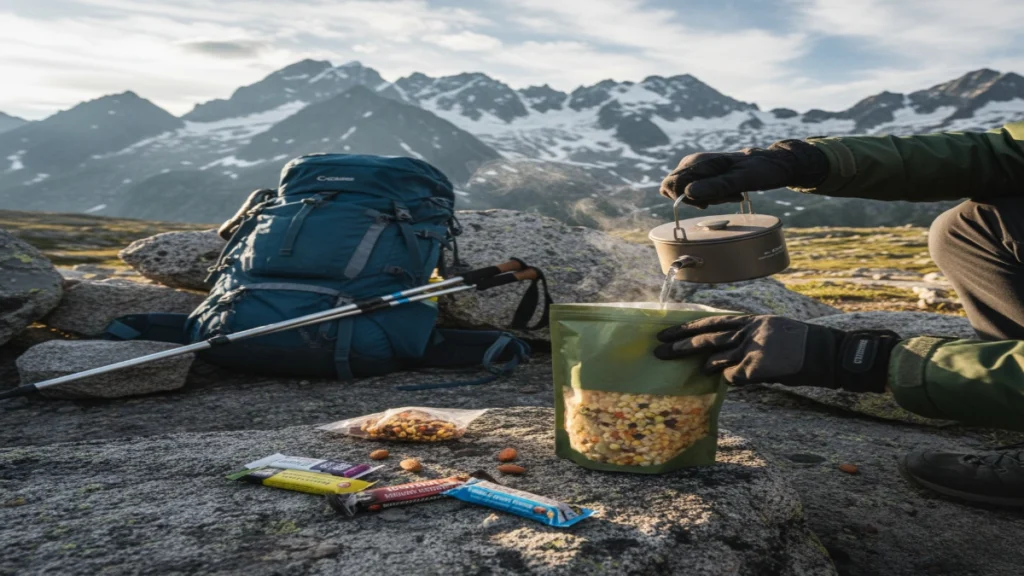
Lightweight Backpacking Food & Trail Snacks: Recipes and Strategies for Multi-Day Adventures
The moment I truly understood the importance of lightweight, high-calorie backpacking food was day four of a seven-day traverse through Washington’s North Cascades. I was 23, working as a trail crew cook, and I had packed what I thought was a reasonable food supply. By the time we hit the 9,000-foot pass that afternoon, my pack felt like it contained bricks, my energy was crashing hard, and I found myself genuinely angry at a bag of dried apricots that weighed more than my rain jacket. That night, sitting exhausted in our camp while the rest of the crew still had energy to set up proper bear hangs, I started keeping notes in what would become my food journal. Seventeen years later, that journal has grown into a system that keeps my food weight under 1.5 pounds per day while delivering over 3,000 calories when I need them.
I want to share what I’ve learned across roughly 180 tested recipes and more backcountry nights than I can accurately count. This isn’t theoretical advice from someone who car camps twice a year. These are strategies refined through genuine trial and error, including some spectacular failures that still make Marcus laugh when I bring them up. If you’re planning a multi-day hike and want to eat well without destroying your knees under pack weight, everything I’m about to tell you comes from hard-won experience.
Table Of Contents
- The Weight Reality Nobody Wants to Hear
- Dehydration: The Game Changer I Resisted Too Long
- The Recipes That Actually Work
- Breakfast Solutions That Don't Waste Your Morning
- Trail Snacks: The Food Between Meals
- The Practical Details That Make It Work
- What I Got Wrong and What I Learned
- Planning Your Own System
- Looking Forward
- Frequently Asked Questions
The Weight Reality Nobody Wants to Hear
Before we get into recipes, I need to address the math that changed how I approach backcountry food. On a typical five-day backpacking trip, my base pack weight (everything except food, water, and fuel) runs about 18 pounds. That’s after years of gear optimization and some expensive ultralight upgrades. But here’s the thing that took me embarrassingly long to figure out: food weight often exceeds your entire shelter system, sleeping setup, and clothing combined. When I was younger and less strategic, I’d pack 2.5 to 3 pounds of food per day, which meant adding 12 to 15 pounds to my pack for a five-day trip. My current system averages 1.4 pounds per day, saving me roughly 7 pounds over that same trip. Seven pounds is the difference between enjoying the scenery and counting every step.
The caloric math matters equally. Through trial and a lot of bonking on steep trails, I’ve settled on targeting 125 to 150 calories per ounce of food. For context, fresh bread sits around 75 calories per ounce. A typical energy bar lands between 120 and 140. My homemade dehydrated meals average 130 to 145. That number becomes your north star when you’re standing in your kitchen deciding what makes the cut.
I track this obsessively now, and I won’t apologize for it. Last September in the Three Sisters Wilderness, I spent four days covering 47 miles of technical terrain, burning an estimated 4,500 calories daily. My food bag weighed 5.6 pounds at the trailhead. I came home having eaten everything I packed, maintained my energy throughout, and felt strong on the final 12-mile push. That doesn’t happen by accident. It happens because I’ve spent years figuring out exactly what works.
Dehydration: The Game Changer I Resisted Too Long
I’ll admit something embarrassing: I resisted dehydrating my own food for almost a decade. The initial investment in a dehydrator seemed unnecessary when I could buy commercial backpacking meals. Then I calculated what I’d spent on those freeze-dried pouches over three years. The number was genuinely painful to acknowledge. More importantly, the sodium levels in commercial meals were leaving me puffy and thirsty, and I wanted more control over ingredients.
My dehydrator, a mid-range Excalibur I bought used for $85, has now produced enough trail meals to pay for itself roughly 40 times over. The learning curve was steeper than I expected, though. My first batch of dehydrated chili came out looking like leather chips and reconstituted into something resembling wet cardboard. I almost gave up. But I kept notes, adjusted my approach, and by my fourth attempt, I had something I’d genuinely look forward to eating at camp.
The fundamental principle I had to internalize: dehydrating isn’t just removing water. You’re concentrating flavors, which means you need to season differently than you would for a fresh meal. Under-seasoning is the most common mistake I see people make, and I made it myself for probably the first dozen batches. Your reconstituted dinner at mile 18 needs more salt, more spice, more depth than the same dish eaten fresh at home. I now season my pre-dehydration meals to the point where they taste slightly aggressive eaten fresh. After dehydration and reconstitution, they taste perfect.
Here’s my standard dehydrating process, refined over probably 50 batches. I cook a large pot of whatever I’m preparing, typically chili, curry, pasta sauce, or some variation of seasoned meat and vegetables. I spread it thin on dehydrator trays lined with non-stick sheets, aiming for layers no more than a quarter inch thick. Thinner is better. Faster drying means less opportunity for bacteria and better texture on the trail. I run the dehydrator at 145 degrees for anywhere from 8 to 14 hours, depending on the moisture content of what I’m drying. The food is done when it cracks or crumbles rather than bending. I’ve over-dried exactly once, turning a perfectly good beef stew into something that never properly reconstituted no matter how long it soaked. Checking frequently in the final hours prevents that disappointment.
Storage matters more than I initially realized. I vacuum seal everything in individual portions, typically enough for two servings per packet. Those packets go into a freezer bag in my freezer, where they stay good for at least a year. I’ve eaten meals that were 14 months old with no detectable quality loss. Beyond 18 months, I’ve noticed some texture changes, though nothing that made the food inedible. Dating your packets with a permanent marker seems obvious but took me three confusing freezer sessions to start doing consistently.
The Recipes That Actually Work
Let me share the specific recipes that have survived my testing process. Every one of these has been made at least eight times in actual backcountry conditions, not just in my kitchen.
Mountain Curry with Coconut Rice
This recipe came from desperation during a windy evening in Oregon’s Eagle Cap Wilderness when nothing sounded good and I needed something that felt like real food. I’d been eating commercial meals for two days and craving the kind of dinner you’d get at home.
At home, I make a large batch by cooking two cups of jasmine rice and mixing it with a can of full-fat coconut milk, then spreading it thin on dehydrator trays. Separately, I prepare a curry using one pound of ground turkey or chicken, a large onion diced small, three cloves of garlic, two tablespoons of red curry paste, one can of diced tomatoes, and a generous amount of whatever vegetables I have. I’ve used bell peppers, spinach, zucchini, and sweet potato in various combinations. The sweet potato holds up best after dehydration, followed by bell peppers. Spinach essentially disappears but adds nutrition. Once the curry is cooked and slightly thickened, it goes onto separate dehydrator trays.
I combine the dried curry and coconut rice in a vacuum-sealed bag at a ratio of roughly two parts curry to one part rice by volume. At camp, I add about one and a half cups of boiling water, seal the bag, and wait 15 minutes. Stirring halfway through helps even rehydration. The result is a creamy, filling meal that tastes like I put actual effort into dinner, which I did, just not at camp.
This meal weighs 4.8 ounces dry and delivers approximately 650 calories. I’ve made it at elevations ranging from sea level to 11,200 feet, and the only adjustment needed at high altitude is slightly more water and an extra five minutes of soaking time. Marcus, who is not easily impressed by camp food, has requested this specific meal on our last six trips together.
Three Bean Chili
I’ve probably made more batches of dehydrated chili than any other meal. It travels well, tastes good even when you’re exhausted, and provides the protein and fiber that keep you moving the next day.
My recipe starts with two cans each of black beans, kidney beans, and pinto beans, all drained and rinsed. I brown one and a half pounds of ground beef with two diced onions and four cloves of garlic, then add one large can of crushed tomatoes, two small cans of diced tomatoes with green chilies, three tablespoons of chili powder, two tablespoons of cumin, one tablespoon of smoked paprika, one teaspoon of oregano, and salt to taste. I simmer this for about 45 minutes until it’s thick and the flavors have melded. Some people mash some of the beans to create a thicker consistency, and I’ve found this helps with even dehydration.
The dehydrating process takes longer than most meals because of the bean moisture content. I typically run mine for 12 to 14 hours, checking after 10. The finished product should crumble easily and feel completely dry to the touch. Any residual moisture will shorten shelf life dramatically and can lead to off flavors.
At camp, this needs more water than you’d expect, roughly two cups per serving, and benefits from a full 20 minutes of soaking. I’ve rushed it at 12 minutes and gotten crunchy beans, which is unpleasant. The finished meal weighs 5.2 ounces and delivers approximately 580 calories. I’ve eaten this at 5 degrees Fahrenheit during a February trip in Colorado, and the warm, spicy comfort was worth every ounce of pack weight.
Coconut Lentil Soup
My friend Sarah is vegetarian and lactose intolerant, which forced me to develop better non-meat options. This one became my favorite accidentally.
I start by cooking one and a half cups of red lentils in four cups of water until they’re soft and starting to fall apart. In a separate pan, I sauté one diced onion, three cloves of garlic, and a tablespoon each of cumin, coriander, and turmeric. Once fragrant, I add the lentils, one can of full-fat coconut milk, and a cup of vegetable broth. I simmer until thickened, season with salt and a squeeze of lime juice, then spread thin for dehydrating.
The lime juice is critical. I left it out once and the result was flat and boring. With the lime, there’s a brightness that cuts through the richness of the coconut and makes every bite interesting.
This dehydrates quickly, usually 8 hours, and reconstitutes easily with one and a half cups of water and a 12-minute wait. It weighs 4.1 ounces dry and provides about 520 calories. Sarah has made this part of her standard backpacking menu, and even Jake, who usually complains about vegetarian options, finished his entire serving without protest during our last trip to Crater Lake.
Breakfast Solutions That Don’t Waste Your Morning
Jake, who photographs professionally and therefore has strong opinions about catching morning light, has made his preferences clear over many shared trips: breakfast cannot take more than 15 minutes from sleeping bag to trail-ready. This constraint has shaped how I approach morning meals.
The fastest option I’ve found is overnight oats prepared the night before. I mix half a cup of instant oats, two tablespoons of powdered whole milk, one tablespoon of brown sugar, a tablespoon of chopped dried fruit, and a handful of whatever nuts I’m carrying that trip. At home, this all goes into a small container or bag. At camp, I add cold water before bed, seal it, and tuck it inside my sleeping bag to prevent freezing. By morning, it’s ready to eat without any stove time. Total weight per serving: 3.8 ounces. Calories: approximately 450.
I ruined this meal exactly once by misjudging the water ratio and ending up with something closer to oatmeal soup. The correct ratio, which I now have memorized, is roughly three-quarters cup of water per serving. The oats absorb more than you’d expect overnight.
For cold mornings when something warm feels necessary, I’ve developed a quick rice pudding that takes under 10 minutes. I combine instant rice, powdered milk, sugar, cinnamon, and dried fruit at home in pre-measured bags. At camp, I add boiling water directly to the bag, wait 8 minutes, and eat. The whole milk powder matters here. I tried non-fat once and the result was watery and unsatisfying. The full-fat version delivers 520 calories and weighs 4.2 ounces, which is worth it for the comfort factor.
The breakfast I make most often, though, is a savory option that sounds strange but works perfectly. I call it trail grits, and it started as an accident when I grabbed the wrong pre-mixed bag from my freezer. I combine instant grits with dehydrated bacon bits, cheddar cheese powder, and a small amount of garlic powder. At camp, boiling water and 5 minutes of waiting produces something filling and savory when I can’t face another sweet breakfast. This runs 4.5 ounces and 480 calories. Marcus thinks it’s weird. I think it’s efficient.
Trail Snacks: The Food Between Meals
Here’s something that took me years to understand: on multi-day hikes, your snacks matter as much as your meals. When you’re covering 15 to 20 miles daily, the calories you eat while moving often determine how you feel more than dinner does. I used to underpack snacks and arrive at camp so depleted that even a great meal couldn’t fully restore me. Now I budget specific snack weights and won’t compromise on them.
My target is 100 to 120 calories per mile of difficult terrain, consumed steadily throughout the hiking day. For a 16-mile day with 3,000 feet of elevation gain, that means roughly 1,600 to 1,900 calories in snacks alone. I know that sounds like a lot. It is. But I’ve bonked too many times from under-fueling to ignore the math anymore.
The single best trail snack I’ve found, in terms of calorie-to-weight ratio, is homemade nut butter balls. I mix one cup of nut butter, half a cup of honey, two cups of rolled oats, half a cup of chocolate chips, and a quarter cup of ground flax seed. I roll this into balls about an inch and a half in diameter, wrap each one individually in plastic wrap, and freeze them until the day before I leave. Each ball weighs about 1.5 ounces and delivers approximately 200 calories. They hold up well in a pack, don’t melt unless temperatures exceed 90 degrees, and taste good enough that I genuinely look forward to eating them.
I made 140 of these balls last season. That sounds excessive until you realize I was on trail for 43 days across various trips, eating an average of three per day. My calculations came out almost perfectly.
For variety, I also carry a rotating selection of commercial bars. I’ve tested probably 30 different brands over the years and keep coming back to a few specific ones that hit my calorie-per-ounce targets without tasting like cardboard. I won’t name brands because preferences vary, but I look for bars in the 130 to 150 calorie-per-ounce range with a balance of fat, protein, and carbohydrates. Pure sugar bars give quick energy but leave me crashing an hour later. Fat-heavy bars provide sustained fuel but can feel heavy in the stomach on steep climbs. The bars I carry most have roughly 35% of calories from fat, 50% from carbohydrates, and 15% from protein.
Dried fruit seems like an obvious choice but I’ve become selective about it. Most commercial dried fruit runs only 80 to 90 calories per ounce because of the retained water. Freeze-dried fruit is lighter but crumbles in a pack and often costs more than I want to spend. My compromise is dehydrating my own bananas and mangoes, slicing them thin and running them until they’re crispy. Homemade dried bananas clock in at about 110 calories per ounce, meaningfully better than commercial options. The time investment is significant, though, so I typically only do this before longer trips.
Cheese is a trail snack I resisted adding because I worried about spoilage. Then I discovered hard aged cheeses, specifically Parmesan and aged gouda, which last 5 to 7 days without refrigeration in temperatures under 75 degrees. I cut them into portion-sized chunks at home and wrap each piece in wax paper. The fat content is high, the calorie density is excellent at around 130 per ounce, and the flavor makes a meaningful difference when everything else you’re eating is sweet. On my last trip through the San Juan Mountains, a chunk of aged gouda on day four felt like a genuine luxury.
Nuts remain a backpacking staple for good reason. They average 170 to 180 calories per ounce, which is nearly impossible to beat. But I’ve learned through experience that eating straight nuts gets boring fast, and boredom leads to not eating, which leads to energy problems. I make my own trail mix now, combining nuts with something sweet and something savory. My current favorite blend is roasted almonds, dark chocolate chips, and pretzels at roughly a 3:1:1 ratio. The salt from the pretzels satisfies a craving that builds over multi-day trips, and the chocolate provides a quick sugar bump when energy dips.
The Practical Details That Make It Work
Everything I’ve described sounds straightforward, but the logistics of actually implementing this system took me years to refine. Let me share some of the practical knowledge I wish someone had told me earlier.
Packaging matters more than you’d think. I pre-portion all meals and snacks at home, vacuum sealing where possible and using freezer bags for everything else. My color-coding system, which Marcus finds amusing, keeps breakfast in blue bags, dinner in red bags, and snacks in green. This sounds obsessive until you’re exhausted at camp, it’s getting dark, and you’re digging through your bear canister trying to figure out which identical-looking packet is dinner. I’ve never grabbed the wrong meal since I started this system.
I also write cooking instructions directly on each bag with permanent marker. Water amount, soak time, any special notes. At 10,000 feet after 18 miles, I don’t trust myself to remember that the coconut curry needs extra water or that the chili takes 20 minutes. The instructions are right there, no thinking required.
Water planning interacts directly with food planning. Dehydrated meals require water to prepare, which means I need to carry more water or plan camp locations near water sources. I estimate roughly one liter of water for food preparation each evening, plus whatever I’ll drink overnight and with breakfast. On dry stretches, this calculation becomes critical. I’ve made the mistake exactly twice of camping without enough water to properly rehydrate dinner, and both times I ate crunchy, unsatisfying meals that left me hungry.
Bear canister packing is its own skill. I learned through frustrating trial and error that food organized at home rarely fits as planned into a cylindrical container. Now I pack my canister before every trip as a test. If something doesn’t fit, I have time to adjust. The strategy that works best for me: soft items like bags of snacks and dehydrated meals go in first, conforming to the container’s shape. Harder items like the cheese chunks and denser bars fill the gaps. I can typically fit five days of food in a BV500 using this approach.
Fuel calculation requires similar attention. I’ve tested my MSR WhisperLite extensively and know it burns roughly one fluid ounce of fuel to boil one liter of water in moderate conditions. Cold temperatures and wind increase consumption. For a five-day trip where I’m only making hot dinner and sometimes coffee, I calculate about 10 ounces of fuel minimum, plus 3 ounces for buffer. I’ve run out of fuel once, three days into a planned five-day trip in the Wind River Range, because I hadn’t accounted for how wind would affect my stove. That memory keeps me conservative with fuel planning now.
Altitude adjustments caught me off guard repeatedly in my earlier years. Water boils at lower temperatures as elevation increases, which means it takes longer to cook things. At 10,000 feet, water boils at about 194 degrees instead of 212. This affects rehydration times noticeably. The chili that reconstitutes perfectly in 15 minutes at sea level needs 22 to 25 minutes at high altitude. I’ve eaten crunchy rice and tough beans enough times to take this seriously. My rule now: add at least 50% to your rehydration time above 8,000 feet.
Cold weather creates different challenges. Food freezes, obviously, but the practical implications surprised me. On a February trip to the San Juan Mountains, temperatures dropped to 5 degrees overnight. My olive oil solidified into something unpourable. My nut butter balls became rock hard and nearly broke a tooth. Now I sleep with anything that might freeze, tucking packets inside my sleeping bag where body heat keeps them usable. I’ve also learned that foods with higher fat content freeze at lower temperatures, making them better choices for cold-weather trips.
What I Got Wrong and What I Learned
Honesty requires admitting failures, and I’ve had plenty. The Great Oatmeal Incident of 2018 on the Olympic Peninsula remains infamous among my camping friends. I’d prepared what I thought was a brilliant pre-mixed instant oatmeal with added protein powder, dried fruit, and spices. In theory, it would be a nutritious, flavorful, one-bag breakfast. In practice, the protein powder clumped weirdly when hot water hit it, creating chunks of powder floating in watery oat soup. The texture was genuinely awful. All four of us refused to finish our portions, and we started the day hungry and slightly demoralized. I’ve since learned that whey protein doesn’t mix well with hot water unless it’s blended first, a piece of knowledge I should have researched beforehand.
The Wind River Range taught me about food freezing, as I mentioned, but it also taught me about portion planning. I’d estimated my calorie needs based on casual hiking, not the technical terrain and heavy pack weight of that trip. By day five, I was rationing food and feeling weak. I finished that trip having lost almost six pounds, mostly muscle, and it took weeks to fully recover. Now I estimate aggressively for difficult trips, assuming 4,000 to 4,500 daily calories for strenuous backcountry travel. I’d rather carry slightly more food than need to ration.
My dehydrating learning curve was steeper than it needed to be. Early batches often came out either over-dried to the point of never reconstituting properly, or under-dried with moisture pockets that created off flavors. The turning point was buying a cheap food thermometer and actually monitoring my dehydrator temperatures, which vary across different trays and positions. My machine runs about 8 degrees hotter in the back than the front. Rotating trays throughout the drying cycle produces much more consistent results.
I also underestimated how much taste fatigue affects eating on long trips. Packing five days of the same meal seemed efficient. Eating that meal three nights in a row destroyed my appetite for it by dinner four. Now I pack at least three different dinner options for any trip longer than four days, even though this requires more preparation time at home.
Planning Your Own System
If you’re building your own lightweight food system, here’s the approach I recommend based on everything I’ve learned.
Start by calculating your actual calorie needs for the terrain and intensity you’re planning. Most people underestimate. For moderate hiking with a 30-pound pack, estimate 3,000 to 3,500 daily calories. For strenuous hiking with significant elevation gain, estimate 4,000 to 4,500. These numbers might seem high, but I’ve tested them against my own weight loss and energy levels on many trips. They’re accurate.
Next, establish your target weight. I aim for 1.5 pounds of food per day or less, which means my calories need to average about 125 to 150 per ounce across everything I carry. Some items will exceed this, like nuts at 170 per ounce. Others will fall short, like the fruit leather I sometimes bring at 90 per ounce. The average needs to hit your target.
Then build your menu around dehydrated meals and high-density snacks. I typically allocate roughly 35% of daily calories to dinner, 20% to breakfast, and 45% to snacks consumed throughout the day. This ratio has worked well for me, keeping energy steady rather than relying on three distinct meals.
Test everything before you depend on it in the backcountry. Make your dehydrated meals at home first, reconstituting them exactly as you would at camp. Eat your planned portions over a day of hiking, even just day hiking near home, to see if your calorie calculations feel accurate. Discover problems where solutions are available, not five days into a wilderness trip.
Finally, pack smart. Label everything, organize logically, and think through water and fuel needs in advance. The extra hour of planning at home translates directly into easier, more enjoyable trips.
Looking Forward
I’m still refining this system after 17 years, which is part of what keeps it interesting. This coming season, I’m planning to test some new high-altitude recipes during a two-week trip through Colorado’s Weminuche Wilderness. I’ve been working on a dehydrated coconut noodle bowl that showed promise in my kitchen tests but hasn’t been trail-proven yet. I’m also experimenting with homemade energy gels, which seem absurdly simple to make at home once you understand the basic formula.
Marcus keeps asking when I’ll write down all my recipes in one place. Maybe this is the beginning of that. The food journal I started 17 years ago now fills three notebooks, plus a spreadsheet tracking calorie densities, prep times, and trip-specific notes. Every entry represents something I learned, often the hard way, about eating well while covering ground in beautiful places.
My hope is that sharing this saves you some of the failures I experienced. Your first batch of dehydrated chili might still come out wrong. Your first long trip might still reveal calculation errors. But maybe you’ll avoid a few of my mistakes and find your own system faster.
The best backpacking food is whatever keeps you fueled and happy on trail, prepared efficiently and packed light enough that your knees don’t suffer. For me, that means homemade dehydrated meals, strategic snacking, and an obsessive attention to calorie-per-ounce math that Marcus still teases me about. Whatever your approach, the wilderness deserves to be enjoyed with energy to spare, not endured through a fog of under-fueled exhaustion.
Pack smart, eat well, and I’ll see you out there.
Frequently Asked Questions
How many calories per day do I need for backpacking?
This depends heavily on terrain, pack weight, and your personal metabolism, but I’ve found most people underestimate significantly. For moderate hiking with a 30-pound pack, I recommend planning for 3,000 to 3,500 calories daily. For strenuous trips with significant elevation gain, bump that up to 4,000 to 4,500 calories. I learned this the hard way during a Wind River Range trip where I’d estimated based on casual hiking. By day five, I was rationing food and came home having lost almost six pounds. Now I estimate aggressively and would rather carry slightly extra than bonk on a remote trail.
How long does homemade dehydrated food last?
When properly dried and vacuum sealed, my dehydrated meals stay good in the freezer for at least 12 to 14 months with no detectable quality loss. Beyond 18 months, I’ve noticed some texture changes, though nothing that made the food unsafe or inedible. The key is ensuring your food is completely dry before packaging. It should crack or crumble rather than bend. Any residual moisture will shorten shelf life dramatically and can create off flavors. I also date every packet with permanent marker, which took me three confusing freezer sessions to start doing consistently.
What is the ideal calorie-to-weight ratio for backpacking food?
I target 125 to 150 calories per ounce across my entire food bag. For context, fresh bread sits around 75 calories per ounce, which is why it never makes my pack. A typical energy bar lands between 120 and 140 calories per ounce. Nuts are the calorie density champions at 170 to 180 per ounce. My homemade dehydrated meals average 130 to 145. That calorie-per-ounce number becomes your north star when deciding what makes the cut. Aiming for 1.5 pounds of food per day or less while hitting your calorie targets is absolutely achievable once you start thinking this way.
How do I adjust cooking times for high altitude backpacking?
Altitude adjustments caught me off guard repeatedly in my earlier years. Water boils at lower temperatures as elevation increases, around 194 degrees at 10,000 feet instead of 212 at sea level. This affects rehydration times noticeably. The chili that reconstitutes perfectly in 15 minutes at sea level needs 22 to 25 minutes at high altitude. My rule now: add at least 50% to your rehydration time above 8,000 feet, and use slightly more water than the recipe calls for. I’ve eaten crunchy rice and tough beans enough times during my Colorado trips to take this seriously.
What are the best lightweight trail snacks for long hikes?
My single best trail snack in terms of calorie-to-weight ratio is homemade nut butter balls. I mix one cup of nut butter, half a cup of honey, two cups of rolled oats, half a cup of chocolate chips, and a quarter cup of ground flax seed. Each ball weighs about 1.5 ounces and delivers approximately 200 calories. Beyond that, I carry hard aged cheeses like Parmesan or aged gouda, which last 5 to 7 days without refrigeration and provide savory variety when everything else is sweet. Nuts remain essential at 170 to 180 calories per ounce, though I mix them into trail mix to prevent taste fatigue.
How do I prevent food from freezing on cold weather backpacking trips?
This surprised me during a February trip to the San Juan Mountains when temperatures dropped to 5 degrees overnight. My olive oil solidified completely, and my nut butter balls became rock hard, nearly breaking a tooth. Now I sleep with anything that might freeze, tucking packets inside my sleeping bag where body heat keeps them usable. Foods with higher fat content freeze at lower temperatures, making them better choices for cold weather trips. I also start ingredients like butter or oil in a warm water bath while my stove heats up, which helps them become workable faster in frigid morning conditions.