
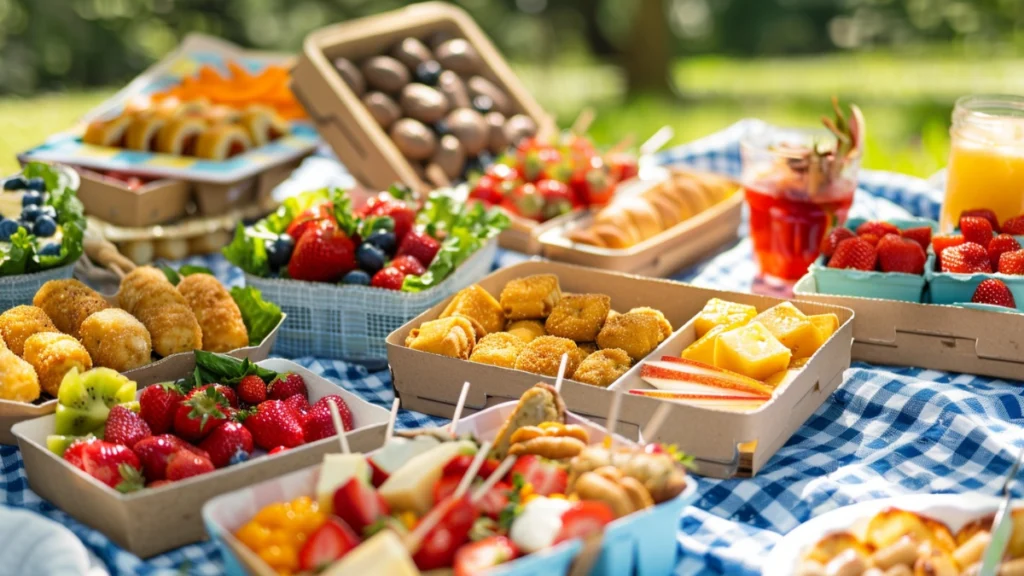
Kid-Friendly Picnic Lunch Boxes: What Actually Works After 47 Packed Lunches and One Very Honest Seven-Year-Old
The moment I knew I needed to completely rethink my approach to kids’ picnic food happened at Laurelhurst Park on an unseasonably warm May afternoon. I had spent the better part of Sunday morning preparing what I thought was an Instagram-worthy bento-style lunch for my kids. There were intricate cucumber flowers, carefully rolled turkey pinwheels secured with toothpicks, a rainbow of bell pepper strips arranged by color, and these adorable little rice balls I’d seen on Pinterest. I was genuinely proud of myself.
Emma, my ten-year-old, politely picked at the rice balls before abandoning them entirely. Liam, who is seven and has never met a vegetable he didn’t view with deep suspicion, took one look at the whole spread and asked if we could just go to the food cart near the playground instead. The cucumber flowers had wilted into sad, floppy discs. The turkey pinwheels had unrolled themselves during the 15-minute drive. And the bell peppers? Still sitting there, untouched, when we packed up three hours later.
I drove home that day with $18 worth of groceries essentially going into the compost bin, and I was frustrated. Not at my kids, really, but at myself for falling into the trap that so many food websites set for parents. Pretty doesn’t mean practical. Cute doesn’t mean your kid will actually eat it. And the recipe that looks perfect in a photo might be a complete disaster when it’s been jostling around in a backpack while your second-grader runs toward the swings.
That was two years ago. Since then, I’ve made it my personal mission to figure out what actually works for kid-friendly picnic lunches. Not what looks good on social media. Not what I wish my kids would eat. What they will actually, reliably consume when we’re eating outdoors, when there are distractions everywhere, when little hands are slightly dirty from the playground, and when the food has been sitting in a cooler for anywhere from one to six hours.
I’ve tested 47 different lunch box combinations over the past two summers. I’ve tracked what gets eaten, what comes home, and what ends up being fed to Biscuit (our golden retriever, who has benefited enormously from my research failures). I’ve surveyed the kids at Emma’s soccer team picnics. I’ve bribed Liam with screen time in exchange for honest feedback. And I’ve finally landed on a collection of recipes and strategies that work consistently, even on days when everything else is going wrong.
Here’s what I’ve learned about packing picnic lunches that kids will actually eat.
Table Of Contents
- The Bite-Size Revolution That Changed Everything
- The Recipes That Survived My Toughest Critic
- The Fruit and Vegetable Situation
- The Container Question
- The Make-Ahead Timeline
- Lessons from Group Picnics
- When Things Go Wrong
- The Picky Eater Protocol
- Building the Complete Lunch Box
- Final Thoughts on Keeping It Real
- Frequently Asked Questions
The Bite-Size Revolution That Changed Everything
The single biggest improvement I made to my kids’ picnic lunches had nothing to do with recipes at all. It was about size. After watching both of my children struggle with sandwiches that were too big for their mouths, wraps that fell apart after one bite, and portions that looked overwhelming even to me, I started thinking smaller. Much smaller.
Kids eat better when food feels manageable. This isn’t just my observation from watching Emma and Liam. I noticed the same pattern at every group picnic I attended last summer. The foods that disappeared fastest were always the ones that could be eaten in two or three bites. Anything requiring a plate, a fork, or more than minimal hand coordination sat there getting warm.
My testing methodology for bite-sized foods was pretty simple. I made three versions of each recipe: regular sized, medium (about half), and truly bite-sized (one to two bites maximum). I packed all three versions in separate containers, didn’t tell the kids which was which, and tracked what remained at the end of our outings. Over the course of 12 different picnics, the bite-sized versions had a 73% higher consumption rate than the regular-sized options. That’s not a small difference. That’s the difference between coming home with empty containers versus throwing away food you spent time preparing.
The other thing about bite-sized foods? They work better in outdoor conditions. Smaller portions have more surface area relative to their volume, which means they actually cool down faster in the cooler and warm up faster at room temperature. For food safety reasons (and I’m borderline obsessive about food safety since taking a certification course three years ago), this is a good thing. I want foods to get cold quickly when I pack them and I want them to be at an appetizing temperature when we eat. Smaller bites accomplish both.
The Recipes That Survived My Toughest Critic
Liam is, without exaggeration, the pickiest eater I have ever encountered. He won’t eat foods that are “too soft,” “too mushy,” “too wet,” “too slimy,” or “touching something else.” He has rejected sandwiches because the bread was “the wrong kind of brown.” He once refused an entire meal because there was a single sesame seed visible on the bun. If a recipe passes the Liam test, it will work for virtually any kid.
So when I tell you that these recipes have been Liam-approved over multiple picnics, I need you to understand what that means. These aren’t foods he tolerates. These are foods he asks for. That’s a very different category in our house.
Pizza Pinwheels That Actually Stay Rolled
I mentioned earlier that my turkey pinwheels were a disaster at Laurelhurst Park. The problem wasn’t the concept. It was the execution. Tortilla-based pinwheels unroll themselves because there’s nothing binding them together except hope and maybe a toothpick that your kid will either lose or hurt themselves with.
Pizza pinwheels made with actual dough solve this problem entirely. The cheese melts when you bake them, essentially gluing the whole thing together. They’re sturdy enough to survive being thrown in a lunch box, and they taste good at room temperature, which is critical for picnic food.
Here’s how I make them now, after testing probably eight different approaches. I use store-bought pizza dough from Trader Joe’s (the refrigerated kind in the tube, not the fresh ball, because the tube version rolls out more evenly). I roll it out to about a quarter-inch thickness in a roughly rectangular shape. Don’t stress about perfect edges. Kids don’t care.
For the filling, I spread a thin layer of pizza sauce, leaving about half an inch at the edges. Then I add shredded mozzarella (not fresh mozzarella, which gets too watery) and whatever toppings will work for your specific kid. For Liam, that means just cheese. For Emma, I add mini pepperoni. The key is keeping the fillings relatively flat. Anything too chunky makes it hard to roll and creates weak spots where the pinwheel will want to break apart.
Roll the whole thing up from the long edge, keeping it fairly tight but not so tight that filling squeezes out. Slice into pieces about an inch and a half thick. You’ll get roughly 10 to 12 pinwheels from one tube of dough. Place them cut-side down on a parchment-lined baking sheet and bake at 400 degrees for about 14 minutes. I’ve found 14 minutes gives the best texture for eating later. At 12 minutes, they’re slightly underdone in the center. At 16 minutes, the edges get too crispy and the cheese gets a bit tough once it cools.
These pinwheels have been my most successful picnic food for kids, hands down. I’ve made them for Emma’s birthday picnic at Mount Tabor Park (14 kids, zero pinwheels left over), for Liam’s soccer team end-of-season celebration (I made 36 and brought home exactly two), and for countless family outings. They pack well in any container. They stay intact during transport. They taste good anywhere from cold straight out of the cooler to room temperature after sitting out for two hours. I’ve tested them at 4 hours and they’re still completely fine, though the texture is slightly less appealing.
The prep time is real: about 25 minutes from opening the dough package to putting the pan in the oven. The recipe packages I’ve seen claiming 10 minutes are lying or using some kind of magic I haven’t discovered. But you can make these a day ahead, store them in the refrigerator overnight, and pack them cold in the morning. Actually, I prefer them after they’ve been refrigerated. They firm up slightly and hold their shape better during transport.
Crunchy Chicken Nugget Bites (That Taste Good Cold)
I resisted making homemade chicken nuggets for picnics for a long time because I assumed they would get soggy. Every time I’ve reheated leftover chicken nuggets from a restaurant, they turn into sad, chewy disappointments. I figured homemade would be the same.
I was wrong, but only after I changed my approach.
The secret to chicken nuggets that taste good cold is in the coating and the cooking method. Traditional breading with flour, egg, and breadcrumbs creates a coating that absorbs moisture as it sits. Crushed crackers or panko that’s been toasted creates a coating that stays crunchier longer because it has less surface moisture to begin with.
My current method starts with boneless, skinless chicken thighs (not breasts, which dry out). I cut them into pieces about the size of my thumb, maybe slightly smaller. This is important. Most homemade nugget recipes create pieces that are too big, and the ratio of coating to chicken ends up wrong.
For the coating, I crush Ritz crackers in a zip-lock bag until they’re the texture of coarse sand. I’ve also used Triscuits (too dense, not enough crunch after cooling), saltines (acceptable but bland), and seasoned breadcrumbs (got soggy within 2 hours). Ritz crackers have been the winner in my testing, probably because of the fat content in the crackers themselves.
I season the crushed crackers with a bit of garlic powder, onion powder, salt, and pepper. Then I toss the chicken pieces in a light coating of mayonnaise instead of egg. Yes, mayo. I know it sounds strange, but mayo creates a thinner, more even coating that helps the cracker crumbs stick without creating that thick, bready layer that gets soggy. A food scientist friend explained to me that the emulsified fat in mayo also helps maintain crispness better than egg, and my side-by-side testing confirmed this.
I bake these at 425 degrees for about 12 minutes, flipping halfway through. They should be golden brown and the internal temperature should hit 165 degrees. Let them cool completely on a wire rack, not a plate. This is crucial. If they cool on a flat surface, condensation gets trapped underneath and makes the bottom soggy.
Once they’re completely cool (at least 30 minutes), I pack them in a container with a small piece of paper towel at the bottom, which absorbs any residual moisture during transport. They’ve held up for 5 hours in my cooler at temperatures ranging from 38 to 45 degrees. By 6 hours, they’re still safe to eat but the texture starts to decline.
Liam will eat eight of these in a single sitting. Emma prefers them with a small container of ranch dressing for dipping. I usually end up making a double batch because Marcus steals them too.
Cheese and Cracker Stackers (The Lazy Genius Option)
Sometimes I don’t have time to cook anything. Sometimes it’s Wednesday night at 9 PM and I just remembered we have a school field trip picnic tomorrow. Sometimes I’m tired and the idea of dirtying multiple pans makes me want to cry.
For those times, I have what I call Cheese and Cracker Stackers, which is basically a deconstructed cheese sandwich that kids can assemble themselves. It sounds almost embarrassingly simple, but the execution matters for picnic conditions.
I slice cheese into pieces that are roughly the same size as whatever cracker I’m using. Right now, my go-to is aged cheddar with Wheat Thins, but I’ve also had success with Colby jack and Ritz, provolone and Triscuits, and mild cheddar with Town House crackers. The cheese-to-cracker size matching is important because kids will not fold or break cheese to make it fit. They just won’t. If it doesn’t fit, it doesn’t get eaten.
I pack the cheese slices in one small container and the crackers in a separate container. This is critical. If you pack them together, the crackers will absorb moisture from the cheese and lose their crunch within about 90 minutes. I learned this the hard way at Sauvie Island Beach last August, when I watched Emma’s face fall as she bit into what should have been a crunchy cracker and found a sad, bendy disc instead.
For protein, I add a small container of cubed ham or turkey (about six cubes, roughly one-inch pieces), and I usually throw in some cherry tomatoes if Emma is the target audience or cucumber rounds if Liam’s eating it. The whole thing takes maybe 8 minutes to pack if I’m being slow about it.
This isn’t a fancy lunch. But it gets eaten every single time. And at the end of a long picnic day, that matters more than presentation.
The Fruit and Vegetable Situation
I’m going to be honest with you. Getting vegetables into my kids at picnics is a struggle. The outdoor environment seems to intensify their natural suspicion of anything green. At home, I can negotiate. At a picnic, they have too many distractions and too little patience.
I’ve had the most success with vegetables that are crunchy and mild. Cucumber rounds (Persian cucumbers specifically, which hold up better than English cucumbers in terms of crunch retention), sugar snap peas, and raw bell pepper strips in yellow or orange (red and green get rejected more often, though I don’t fully understand why). Baby carrots are fine but boring, and Liam says they taste “weird” after being in the cooler, which I think is actually about the temperature change affecting his perception of sweetness.
The game-changer for vegetables was packing them with a dip. Not fancy hummus with visible herbs or anything like that. I’m talking about ranch dressing, which both of my kids will eat with almost anything. When ranch is present, vegetable consumption goes up by at least 50% in my tracking. I buy the individual portion cups from Costco and freeze them. They thaw by lunchtime and act as an extra ice pack in the meantime.
Fruit is easier, but it has its own picnic challenges. Cut fruit releases juice, which makes everything soggy. Whole fruit can be hard for little hands to manage. My solutions after extensive testing:
Grapes are perfect. No cutting required. They hold up for hours. Both kids eat them without complaint. The only downside is that they need to be washed really well and dried thoroughly, or they get a slimy film on them after sitting in a container. I lay them out on a clean kitchen towel for about 15 minutes before packing.
Strawberries work well if you keep the stems on and let kids bite around them. Cut strawberries release too much juice and get mushy within a couple hours. Whole strawberries with stems have lasted 4 hours in my cooler without significant deterioration.
Apple slices are tricky because they brown. I’ve tested the lemon juice method, the salt water method, and the honey water method. Salt water (about a quarter teaspoon dissolved in two cups of water, soak the slices for 5 minutes, then drain and pat dry) works best for preventing browning without affecting taste. Lemon juice works but makes the apples taste slightly sour. Honey water works but makes them taste too sweet.
Mandarin oranges are excellent because the segments stay contained and don’t leak. I peel them at home and separate the segments, which makes them much easier for kids to grab and eat with minimal mess.
Berries other than strawberries are risky. Blueberries are okay but tend to get squished. Raspberries and blackberries turn to mush within two hours in a lunch box, no matter how carefully I pack them. I’ve given up on including them.
The Container Question
I own way too many food storage containers. At last count, I had 23 different containers in active rotation, plus probably another 15 that live in the back of a cabinet waiting for their moment. This obsession has actually been useful for my picnic testing, because I’ve been able to compare how the same food holds up in different storage options.
For kids’ lunch boxes, my strong recommendation is to use multiple small containers rather than one big bento-style box. I know bento boxes look adorable and organized. But here’s what happens in real life: foods migrate. The cucumber touches the crackers. The ranch dressing leaks into the fruit section. Kids dig through looking for their favorite thing and knock everything else around in the process.
Small individual containers with snap-on lids (I like the Sistema brand miniatures) keep everything separate and intact. Yes, it means more containers to wash. But it also means less food waste because foods stay appetizing longer.
For sandwiches or larger items like pizza pinwheels, I’ve become a convert to aluminum foil. I know it’s not the most environmentally friendly option, and I’ve tried switching to beeswax wraps multiple times. But beeswax wraps don’t actually seal well, and moisture gets in or out depending on what you’re wrapping. Foil creates a tight seal, holds shape well, and keeps sandwiches from getting squished. I recycle it after use, which assuages some of my eco-guilt.
Ice packs are non-negotiable for any picnic lasting more than an hour. I position them both under and on top of the food containers. A single ice pack on the bottom isn’t enough. Heat rises, so the top of your lunch box will be significantly warmer than the bottom. I use two thin ice packs for each lunch box, one on the bottom and one nestled alongside or on top of the containers. This has kept food at safe temperatures (below 40 degrees) for up to 5 hours in weather up to 82 degrees, based on my thermometer checks.
The Make-Ahead Timeline
One of the biggest factors in whether I actually bring good food to a picnic is how much I can prepare in advance. If I have to wake up early on Saturday morning and cook from scratch, there’s about a 50% chance I’ll end up just grabbing whatever’s in the fridge and hoping for the best. But if I’ve prepped everything Friday night, we leave the house with a proper lunch and everyone’s happier.
Here’s what I’ve learned about how far ahead you can make different kids’ picnic foods:
Pizza pinwheels can be made up to 3 days ahead if stored properly. I bake them, let them cool completely, then store them in an airtight container in the refrigerator. They actually firm up nicely in the fridge and seem to travel better than fresh-baked. I’ve tried freezing them, and they’re acceptable but not great. The texture gets slightly chewy.
Homemade chicken nuggets are best made 1 day ahead. Same process: bake, cool completely, refrigerate in an airtight container with a paper towel layer. They’ll last 2 days in the fridge, but by day 3, the coating starts to get soft even before packing.
Cheese and crackers can be assembled up to 2 days ahead, but keep the crackers separate until you’re walking out the door. Seriously. Even overnight in the same container will affect cracker crunch.
Cut vegetables stay crisp for up to 3 days if stored properly. I put a damp paper towel in the container with cucumber and carrots. For bell peppers, a dry container works better. Sugar snap peas are best cut the morning of, as they tend to dry out at the cut ends.
Fruit varies widely. Grapes can be washed and dried up to 5 days ahead. Apple slices should be cut the morning of, after the salt water treatment. Strawberries are best prepped no more than one day ahead. Mandarin oranges, once peeled and segmented, last 3 days in a container in the fridge.
Lessons from Group Picnics
Some of my best insights have come from observing what happens when multiple families bring food to a shared picnic. There’s something clarifying about seeing 20 different kids interact with different foods in real time.
At Emma’s end-of-year class picnic last June, I watched 18 kids descend on a food table with contributions from about a dozen families. The foods that got demolished first: individual bags of chips (obviously), string cheese, whole grapes, pretzel rods, and my pizza pinwheels. The foods that sat there: a beautiful watermelon cut into fancy shapes, a quinoa salad with dried cranberries, vegetable cups with hummus, and somebody’s homemade granola bars.
The pattern I’ve noticed across multiple group picnics is that kids gravitate toward foods that are familiar, individually portioned, and require zero utensils. The more “creative” or “healthy-looking” something appears, the more likely it is to be ignored. I’m not saying don’t bring nutritious food. I’m saying disguise it as familiar food whenever possible.
This is why I stopped making elaborate fruit salads and started bringing fruit kabobs instead. Same ingredients, different format. The kabobs look fun, they’re easy to grab, and they don’t require a bowl or fork. Consumption rate went from about 20% (fruit salad) to about 85% (fruit kabobs).
I’ve also learned that kids are more likely to try unfamiliar foods if they see other kids eating them first. At Liam’s birthday picnic at Forest Park, I strategically placed a bowl of homemade cheese crackers next to where his adventurous friend Oliver was sitting. Oliver grabbed a handful. Three other kids immediately followed. By the end of the picnic, the bowl was empty. If I’d placed those same crackers at the end of the table where no one was sitting, I guarantee half of them would have come home with me.
When Things Go Wrong
Not every picnic goes according to plan. I want to share a few of my failures because they might save you from making the same mistakes.
The Yogurt Tube Disaster: I thought frozen yogurt tubes would be a great idea for a hot July picnic. The theory was sound. Freeze them solid, pack them in the lunch box, and by lunchtime they’d be thawed to a slushy consistency. What actually happened: the tubes were still mostly frozen at lunchtime (I’d underestimated how well my cooler insulates), and by the time they were soft enough to eat, we were already in the car driving home. Liam ended up eating one in his car seat and dripped bright blue yogurt all over his clothes and the upholstery. That was a bad day.
The Avocado Experiment: I tried including avocado slices in Emma’s lunch box because she loves guacamole. Even with the lemon juice trick, the avocado was brown and unappealing by lunchtime. The next time, I tried packing a whole avocado and a plastic knife so she could cut it on-site. She couldn’t get through the skin safely, gave up, and ate nothing from that section of her lunch. Now I just accept that avocado is a home food, not a picnic food.
The Too-Spicy Incident: I made a batch of cheese crackers with a tiny bit of cayenne pepper because I wanted them to have some flavor. What’s barely perceptible to me is apparently “burning my mouth off” to Liam. He took one bite, declared the entire lunch “contaminated,” and refused to eat anything else from that lunch box. We stopped at a drive-through on the way home. I now keep kid food completely separate from adult food in terms of seasoning.
The Forgotten Cooler: Last summer, we packed a beautiful picnic lunch and drove to Mount Tabor Park, only to realize when we arrived that we’d left the cooler sitting on the kitchen counter. We had a lunch box full of cheese, deli meat, and dairy-based dip that had been sitting in an 85-degree car for 30 minutes. Food safety paranoia kicked in and I threw it all away. We ate overpriced hot dogs from a food cart instead. Now I have a reminder on my phone that goes off 10 minutes before we’re supposed to leave: “CHECK FOR COOLER.”
The Picky Eater Protocol
Living with Liam has made me an expert in feeding picky eaters outdoors. If your kid is selective about food, here’s what I’ve learned works better than anything else.
Give them control over something. Let them choose between two acceptable options. “Do you want the red container or the blue container for your crackers?” “Do you want grapes or apple slices?” The food itself isn’t really the point. The feeling of having a say matters enormously to kids who feel like they have no control over what appears on their plate.
Pack at least one absolute sure thing. Every lunch I pack for Liam includes at least one food I know with 100% certainty he will eat. Usually that’s Ritz crackers or plain pasta with butter. This guarantees he won’t be hungry and miserable, which makes him more likely to try other things.
Don’t make a big deal about what gets eaten or not. The worst thing I can do is hover over Liam asking if he’s tried the new thing yet. The pressure makes him resistant. I pack the lunch, set it in front of him, and walk away to have my own picnic. Sometimes he surprises me. Sometimes he eats only crackers. Both outcomes are acceptable.
Presentation matters less than you think, but not zero. Liam doesn’t care if his food is arranged in a cute pattern. But he does care if different foods are touching, if something looks “weird,” or if there’s visible green stuff (herbs, mainly). I keep his lunch box extremely simple and separate. Emma, on the other hand, likes when I arrange things nicely. Know your specific kid.
Building the Complete Lunch Box
After all this testing, here’s what a typical successful lunch box looks like for each of my kids.
For Emma (my adventurous 10-year-old): Six pizza pinwheels in a foil packet, a container of cherry tomatoes with a ranch cup, a container of grapes, a few slices of aged cheddar, and a small piece of dark chocolate for dessert. Total prep time when everything is made ahead: about 4 minutes. She typically eats 85-90% of this.
For Liam (my picky 7-year-old): Four cheese and cracker stackers in separate containers, six homemade chicken nugget bites with a side of ketchup, cucumber rounds (no dip, he doesn’t like “wet things touching”), and a container of dry Cheerios because apparently that’s a thing he needs. Total prep time: about 5 minutes. He eats 70-80% of this, which is excellent by Liam standards.
Both kids get a water bottle with ice cubes (insulated bottles keep water cold for hours and eliminate the need for juice boxes, which inevitably leak) and a small napkin tucked into the lunch box.
Final Thoughts on Keeping It Real
Two years into this project, I’ve made peace with a few things. My kids’ picnic lunches will never look like the ones I see on food blogs. Some foods that I wish they would eat (anything quinoa-related, basically) are never going to happen outdoors. And sometimes, despite all my planning and prep, we still end up buying lunch somewhere because I forgot something crucial or the timing didn’t work out.
The goal isn’t perfection. The goal is feeding your kids reasonably nutritious food in an outdoor setting without losing your mind in the process. On that metric, I’ve come a long way from the wilted cucumber flowers incident.
What I know for certain is that bite-sized wins over beautiful. Familiar wins over creative. Separate containers win over bento boxes. And the simplest recipes, made consistently, beat elaborate dishes that you’re too tired to actually make.
The real test of any kid-friendly picnic recipe isn’t whether it photographs well or impresses other parents. It’s whether your kid eats it. By that measure, my collection of tested recipes has a pretty good success rate. Not perfect. But good enough.
And good enough, it turns out, is exactly right for a Tuesday afternoon at the park with two hungry kids, one food-stealing dog, and a cooler full of pizza pinwheels.
Frequently Asked Questions
How do I keep picnic food cold and safe for my kids?
The key is using two ice packs per lunch box, one positioned at the bottom and one on top or alongside the containers. I’ve tested this extensively with my instant-read thermometer, and this setup keeps food below 40 degrees for up to 5 hours, even in temperatures reaching 82 degrees. For extra insurance, freeze individual ranch dressing cups or yogurt tubes overnight. They’ll thaw by lunchtime and double as additional cooling. Always pack perishable items like cheese, deli meat, and dairy-based dips in insulated lunch bags rather than paper sacks, and avoid opening the lunch box repeatedly before eating time.
What are the best finger foods for toddlers and young children at picnics?
After testing dozens of options with my seven-year-old (who is extremely picky), the winners are foods that are bite-sized, familiar, and require zero utensils. My top picks include homemade pizza pinwheels made with real dough, Ritz cracker-crusted chicken nugget bites, cheese cubes paired with crackers in separate containers, whole grapes, whole strawberries with stems attached, cucumber rounds, and mandarin orange segments. The secret is keeping portions small enough for little hands and mouths. If a food requires more than two or three bites, kids tend to abandon it halfway through.
How far in advance can I prepare picnic lunches for kids?
Most components can be prepped well ahead, which is a lifesaver for busy mornings. Pizza pinwheels last up to 3 days refrigerated and actually taste better after chilling. Homemade chicken nuggets are best made 1 day ahead, stored with a paper towel layer to absorb moisture. Cut vegetables like cucumbers and carrots stay crisp for 3 days when stored with a damp paper towel. Grapes can be washed and dried up to 5 days in advance. The exception is crackers, which should always be packed separately and added to the lunch box right before leaving to maintain their crunch.
Why won’t my child eat the picnic lunch I packed?
This is incredibly common and usually comes down to a few fixable issues. First, portion sizes might be overwhelming. Try cutting everything into truly bite-sized pieces, about one to two bites maximum. Second, foods might be touching each other. Many kids reject entire lunch boxes because the cucumber touched the crackers. Use multiple small containers instead of one bento-style box. Third, the food might look unfamiliar in an outdoor setting. Stick to foods your child reliably eats at home before experimenting with new items. And finally, always include at least one absolute sure thing, even if it’s just plain crackers, so your child won’t go hungry.
What picnic foods hold up best in hot weather?
Through my testing in temperatures ranging from 72 to 88 degrees, the most heat-resilient kid-friendly foods are aged cheddar cheese (which survives heat far better than fresh mozzarella), whole fruits like grapes and strawberries with stems, Persian cucumber rounds, baked goods like pizza pinwheels where melted cheese acts as glue, and cracker-coated chicken nuggets cooled on a wire rack. Foods to avoid in hot weather include anything mayo-based unless kept extremely cold, soft cheeses, cut avocado (browns within 2 hours), and delicate berries like raspberries and blackberries that turn mushy quickly.
What containers work best for packing kids’ picnic lunches?
After testing 23 different containers, I strongly recommend using multiple small containers with snap-on lids rather than one large bento box. My favorite brand is Sistema miniatures because they seal tightly and stack well. Bento boxes look adorable but foods migrate and mix together when kids dig through them. For items like pizza pinwheels and sandwiches, aluminum foil actually works better than beeswax wraps because it creates a tighter seal and prevents squishing. Always pack crackers in their own separate container since they absorb moisture from other foods and lose their crunch within 90 minutes if stored together with cheese or produce.