
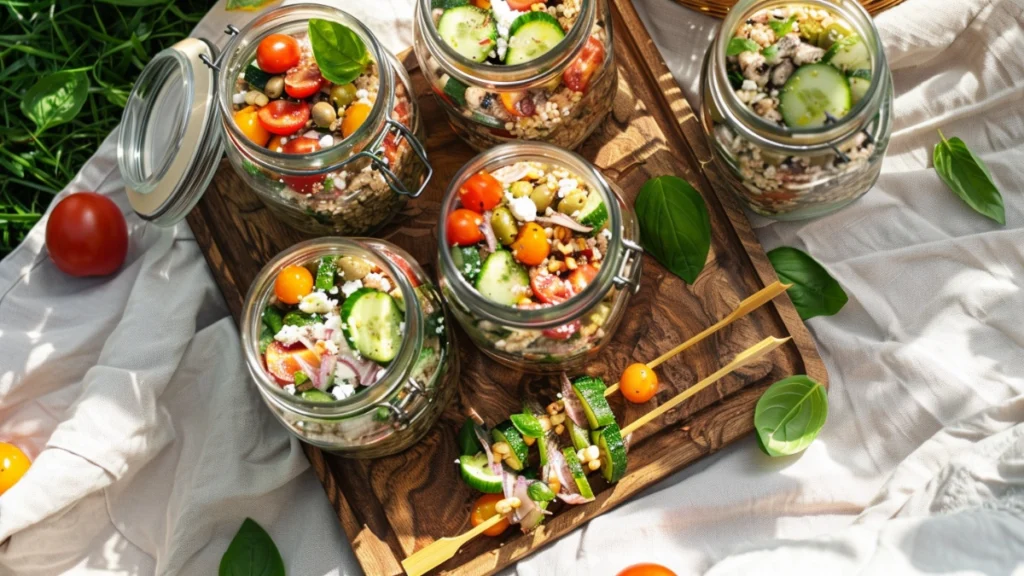
Picnic Food in Jars and Skewers: My Two-Year Journey to Mess-Free Outdoor Eating
The moment I knew I needed to rethink my entire approach to picnic food happened at Laurelhurst Park on a blistering July afternoon. I’d spent three hours preparing a beautiful Mediterranean spread, complete with a grain salad that looked magazine-worthy in my kitchen. By the time we’d hiked to our favorite shaded spot and spread out our blanket, that same salad had transformed into a soggy, olive oil-soaked mess that nobody wanted to touch. My daughter Emma, who was eight at the time, poked at it with her fork and said, “Mom, it looks like swamp food.” She wasn’t wrong.
That evening, while scraping the remnants into the compost bin, I started thinking about all the picnic disasters I’d accumulated over my years of outdoor eating. The sandwiches that turned to mush. The fruit salads that became fruit soup. The appetizers that required three hands to serve while also swatting away bees. There had to be a better way.
And then I remembered something from my catering days, back when I worked events where everything needed to be individual, portable, and presentable for hours. Jars and skewers. Not the Pinterest-perfect versions you see online, but practical, tested, actually-works-in-the-real-world versions. That realization sparked what became a two-year obsession with perfecting jar and skewer recipes specifically for outdoor conditions. I’ve tested over forty different combinations, dragged my family to countless parks and beaches, and documented everything in my picnic notebook with the kind of detail that makes Marcus roll his eyes every time I pull out my instant-read thermometer.
What I’ve learned has genuinely changed how our family does picnics. And I’m not exaggerating when I say that our outdoor meals have gone from stressful to actually enjoyable. Even Liam, my seven-year-old who refuses to eat anything that looks “mixed together,” will happily grab a skewer or dig into his own personal jar of food. There’s something about individual portions that appeals to kids in a way that communal dishes just don’t.
So let me share what I’ve figured out, including the failures, the surprises, and the recipes that have earned permanent spots in my rotation. If you’ve ever watched a carefully prepared picnic meal turn into an unappetizing disaster, this one’s for you.
Table Of Contents
- Why Jars and Skewers Actually Work (The Science and the Reality)
- My Testing Setup and What I Track
- Jar Recipes That Have Earned Their Spot
- Skewer Recipes That Actually Work Outdoors
- Transport Strategies I've Learned
- What Didn't Work (Because Honesty Matters)
- The Family Verdict
- Where We Go From Here
- Frequently Asked Questions
- How far in advance can I make jar salads, and will they actually stay fresh?
- What's the best way to eat from a jar without making a mess?
- Can I use plastic containers instead of glass jars?
- How do I keep skewer ingredients from spinning when threaded?
- What if I'm vegetarian or need to accommodate dietary restrictions?
- Do I really need to track temperatures, or is that overkill? I
Why Jars and Skewers Actually Work (The Science and the Reality)
Before I get into specific recipes, I want to explain why these two formats solve so many picnic problems. I spent months testing side-by-side comparisons, and the results were pretty clear.
Jars work because they create controlled environments. When you layer ingredients properly in a jar, the denser, moisture-resistant ingredients protect the delicate ones. Dressing stays at the bottom. Crunchy toppings stay at the top. Nothing touches what it shouldn’t until you’re ready to eat. I tested the same Greek salad recipe in a regular Tupperware container versus a properly layered mason jar, transported both in my Coleman soft-sided cooler for four hours during a trip to Sauvie Island Beach. The container version had wilted spinach and soggy croutons. The jar version looked almost identical to when I’d packed it that morning.
But here’s what surprised me: jar size matters more than I expected. I started with pint-sized mason jars because that’s what everyone recommends, but they’re actually too small for a satisfying meal portion and too large for a side dish. After testing about a dozen different sizes, I landed on wide-mouth 24-ounce jars for main dish salads and 8-ounce jars for sides, dips, and kid portions. The wide mouth is non-negotiable. I tried regular-mouth jars exactly once and spent twenty minutes trying to fish out ingredients with a fork while Emma laughed at me.
Skewers solve a different set of problems. They eliminate the need for plates and most utensils. They provide built-in portion control. And they keep ingredients that shouldn’t touch each other separated by design. I’ve watched Liam eat vegetables on a skewer that he would absolutely refuse if they were mixed into a salad. Something about the format just works for picky eaters.
The biggest lesson I learned about skewers is that not all skewers are created equal. I tested wooden skewers, metal skewers, and bamboo skewers across probably fifteen different recipes. Wooden and bamboo need to be soaked for at least thirty minutes before using them for anything that might be grilled, but here’s the thing: for cold picnic skewers, soaking actually makes them worse. The moisture transfers to the food over time. For cold preparations, dry bamboo skewers work best because they don’t conduct cold the way metal does and they don’t splinter like cheap wooden ones. I buy the 8-inch flat bamboo skewers from the Asian grocery store near my house. They’re about four dollars for a pack of 100, and they’ve held up better than the fancy ones I ordered online.
My Testing Setup and What I Track
I know I’m a bit obsessive about this, but I’ve found that tracking actual data helps me give better advice than vague impressions. For every jar and skewer recipe I develop, I prepare at least three batches under different conditions.
My standard test protocol looks like this: I make the recipe on a Thursday evening, pack it into my test containers, and store it in the refrigerator overnight. Friday morning, I transfer everything to my cooler with my standard ice pack setup, which is two frozen gel packs on the bottom, food in the middle, and one gel pack on top. Then I drive around Portland for thirty to forty minutes, which simulates the bumpy ride most people experience getting to their picnic spot. I check temperatures when I leave, after the drive, and then every hour for up to six hours. I take photos at each checkpoint and make notes about texture, appearance, and taste.
It sounds like a lot, but after doing this dozens of times, I can now predict pretty accurately how a recipe will hold up based on its ingredient composition. And I’ve learned which recipes absolutely need to be eaten within two hours versus which ones genuinely improve with time.
For temperature tracking, I use my instant-read thermometer obsessively. The danger zone for food safety is between 40°F and 140°F, and I won’t recommend any recipe that can’t stay below 40°F in a properly packed cooler for at least three hours. Most of my tested recipes maintain safe temperatures for four to six hours, which covers the majority of picnic scenarios.
Jar Recipes That Have Earned Their Spot
Let me walk you through the jar recipes that have survived my testing gauntlet and earned permanent places in our rotation. These aren’t theoretical recipes I adapted from somewhere else. They’re the result of actual trial and error, and I’ll include the failures I encountered along the way.
The Mediterranean Farro Jar
This is probably my most-requested recipe, and it took me eight tries to get it right. The original version used quinoa because everyone online said quinoa was perfect for jar salads. They were wrong. Quinoa gets mushy after about three hours in contact with any acidic dressing, and it develops a weird squeaky texture when cold. I tested quinoa side by side with farro, wheat berries, and Israeli couscous. Farro won by a landslide. It keeps its chewy texture for up to 24 hours, and it actually tastes better after absorbing some dressing overnight.
Here’s how I build this jar, starting from the bottom. First goes the dressing, about three tablespoons of a mixture that’s half olive oil, a quarter fresh lemon juice, and a quarter red wine vinegar, plus minced garlic, dried oregano, salt, and pepper. I make this in a large batch and keep it in a squeeze bottle in my refrigerator. Next comes a layer of sturdy vegetables that can handle sitting in dressing, which for this recipe means diced cucumber, and yes, I specifically use Persian cucumbers because they have fewer seeds and stay crunchy longer than English cucumbers. I learned this after a side-by-side test where the English cucumber version turned watery after four hours. On top of the cucumber goes halved cherry tomatoes, then kalamata olives, then diced red onion. The farro goes next, about one cup per jar, followed by crumbled feta cheese. I pack the feta separately in a small container and add it on-site because in hot weather, feta clumps together in the jar and becomes difficult to distribute when you shake it. Topping everything is a handful of fresh mint leaves.
The assembly order matters. I made the mistake once of putting the farro directly on top of the dressing, thinking the grains would absorb it nicely. They absorbed it too nicely, turning soggy within two hours. The vegetable layer acts as a barrier, slowing down that absorption until you’re ready to shake and eat.
This recipe feeds our family of four with a jar each, and I can make all four jars in about 25 minutes once I have the farro cooked. I usually cook a big batch of farro on Sunday and portion it out for the week.
The Thai Peanut Noodle Jar
This one took the longest to perfect because noodles in jars present unique challenges. Most noodle salads turn into a solid clump after refrigeration, and no amount of shaking breaks them apart. I tried rice noodles, soba noodles, regular spaghetti, and rice vermicelli. The solution turned out to be soba noodles tossed with a tablespoon of sesame oil immediately after cooking and cooling. The oil coats each noodle individually and prevents clumping for up to 24 hours.
The dressing for this one is a bit of work, but it’s worth it. I blend together creamy peanut butter (not natural, the kind with added oil works better here), soy sauce, rice vinegar, honey, sesame oil, fresh ginger, and a splash of hot water to thin it out. The dressing goes in the bottom of the jar, about a quarter cup per jar. Then comes shredded purple cabbage, which adds crunch and color and holds up remarkably well. Next is julienned carrots, then sliced red bell pepper, then the soba noodles. I top with chopped roasted peanuts and fresh cilantro.
The key discovery here was temperature. This salad tastes significantly better at cool room temperature than it does straight from the cooler. The peanut dressing gets thick and sticky when cold, making it hard to coat the noodles when you shake. I now take these jars out of the cooler about twenty minutes before serving and let them warm slightly. At our last Forest Park hike picnic, I set the jars on a sunny patch of the blanket while we settled in, and by the time we were ready to eat, the dressing had loosened perfectly.
One warning about this recipe: if anyone in your group has a peanut allergy, obviously skip this one. I’ve tried making it with sunflower seed butter, and while it’s okay, the flavor profile is different enough that I consider it a separate recipe.
The Breakfast Jar (Yes, for Picnics)
I developed this one for our 8am hikes at Forest Park, where we wanted something more substantial than granola bars but couldn’t deal with a full hot breakfast. It’s basically a deconstructed breakfast scramble in jar form.
The base layer is a Greek yogurt mixture, about half a cup of full-fat Greek yogurt mixed with a drizzle of honey and a pinch of salt. On top of that goes a layer of granola. Now, granola in jars is tricky because it absorbs moisture quickly. I tested this with five different granola brands, and the only ones that stayed crunchy for more than two hours were the ones with larger clusters and a visible coating of oil or honey. The cheap store brand granola turned to mush within ninety minutes. I now use a specific granola from Trader Joe’s that has big clusters and stays crunchy for up to four hours in the jar.
Above the granola goes fresh berries. Blueberries work best because they don’t release much juice. Strawberries and raspberries release liquid and make the granola soggy faster, so if I include them, I put them in a separate small container and add them on-site.
The final layer depends on the day. Sometimes it’s sliced banana, which I toss with a bit of lemon juice to prevent browning. Sometimes it’s a spoonful of nut butter. For the kids, I often add a few chocolate chips because apparently breakfast without chocolate is torture.
These jars travel beautifully for up to six hours and make Emma and Liam actually excited about eating something other than packaged snacks during our hikes.
The Layered Taco Jar
This was Marcus’s request, and I’ll admit I was skeptical at first. How do you translate tacos to jar format? But after some experimentation, I figured out a version that actually works and has become one of our summer staples.
The layering order is critical here. Salsa goes on the bottom, about three tablespoons of a chunky salsa that won’t make everything too wet. On top of that goes seasoned black beans, which I make from canned beans sautéed with cumin, chili powder, garlic powder, and a bit of lime juice. Next comes corn kernels, either fresh off the cob in summer or frozen and thawed during other seasons. Then diced avocado, and this is the tricky part. Avocado browns quickly once cut, so I toss it generously with lime juice and place it in the middle of the jar where it’s protected from air by the layers above and below. I’ve tested this extensively, and avocado prepared this way stays green for about four hours, which is usually long enough.
Above the avocado goes shredded cheese, then shredded lettuce (romaine only, because butter lettuce wilts too quickly), and finally crushed tortilla chips on top. I pack extra chips in a separate bag because even with the careful layering, some chip sogginess is inevitable after a few hours.
The secret weapon for this recipe is sour cream, or rather, Greek yogurt mixed with lime juice and a bit of salt. Regular sour cream separates weirdly in the jar, but Greek yogurt stays smooth and creamy. I dollop this on top just before eating.
Liam will actually eat this one, which is remarkable because he claims to hate beans. I think the chip-to-everything-else ratio appeals to his crunchy-food preferences.
The Italian Antipasto Jar
This is my go-to for adult picnics or when we’re meeting friends at a park. It’s less of a salad and more of a composed appetizer that you eat with a fork straight from the jar.
I start with a layer of olive oil infused with Italian herbs, about two tablespoons. Then comes marinated artichoke hearts, quartered. Next is roasted red peppers, sliced into strips. Then a layer of hard salami cut into thin strips, not full circles, so they’re easier to stab with a fork. Above that goes fresh mozzarella balls (ciliegine), which I drain thoroughly and pat dry before adding. Cherry tomatoes come next, halved, followed by pepperoncini peppers for a bit of heat. I finish with fresh basil leaves and a sprinkle of dried oregano.
The key to this one is using high-quality jarred ingredients. Cheap marinated artichokes taste like vinegar and nothing else. I spend a bit more on the DeLallo or Cento brand and the difference is noticeable.
This jar holds up incredibly well because most ingredients are already preserved in some way. I’ve made these the night before and eaten them the next day at 6pm without any quality decline. They’re also pretty to look at through the glass, which has earned me more than a few compliments at group picnics.
Skewer Recipes That Actually Work Outdoors
Now let me get into skewers, which present their own set of challenges and rewards. The biggest lesson I’ve learned about picnic skewers is that they need to be assembled with transport in mind. What looks beautiful on a platter in your kitchen might slide off into a jumbled mess by the time you reach the park.
The Greek Salad Skewer
This was my gateway into skewer recipes, born from the realization that Greek salad ingredients are individually sturdy but fall apart when mixed together. On a skewer, each component stays intact until you eat it.
My standard assembly order is: cherry tomato, cucumber chunk (cut thick, about one inch), folded piece of feta cheese, kalamata olive, red onion slice, and another cherry tomato. I thread them snugly but not too tight, because smashed tomatoes are not appetizing.
The feta folding technique took me a while to figure out. If you just cube feta and thread it, it crumbles and falls off. Instead, I cut thin slices, about a quarter inch thick, and fold them in half before threading. This creates a more secure hold and gives you a bigger feta bite.
For dressing, I make a simple oregano-lemon vinaigrette and pack it in a small jar. People can dip their skewers or drizzle the dressing over them on their plates. Trying to dress skewers ahead of time makes them slippery and the vegetables start to release moisture.
I make these on 8-inch skewers and can fit about six complete “salads” worth of ingredients on twelve skewers. They pack beautifully in a rectangular container lined with damp paper towels, which keeps everything hydrated without making it soggy.
The Caprese Skewer (Perfected After Many Failures)
Caprese seems like it should be the easiest skewer recipe, but I actually struggled with this one more than expected. The problem is fresh mozzarella. It’s soft, it tears easily, and it releases whey when it sits, which makes everything slippery.
My solution after testing five different approaches: use pearl mozzarella, not the larger balls. Pearl mozzarella is firmer, doesn’t tear when threaded, and fits better between the tomato and basil. I thread cherry tomato, pearl mozzarella, fresh basil leaf folded in half, and repeat twice more for a good-sized skewer.
The basil folding is important. A flat basil leaf will wilt and turn black within a couple hours. Folded, the protected inner surfaces stay green longer. I tested this at Sauvie Island during an 84-degree day, and folded basil leaves stayed presentable for almost four hours while flat leaves looked sad after two.
For serving, I make a balsamic reduction by simmering balsamic vinegar until it thickens, then I drizzle it over the skewers just before eating. Do not apply the reduction ahead of time. It runs everywhere and makes the basil turn brown faster.
The Melon Prosciutto Skewer
This is my fancy picnic skewer, the one I bring when I want to impress people without spending all day cooking. It’s also idiot-proof to assemble, which is great when I’m rushing.
I use cantaloupe, cut into one-inch cubes, and wrap each cube loosely with a thin slice of prosciutto before threading. Between each wrapped melon cube, I add a fresh mint leaf. That’s it. Three ingredients, absurdly good.
The prosciutto wrapper stays in place surprisingly well as long as you don’t wrap too tightly. I made that mistake early on, wrapping each cube like a little present, and the prosciutto just tore and fell off. A loose wrap with the ends tucked under the skewer threading works best.
These need to stay cold, so I pack them in a container that goes directly on the ice packs, not in the middle of the cooler. Warm prosciutto is unpleasant.
A drizzle of honey just before serving takes this from good to memorable. I bring honey in a small squeeze bottle and pass it around.
The Rainbow Vegetable Skewer
I developed this one specifically for Liam, who will only eat vegetables if they’re crunchy, colorful, and separated from each other. It sounds ridiculous, but the kid will eat an entire pepper if it’s on a skewer while refusing the same pepper cut up on his plate.
My standard rainbow order is: red cherry tomato, orange bell pepper chunk, yellow bell pepper chunk, small broccoli floret, purple grape. You could argue that a grape isn’t a vegetable, but it adds sweetness and makes the skewer more appealing to reluctant veggie eaters.
The broccoli requires blanching, about ninety seconds in boiling water followed by an ice bath. Raw broccoli is too tough to thread easily, and fully cooked broccoli falls apart. Blanched broccoli threads smoothly and stays bright green for hours.
For dipping, I pack ranch dressing in small individual containers. I’ve tried making homemade ranch, but honestly, Liam prefers the bottled stuff, and I’ve learned to pick my battles.
The Fruit Skewer That Actually Holds Up
Fruit skewers sound simple, but most fruits release juice and become slippery messes within an hour or two. I’ve tested probably twenty different fruit combinations, and I’ve identified the ones that work best for picnic transport.
Winners: strawberries (stem end down on the skewer), grapes (red and green both work), pineapple chunks, honeydew cubes, and cantaloupe cubes. These fruits are firm enough to stay on the skewer and don’t release much juice at cool temperatures.
Losers: watermelon (too much juice), banana (browns too quickly even with lemon juice), kiwi (gets slimy), raspberries (fall apart), and oranges (too slippery).
My standard fruit skewer alternates colors: green grape, strawberry, pineapple, honeydew, red grape, repeat. I pack them in a single layer on a rimmed baking sheet lined with paper towels, then cover with plastic wrap. They transport well for up to four hours if they stay cold.
For a fun addition, I sometimes pack a small container of chocolate dipping sauce or vanilla yogurt for dunking. Emma goes through a concerning amount of chocolate sauce when given the option.
The Meat and Cheese Skewer (The Snacky One)
This is less of a composed dish and more of a portable snacking situation. I thread cubes of hard cheese, usually aged cheddar or Gruyère, alternating with folded slices of hard salami, chunks of summer sausage, and cornichon pickles. Sometimes I add olives, sometimes grape tomatoes, depending on what I have.
The key insight here is that soft cheeses and soft meats don’t work. I tried this with fresh mozzarella and it fell apart. I tried it with deli turkey and it slid right off. Hard, aged, cured. Those are the magic words for skewers that survive a car ride.
These are crowd pleasers at every group picnic we attend. People can grab one and snack without needing a plate, and the portion control keeps everyone from filling up too fast on appetizers.
Transport Strategies I’ve Learned
Getting jar and skewer foods from kitchen to picnic spot without disaster requires some specific strategies. Here’s what I’ve figured out through trial and error.
For jars, I transport them upright, always. I know lying them down uses cooler space more efficiently, but I’ve had too many incidents of leaking dressings and displaced layers. I use a small cardboard box or a fabric bag that keeps the jars upright in the cooler. The Sistema containers with locking lids that I use for other foods are great, but for jar transport, I find that keeping them in a dedicated spot where they can’t tip makes the biggest difference.
Jar temperature matters more than I initially realized. Too cold and the dressings thicken. Too warm and food safety becomes a concern. I aim to pack the jars in the middle zone of my cooler, surrounded by other cold items but not directly touching ice packs. This keeps them at about 38-42°F, cold enough to be safe but not so cold that olive oil solidifies.
For skewers, I use flat containers lined with damp paper towels on the bottom and dry paper towels on top. The moisture from the bottom keeps vegetables from drying out while the dry top layer absorbs any excess moisture that releases during transport. I learned this after a Forest Park hike where my skewers arrived swimming in tomato juice.
I also pack skewers with the sharp ends all facing the same direction and the blunt ends against the container wall. This prevents the sharp ends from poking through the container or into other foods.
One thing I wish someone had told me earlier: don’t stack skewers. Even in a container with partitions, stacking leads to the top skewers pressing down on the bottom ones, which crushes delicate ingredients. I lay them in a single layer, even if it means using more containers.
What Didn’t Work (Because Honesty Matters)
I’ve had plenty of failures over the past two years, and I think sharing them is just as valuable as sharing successes.
The overnight marinated skewer experiment was a disaster. I thought that threading ingredients and letting them marinate overnight would infuse more flavor. Instead, the acid in the marinade broke down the vegetables, turning them into mush. Tomatoes collapsed. Cucumbers became translucent and slimy. The only things that survived were the olives and the cheese. Now I assemble skewers the morning of the picnic at the earliest.
Pasta salad in jars never worked the way I wanted. Even with the best techniques, pasta absorbs too much dressing over time and becomes stodgy. The Thai peanut noodle jar works because the sesame oil coating the noodles acts as a barrier, but traditional pasta with Italian dressing just turns into a solid clump. I’ve mostly given up on pasta jars and stick with grain-based recipes instead.
Leafy green skewers seemed like a good idea until I tried them. I threaded butter lettuce leaves between other ingredients, thinking they’d add freshness. Within an hour, the leaves had wilted into sad little strips. Even romaine, which is sturdier, got brown edges where the skewer pierced through. Fresh herbs like basil and mint work when folded, but larger leaves just don’t hold up.
I also learned that some jar recipes that work beautifully at home fail outdoors. A quinoa salad with roasted vegetables tasted great eaten at my kitchen table but was actively unpleasant after four hours in a cooler at Mount Tabor Park. The roasted vegetables released liquid, the quinoa absorbed it and turned mushy, and the whole thing became a gray-brown blob. Some recipes just aren’t meant for transport.
The Family Verdict
After two years of testing, our family has definitely developed favorites. Emma loves the Thai peanut noodle jars and asks for them specifically for school field trips. Liam will eat almost anything on a skewer, which has been life-changing for getting vegetables into him. Marcus appreciates that jar meals are portion-controlled because, as he puts it, “I can’t accidentally eat three servings when it’s in my own jar.”
The dog, Biscuit, has opinions too, mostly that unattended skewers are fair game. We’ve lost exactly three caprese skewers to her stealth attacks, and I’ve learned to never leave food at dog-snout level.
For me, the biggest change is how much more relaxed our picnics have become. I used to stress about keeping foods separate, remembering serving utensils, dealing with communal dishes that got warm too fast or soggy too quickly. Now I pack the jars and skewers, throw in some napkins, and know that everything will be ready to eat whenever we’re hungry. It’s freed up mental energy to actually enjoy the time outdoors instead of managing food logistics.
Where We Go From Here
After two years of testing, I’ve accumulated enough jar and skewer recipes to fill a small cookbook, and I’m still finding new combinations that work. This past summer, I experimented with Asian-inspired flavors in jar format, including a sesame ginger soba jar and a Vietnamese-style banh mi skewer that both showed promise. I’ve started testing breakfast skewers with fruit, cheese, and breakfast meat for early morning hikes. And I’m working on a dessert jar that layers brownie crumbs, whipped cream, and berries, though keeping whipped cream stable in a cooler has proven challenging.
What I love most about this approach to picnic food is how it transforms outdoor eating from a logistics problem into an actual pleasure. When the food is self-contained, portable, and designed to survive real-world conditions, you can focus on the parts of picnicking that actually matter: the sunshine, the fresh air, the kids running around, the chance to eat outside instead of at your kitchen table again.
Our Saturday picnic ritual has become my favorite part of the week. Biscuit gets excited the moment she sees the cooler come out of the closet. Emma has started developing her own jar combinations, which are creative if not always successful (her peanut butter and pickle jar did not earn a repeat). Even Marcus, who used to view picnics as more trouble than they were worth, now suggests locations and helps pack the car.
If you’re just starting with jars and skewers, my advice is to begin with one recipe that sounds appealing and make it three times before moving on to something new. Pay attention to what works and what doesn’t in your specific conditions, with your specific equipment, for your specific family. My discoveries came from repeated testing, and yours will too.
And if something fails, which it will, that’s just information for next time. I’ve scraped more disappointing food into the compost than I care to admit, but each failure taught me something. The soggy grain salad at Laurelhurst Park that started this whole obsession? I’m grateful for it now. It led me to two years of experimentation that transformed how my family eats outdoors.
So grab some jars, grab some skewers, and head to your nearest park. The worst that can happen is a learning experience. And the best? A mess-free, delicious meal with the people you love, eaten in the fresh air, without a soggy sandwich in sight.
Frequently Asked Questions
How far in advance can I make jar salads, and will they actually stay fresh?
I’ve pushed the limits on this extensively because meal prep is a big part of how our family operates. Most of my jar recipes stay fresh for three to four days when properly stored in the refrigerator. The Mediterranean farro jar actually tastes better on day two once the farro has absorbed some dressing. The Thai peanut noodle jar holds up for about two days before the noodles start to soften noticeably. The taco jar should be made the same day because avocado, even treated with lime juice, starts to brown after about 18 hours. My general rule is that grain and bean-based jars can be made up to three days ahead, but anything with fresh greens or avocado needs to be made the morning of your picnic.
What’s the best way to eat from a jar without making a mess?
This is a question I get constantly, and the answer is counterintuitive. Don’t shake the jar while sitting down. Stand up or kneel, hold the jar firmly with both hands, and turn it upside down several times to distribute the dressing. Then either eat directly from the jar with a long fork or dump the contents onto a plate and eat from there. I prefer the dump method because the layering presents beautifully when inverted onto a plate. For kids, I’ve found that dumping onto a plate works much better because they can see all the components and choose what to eat first. Liam has very specific eating orders.
Can I use plastic containers instead of glass jars?
You can, but I don’t recommend it for several reasons. First, plastic stains easily, especially with tomato-based ingredients, and cloudy containers are less appealing to eat from. Second, plastic doesn’t keep food as cold as glass, so your contents warm up faster. Third, and this is more personal preference, the layered presentation is part of what makes jar salads appealing, and you lose that visual impact with opaque plastic. If weight is a concern for hiking, there are lightweight glass jars designed for camping, or you can use high-quality clear plastic containers like Weck’s cellulose options. I still prefer glass for the temperature stability alone.
How do I keep skewer ingredients from spinning when threaded?
This frustrated me for months until I figured out the solution. Use flat bamboo skewers instead of round ones. The flat surface prevents ingredients from rotating around the skewer. For ingredients that still want to spin, like olives or grapes, thread them through the wider middle part of the item rather than piercing straight through. You can also double-skewer larger items by using two parallel skewers about half an inch apart, which locks everything in place. I use the double-skewer technique for caprese skewers because the mozzarella balls tend to rotate otherwise.
What if I’m vegetarian or need to accommodate dietary restrictions?
Almost all of my jar recipes can be modified easily. The Mediterranean farro jar is naturally vegetarian. The Italian antipasto jar works without the salami if you add extra vegetables or marinated mushrooms. For vegan modifications, I’ve tested the Thai peanut noodle jar with coconut aminos instead of soy sauce and it works well, though the flavor is slightly different. For gluten-free, substitute the farro with quinoa (just reduce the sitting time to under three hours) or use buckwheat soba noodles in the Thai jar. For the skewers, the Greek salad, caprese, and fruit skewers are naturally vegetarian. The meat and cheese skewer obviously needs substitutions, but I’ve made a successful version with firm tofu cubes marinated in tamari and cubed smoked Gouda.
Do I really need to track temperatures, or is that overkill? I
get pushback on this from people who think I’m being paranoid, but here’s my honest answer: you don’t need to track temperatures for every picnic, but you should understand the principles. Food in the danger zone between 40°F and 140°F for more than two hours becomes risky, and that clock starts ticking the moment food leaves refrigeration. If you’re doing a short one to two hour picnic with a well-packed cooler, you’re probably fine without obsessive monitoring. But if you’re doing an all-day outing or eating in hot weather, knowing your cooler’s performance matters. I tracked temperatures obsessively for my first year of testing so that now I know what to expect from my equipment without checking constantly. If you’re using an unfamiliar cooler or dealing with extreme heat, I’d recommend at least spot-checking temperatures to make sure your setup is working.