
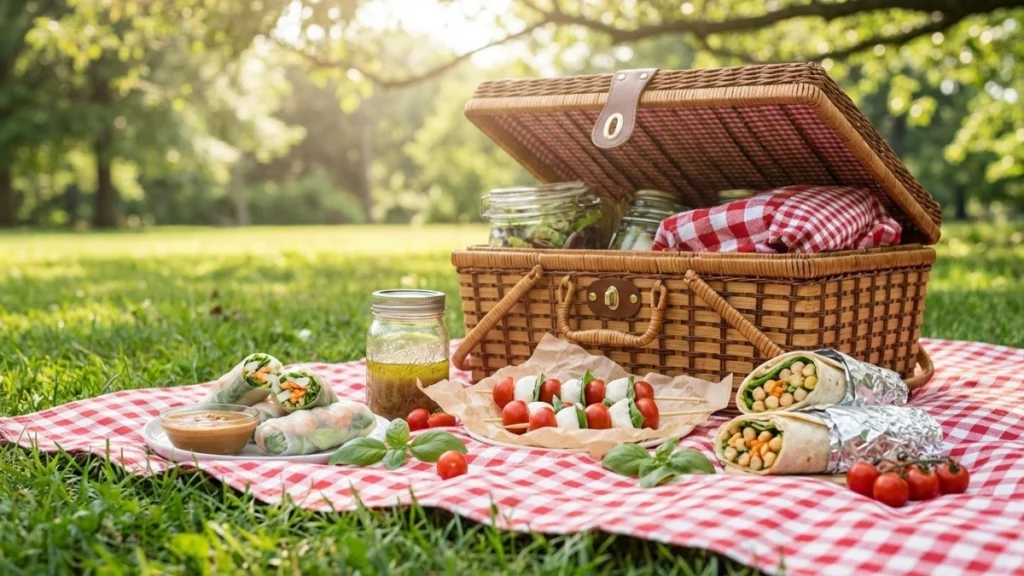
Easy No-Bake Picnic Recipes: How I Learned to Stop Stressing and Love the Cooler
The Day I Realized I Was Overcomplicating Everything
I remember standing in my kitchen at 6:47 AM on a Saturday morning, sweat already beading on my forehead as I frantically tried to finish a three-layer Mediterranean dip that absolutely required a broiler to crisp the phyllo topping. My husband Marcus wandered in, coffee mug in hand, and just stared at me. “We’re going to Laurelhurst Park,” he said slowly. “Not catering a wedding.”
He wasn’t wrong. But there I was, determined to make something impressive, something that would make the other parents at Emma’s soccer team gathering look twice. What I ended up with was a beautiful dip that took 90 minutes to prepare, required me to turn on the oven in July, and then promptly separated into an oily mess within two hours of sitting in my cooler. The phyllo turned into sad, soggy cardboard. Liam poked at it once, announced it “looked weird,” and went back to his juice box.
That was three summers ago, and it fundamentally changed how I approach picnic food. I’d spent years believing that good picnic food meant cooking something elaborate at home and then transporting it carefully. But the truth I’ve learned after testing dozens and dozens of recipes in Portland parks, on Oregon beaches, and during countless family outings is this: the best picnic food often requires no cooking at all.
I’m not talking about throwing together a sad sandwich and calling it a day. I’m talking about genuinely delicious, crowd-pleasing food that comes together through smart assembly, quality ingredients, and understanding what actually works when you’re eating outdoors. No-bake picnic recipes aren’t a compromise. When done right, they’re often better than their cooked counterparts because they’re designed for exactly the conditions you’ll be serving them in.
Over the past two summers, I’ve developed, tested, and refined a collection of no-bake recipes specifically for outdoor eating. I’ve served these at family picnics, potlucks, beach days, and hiking trips. I’ve watched my notoriously picky seven-year-old, Liam, actually request seconds. I’ve had other parents stop me to ask what I brought. And I’ve done it all without turning on my oven or standing over a hot stove.
Here’s what I’ve learned about making no-bake picnic food that people actually want to eat.
Table Of Contents
- Understanding Why No-Bake Works Better for Picnics
- The No-Bake Recipes That Have Become My Picnic Standards
- The Philosophy of No-Bake Picnic Prep
- What I've Learned About Make-Ahead Timelines
- Transport and Serving: The Details Nobody Talks About
- Dealing with Dietary Restrictions
- The Honest Failures I've Had Along the Way
- Building Your Own No-Bake Picnic Repertoire
- A Final Thought on Picnic Expectations
- Frequently Asked Questions
- How long can no-bake picnic food safely sit out before it needs to be eaten or refrigerated?
- What are the best no-bake picnic foods for hot weather above 85 degrees?
- Can I make no-bake picnic recipes the night before, or do they need to be prepared the same day?
- What containers work best for transporting no-bake picnic food without spills or squishing?
- How do I keep no-bake picnic food fresh and prevent it from getting soggy during transport?
- Are no-bake picnic recipes suitable for kids and picky eaters?
- Learn About More Experiences
Understanding Why No-Bake Works Better for Picnics
Before I share the recipes themselves, I need to explain something I figured out the hard way. Cooked food, especially proteins, goes through temperature changes that affect both safety and quality. You cook it, it’s hot. Then you cool it down for transport. Then it sits in your cooler. Then you serve it at whatever ambient temperature your picnic happens to be. That’s a lot of transitions, and every single one is an opportunity for texture degradation, bacterial growth, or just plain sogginess.
No-bake recipes sidestep most of these issues. You’re working with ingredients that are either stable at room temperature, designed to be served cold, or assembled in ways that account for sitting time. There’s less temperature stress on the food, which means less opportunity for things to go wrong.
I started tracking this obsessively after that Mediterranean dip disaster. I made two versions of a chickpea salad: one with roasted chickpeas (oven required) and one with simply drained and seasoned canned chickpeas (no cooking). Both sat in my Coleman soft-sided cooler for four hours during a family outing to Forest Park. The roasted chickpeas had lost all their crunch and turned mealy. The no-bake version maintained its texture perfectly. Same flavor profile, vastly different results.
This doesn’t mean cooking is bad. It means that when you’re specifically designing food for outdoor eating and transport, sometimes the simplest approach yields the best results.
The No-Bake Recipes That Have Become My Picnic Standards
Mediterranean Smash Chickpea Wraps
I call these smash wraps because you literally smash the chickpeas, and also because my kids think saying “smash” makes everything more appealing. They’re not wrong. These wraps have become my most requested picnic food, and they require exactly zero cooking.
The base is ridiculously simple. You take two cans of chickpeas, drain and rinse them thoroughly (this matters more than you’d think, so spend a good 30 seconds rinsing), and then smash them in a bowl with a fork. You’re not making hummus here. You want texture, with some chickpeas broken down and others still mostly whole. I tested smooth versus chunky versions, and the chunky smash held up dramatically better after three hours in a cooler. The smooth version got watery as it sat.
To the smashed chickpeas, I add about a third cup of good olive oil, the juice of one lemon (plus the zest, which I initially skipped and then realized made a huge difference), a teaspoon of cumin, half a teaspoon of salt, and a big handful of fresh dill. I also throw in about a quarter cup of finely diced red onion and a diced Persian cucumber. The cucumber is non-negotiable for me. I tested this with English cucumber three times, and it released too much water after sitting. Persian cucumbers stay crunchy for hours.
For the wraps themselves, I use large flour tortillas. I’ve tried spinach wraps, sun-dried tomato wraps, and whole wheat options. Regular flour tortillas work best because they’re the most pliable and least likely to crack when you roll them tightly. I spread the chickpea mixture down the center, add crumbled feta (packed separately until assembly, which I learned after the feta-clumping incident of 2023), some halved cherry tomatoes, and a few leaves of fresh mint if I have it.
Here’s the transport trick that took me four attempts to perfect: I roll the wraps tightly, then wrap each one individually in aluminum foil. Not plastic wrap. Foil. The foil keeps everything compressed and prevents the wraps from unrolling. It also makes them easy to eat because you can peel back the foil as you go. I pack them in my cooler with ice packs on the bottom and top, and they stay perfect for at least five hours. I’ve pushed it to six, and they were still completely fine.
The whole process takes about 18 minutes from opening the chickpea cans to having wrapped, ready-to-go portions. That’s not an estimate from a recipe card. That’s me timing myself while also answering Liam’s questions about whether we could bring Biscuit to the park (yes, but he’d definitely try to steal the food, which he has done twice now with these exact wraps).
The Antipasto Salad That Changed My Potluck Game
I brought this to a neighborhood potluck at Laurelhurst Park last August, and I’m not exaggerating when I say four different people asked me for the recipe before we even sat down to eat. It looks impressive, tastes fantastic, and requires nothing more than chopping and mixing.
The ingredient list is longer than most of my no-bake recipes, but the assembly is dead simple. You need a good hard salami (I buy Molinari from the deli counter at my local grocery, sliced thick and then cut into strips), provolone cheese cubed into bite-sized pieces, marinated artichoke hearts (drained and quartered), pepperoncini peppers (sliced into rings), black olives (I prefer Kalamata but Castelvetrano work too), roasted red peppers from a jar (drained and sliced), and a pint of cherry tomatoes halved.
Everything goes into a large bowl with half a diced red onion, a quarter cup of olive oil, two tablespoons of red wine vinegar, a teaspoon of dried oregano, and salt and pepper to taste. That’s it. Toss it together and let it sit for at least 30 minutes before packing. The sitting time is actually crucial because the flavors need time to marry. I’ve served this immediately after mixing and then again after a two-hour rest, and the difference is remarkable. The rested version has a cohesive flavor where all the components complement each other. The immediate version tastes like a bunch of separate ingredients in a bowl.
This salad genuinely gets better the longer it sits, which makes it ideal for picnics. I’ve tested it at the 4-hour mark, the 6-hour mark, and once even at 8 hours when our picnic got delayed by unexpected rain that drove us back to the car for an hour. At every point, it was delicious. The only component that softens is the onion, which actually becomes more pleasant as it loses some of its sharp bite.
Portion-wise, the recipe I just described feeds about six adults as a substantial side dish. I usually double it for larger gatherings because people always go back for seconds. The cost runs about $19 at Trader Joe’s if you’re strategic about the deli meats and cheeses.
Transport is easy because everything is sturdy. I use a large snap-lid container (my beloved Sistema brand that I’ve been using for three years now), and I don’t worry about a thing. No special precautions needed beyond basic cooler placement.
Fresh Spring Rolls with Peanut Dipping Sauce
I was intimidated by spring rolls for years because I assumed they required some kind of special skill or equipment. Then I actually made them and realized they’re essentially just very pretty wraps. The rice paper wrappers cook in literally no way. You soak them in warm water for about 15 seconds until they’re pliable, and then you roll. That’s the extent of the technique.
My filling is a combination of rice vermicelli noodles (the only “cooking” here is soaking them in hot water for 5 minutes until tender, which I don’t count as actual cooking), shredded carrots, thinly sliced cucumber, fresh herbs like cilantro and mint, and some form of protein. I usually use pre-cooked shrimp from the seafood counter or rotisserie chicken pulled from whatever I have in the fridge. Neither requires me to actually cook anything for this specific recipe.
The rolling process took me about six tries to get right, and I’ll be honest about that. My first batch looked like lumpy cylinders that fell apart when anyone tried to pick them up. The secret, which I wish someone had told me earlier, is to not overfill them and to fold in the sides before you roll. You also need to work quickly because the rice paper gets stickier the longer it sits. I now set up an assembly line: softened rice paper on a damp cutting board, fillings laid out in a row about two inches from the bottom edge, sides folded in, and then a tight roll from the bottom up.
For picnics, I wrap each spring roll individually in damp paper towels, then place them in a container lined with more damp paper towels. This prevents them from drying out, which happens faster than you’d expect. In my cooler, they stay perfect for about three hours. After that, the rice paper starts getting a bit chewy. They’re still edible at the 4-hour mark, but the texture isn’t as nice.
The peanut dipping sauce is where these really shine, and it’s completely no-bake as well. I whisk together half a cup of creamy peanut butter (natural style, the kind you have to stir), three tablespoons of soy sauce, two tablespoons of rice vinegar, one tablespoon of sesame oil, a tablespoon of honey, one minced garlic clove, and enough warm water to thin it to dippable consistency. Usually about three to four tablespoons of water. I pack the sauce in a separate small mason jar (one of the few times I’ll admit mason jars are actually the right tool for the job), and I bring extra on the side because people always want more.
Emma loves making these with me. She’s gotten quite good at the rolling technique, and she thinks the whole process is fun because it’s interactive. Liam still won’t eat them because he claims the rice paper “feels weird,” but I’ve learned to accept that not every recipe will win him over.
The Greek Orzo Salad That Survives Anything
I developed this recipe specifically for hot weather picnics after too many pasta salads turned into gummy, sad messes. Orzo, I discovered, holds up better than most pasta shapes because of its smaller size and density. It absorbs dressing without becoming waterlogged, and it maintains a pleasant texture even after hours in a cooler.
The orzo does require boiling, so technically this isn’t entirely no-bake. But hear me out. You can cook the orzo up to two days in advance, toss it with a splash of olive oil to prevent sticking, and refrigerate it until you’re ready to assemble. The actual picnic-day work requires no cooking whatsoever. For the purposes of picnic prep, I consider this a no-bake recipe because all the morning-of work is just chopping and mixing.
Once your orzo is cooked and cooled (about two cups dry, which yields roughly four cups cooked), you add diced cucumber (Persian, always Persian for the crunch), halved cherry tomatoes, diced red bell pepper, sliced Kalamata olives, crumbled feta cheese, thinly sliced red onion, and a generous amount of fresh dill and parsley. The fresh herbs are essential here. I tested dried herbs as a shortcut once, and the salad tasted flat and uninspired.
The dressing is a simple combination of a quarter cup olive oil, three tablespoons red wine vinegar, one teaspoon Dijon mustard, one minced garlic clove, a teaspoon of dried oregano, and salt and pepper. I whisk it together in a small jar and pour it over the salad, tossing everything to combine.
Here’s what I learned through testing: this salad actually tastes better after 24 hours in the refrigerator. The flavors meld, the orzo absorbs some of the dressing, and everything becomes more cohesive. I’ve served it fresh, at 12 hours, at 24 hours, and at 48 hours. The 24-hour version consistently gets the most compliments. At 48 hours, the cucumbers start softening too much, so that’s my upper limit.
For transport, I add the feta separately and toss it in just before serving. This prevents the crumbling and clumping that happens when feta sits in an acidic dressing for too long. I pack the feta in its own small container and just dump it on top when we arrive at our picnic spot.
This recipe feeds six to eight people as a side dish. I’ve made it for gatherings of up to twenty people by tripling the recipe, and it scales perfectly.
Caprese Skewers with Balsamic Glaze
These are the simplest thing I make for picnics, and they’re always the first to disappear. The concept is almost embarrassingly basic: cherry tomatoes, fresh mozzarella balls, and basil leaves threaded onto wooden skewers with a drizzle of balsamic glaze. But the execution matters, and I’ve refined my approach through probably fifty batches at this point.
For the mozzarella, I use ciliegine (the small balls, about cherry-tomato sized) rather than the larger bocconcini. Size matching matters for even bites. I tested this with different sizes and combinations, and having the tomato and cheese be roughly the same dimension makes the eating experience much better. Nobody wants to bite into a giant cheese ball while the tiny tomato rolls off their skewer.
The threading order is: tomato, basil leaf (folded in half so it’s more compact), mozzarella. I thread two complete sets on each skewer for a total of six components per stick. This gives you a substantial bite without being unwieldy.
The balsamic glaze is store-bought, and I’m not apologizing for that. You can certainly make your own by reducing balsamic vinegar, but that requires the stove and defeats the no-bake purpose. I buy a good quality balsamic glaze (Trader Joe’s version is perfectly adequate) and drizzle it over the assembled skewers just before serving. Drizzling too early causes the basil to wilt faster and makes the skewers slippery.
I pack these in a single layer in a flat container, separated by layers of parchment paper. In my cooler with proper ice pack placement, they stay perfect for four hours. After that, the tomatoes start releasing juice and the basil wilts. So I time my assembly accordingly. If our picnic starts at noon, I’m making these at 10 AM at the earliest.
The most common mistake I see people make with caprese skewers is using old or subpar mozzarella. Fresh mozzarella should be soft and creamy, not rubbery. Check the date on the package and buy the freshest option available. It makes a genuine difference in the final product.
No-Bake Energy Bites for the Kids (and Adults)
Liam, my perpetually picky seven-year-old, presents a constant challenge at picnics. He rejects most vegetables, views unfamiliar foods with deep suspicion, and has an impressive talent for filling up on chips before touching anything I’ve actually prepared. But these energy bites? He asks for them by name.
The base is rolled oats, peanut butter, and honey. To one and a half cups of old-fashioned rolled oats (not quick oats, which make the texture too dense), I add half a cup of peanut butter, a third cup of honey, and a quarter cup of mini chocolate chips. I also throw in a couple tablespoons of ground flaxseed because I figure any fiber I can sneak past him is a win. He has no idea the flaxseed is in there, and I’m never telling him.
You mix everything in a bowl until combined, refrigerate for 30 minutes so the mixture firms up enough to handle, and then roll into balls about the size of a golf ball. The yield is usually about 18 to 20 bites depending on how big you make them. They keep in the refrigerator for up to a week, so I often make a batch on Sunday and we eat them through the following Saturday.
For picnics, these transport beautifully. They’re sturdy enough to pile in a container without sticking together (though I separate layers with parchment paper just to be safe), and they don’t really care about temperature fluctuations. I’ve had them sit in a hot car for an hour when we forgot to bring the cooler inside, and they were completely fine. A bit softer than refrigerated, but totally edible.
The chocolate chips are optional, but let’s be realistic about feeding children. The chocolate chips are not optional if you want them to actually eat these.
Cucumber Cream Cheese Sandwiches
These feel very garden party, very elegant, and they require absolutely no cooking. They’re also one of Marcus’s favorite picnic foods, which means I make them at least once a month during summer.
The concept is simple: cream cheese spread on bread, topped with thin cucumber slices, and seasoned with fresh dill and a squeeze of lemon. The execution requires a few specific choices to get right.
First, the cream cheese needs to be softened to room temperature before spreading. Cold cream cheese tears the bread. I take it out of the refrigerator the night before and leave it on the counter. By morning, it spreads like butter.
Second, the bread matters more than you’d expect. I use a high-quality white sandwich bread, the kind with a soft crumb and thin crust. Whole wheat works too but adds a flavor that competes with the delicate cucumber. I’ve tried brioche (too sweet), sourdough (too chewy), and rye (too aggressive). Classic white bread lets the other flavors shine.
Third, the cucumber slicing needs to be thin. Paper thin, if you can manage it. I use a mandoline set to its thinnest setting. Thick cucumber slices create an unbalanced bite where you’re mostly tasting raw vegetable. Thin slices meld with the cream cheese into something cohesive.
For assembly, I spread cream cheese on both slices of bread, layer cucumber slices in an overlapping pattern on one side, sprinkle fresh dill over the cucumbers, add a tiny squeeze of lemon juice, season with a pinch of salt and pepper, and close the sandwich. I cut off the crusts (this isn’t strictly necessary, but it looks prettier and Emma insists it tastes better, which I don’t argue with) and slice each sandwich into four triangles or rectangles.
These need to be eaten within three hours of assembly, which is the shortest window of any recipe I make. After that, the cucumber releases moisture and the bread gets soggy. I’ve tried various solutions: toasting the bread (changes the texture too much), spreading butter as a moisture barrier (makes it greasy), salting the cucumbers first to draw out water (helps somewhat but adds an extra step). My conclusion is to just accept the time limit and make them last on the morning of the picnic.
The Philosophy of No-Bake Picnic Prep
What I’ve realized after years of testing recipes for outdoor eating is that the best picnic food isn’t about impressing anyone with culinary complexity. It’s about understanding the constraints of the situation and working within them intelligently.
When you take cooking out of the equation, you’re forced to focus on ingredients. The quality of your cherry tomatoes matters more when you’re not roasting them to caramelize their sugars. The freshness of your herbs becomes critical when they’re not being incorporated into a cooked dish. Your olive oil should actually taste good because it’s not being used as a neutral cooking medium.
This shift in focus has made me a more thoughtful shopper. I buy smaller quantities of higher-quality ingredients. I check dates more carefully. I taste things before I add them to recipes. I’ve become almost obsessive about the difference between a good tomato and a mediocre one, because in a no-bake recipe, there’s nowhere for a mediocre tomato to hide.
The other benefit of no-bake recipes is timing flexibility. When you don’t have to wait for things to cook and cool, you can prep in stages that fit your life. The orzo can be cooked two days ahead. The energy bites can be made on Sunday. The caprese skewers can be assembled while your kids eat breakfast. You’re not chained to the stove on the morning of your picnic, frantically trying to finish everything before you need to leave.
I’ve also noticed that no-bake recipes are more forgiving of interruptions. If Liam needs help with something while I’m assembling spring rolls, I can walk away and come back. The rice paper isn’t going to burn. The filling isn’t going to overcook. This might seem like a small thing, but when you’re cooking with kids around (or a golden retriever who has definitely learned to counter-surf), interruptions are constant. No-bake prep accommodates real life in a way that active cooking often doesn’t.
What I’ve Learned About Make-Ahead Timelines
Through all my testing, I’ve developed mental categories for how far ahead different recipes can be made. This probably sounds neurotic, but bear with me. Knowing these timelines has saved me from both last-minute stress and prematurely prepared food that doesn’t hold up.
The orzo salad is my make-ahead champion. It genuinely tastes better after 24 hours, so I now always make it the day before a picnic. Same with the antipasto salad. The marinating time improves both recipes substantially.
The chickpea wraps can be assembled up to 12 hours in advance without any quality loss. I’ve pushed it to 18 hours and they were still fine, just slightly less fresh-tasting. For morning picnics, I sometimes make them the night before and refrigerate overnight.
The spring rolls need to be made the morning of, ideally within three hours of eating. Same with the cucumber cream cheese sandwiches. Both are sensitive to time in ways that the heartier recipes aren’t.
The caprese skewers fall somewhere in the middle. I can assemble them four hours ahead, but the balsamic glaze absolutely must wait until serving time.
The energy bites are infinitely flexible. Make them whenever you want. They’ll be fine.
Transport and Serving: The Details Nobody Talks About
I’ve become almost evangelical about transport containers, and I realize this makes me sound insufferable at parties. But here’s the thing: the right container genuinely makes or breaks your picnic food. I’ve ruined perfectly good recipes with inadequate containers, and I’ve saved mediocre recipes with good ones.
For wet salads like the orzo or antipasto, I use a deep snap-lid container. The Sistema brand, specifically, because the locking mechanism is reliable and I’ve never had a single leak in three years of use. Mason jars look cute in photos but are terrible for salads because you can’t toss them to redistribute dressing.
For the chickpea wraps, aluminum foil wrapped individually and then placed in a rectangular container. The container prevents the foil-wrapped rolls from getting crushed. This sounds obvious but I learned it the hard way after finding flattened wraps at the bottom of my cooler bag.
For the spring rolls, a flat container with damp paper towels lining the bottom and between layers. Height is the enemy here. Stacking them puts pressure on the delicate rice paper wrappers.
For the caprese skewers, a flat container with the skewers laid in a single layer, separated by parchment paper if you’re doing multiple layers. Never pack them standing up (they’ll tip and the components slide off) or loose in a pile (they’ll stick together).
And for everything that needs cold temperatures, ice packs go on the bottom AND top of the cooler. I use four packs for a full cooler: two on bottom, two on top. The stuff in the middle stays coldest, so that’s where I put the most temperature-sensitive items.
I also bring serving utensils from home. Too many times I’ve arrived at a picnic and realized I had no way to serve a salad or sauce. A big spoon, a small spoon, and some paper towels now live permanently in my picnic bag.
Dealing with Dietary Restrictions
One thing I’ve learned from years of potluck picnics is that someone always has a dietary restriction. Gluten-free, dairy-free, nut-free, vegetarian, vegan. When you’re making no-bake recipes, accommodating these restrictions is often easier than with cooked food because substitutions are more straightforward.
The chickpea wraps become gluten-free with a swap to rice tortillas or large lettuce leaves for wrapping. The filling itself is naturally gluten-free, dairy-free, and vegan (without the feta). I’ve made a fully plant-based version that Liam’s friend’s mom, who is vegan, specifically requested after trying it at a birthday party.
The spring rolls are naturally gluten-free (rice paper) and can be made vegan with tofu instead of shrimp. Just watch the soy sauce in the peanut dipping sauce and use tamari for gluten-free needs.
The orzo salad requires a swap to gluten-free orzo or quinoa for celiacs, and the feta can be omitted for dairy-free needs. I’ve tested it with dairy-free feta alternatives and honestly, just skip the feta entirely. The alternatives don’t melt right and add a weird aftertaste.
The caprese skewers are the hardest to adapt because cheese is the whole point. For dairy-free gatherings, I skip them entirely and make more of something else.
The energy bites need a nut butter swap for nut allergies. Sunflower seed butter works, though it turns the bites a slightly greenish color due to a chemical reaction with the baking soda in some recipes. For mine, which don’t include baking soda, you’re fine.
The Honest Failures I’ve Had Along the Way
I would be lying if I said every no-bake recipe I’ve tried has worked. The failures have taught me as much as the successes, so let me share a few.
I attempted a no-bake watermelon salad with feta and mint that sounded beautiful but turned into a watery mess within 90 minutes. The watermelon just releases too much liquid once it’s cut and dressed. I’ve seen this recipe all over the internet and I’m convinced nobody has actually taken it to a picnic. It’s a serve-immediately dish masquerading as a make-ahead recipe.
I tried to make a no-bake gazpacho to serve in cups, thinking cold soup would be perfect for a hot day. The problem was transport. Even in a sealed container, the liquid splashed everywhere in my cooler, the flavors intensified in ways I didn’t expect (it became almost too acidic after four hours), and drinking cold soup outdoors felt weirder than I anticipated. Some foods just belong at a table.
I experimented with assembling ceviche-style shrimp cups, where the acid from lime juice “cooks” the shrimp. Food safety paranoia kicked in hard. Even though ceviche is technically safe when prepared correctly, I couldn’t relax enough to enjoy serving it at a picnic where I had no control over temperature fluctuations. It might be fine. It probably would have been fine. But I spent the whole gathering worried about everyone getting sick, and that defeated the purpose of bringing something delicious.
I tried making no-bake cheesecake bites for dessert, and while they tasted good at home, they became unpleasantly soft and squishy after two hours in my cooler. The cream cheese base just doesn’t hold up to temperature variations the way I’d hoped. I’ve since switched to the energy bites for sweet picnic treats.
Building Your Own No-Bake Picnic Repertoire
If you want to develop your own no-bake recipes for picnics, here are the principles I’ve learned that seem to apply universally.
Sturdy ingredients survive better than delicate ones. Cherry tomatoes outperform sliced beefsteak. Farro outlasts rice. Hard cheeses beat soft ones. This doesn’t mean you can never use delicate ingredients, just that you need to protect them (separate containers, last-minute assembly) or accept a shorter window of peak quality.
Acid is your friend. Lemon juice, vinegar, pickled vegetables. They add brightness that cuts through the dulling effect of cold temperatures on flavor, and they help preserve freshness. I find that cold food often needs more acid than the same dish served warm.
Fat carries flavor in cold food. When something is served cold, your taste buds are less active than when the same food is warm. Fat helps deliver flavor compounds to your palate. This is why oil-based dressings work better than fat-free options in cold salads, and why a drizzle of good olive oil at the end often improves things.
Texture contrasts matter more outdoors. There’s something about eating outside that makes people appreciate crunch. Maybe it’s the casual atmosphere, maybe it’s the fresh air, I don’t know. But I’ve noticed that recipes with multiple textures (creamy and crunchy, soft and chewy) get more positive feedback than uniform textures.
Salt after cooling, not before. Food tastes less salty when it’s cold. I consistently under-salt during prep and then taste and adjust once everything has chilled. This has saved many dishes from blandness.
A Final Thought on Picnic Expectations
I used to approach picnics with anxiety, determined to prove something about my cooking abilities. Now I see them differently. A picnic is not a dinner party. It’s not a restaurant. It’s eating food outside with people you enjoy, hopefully somewhere beautiful, ideally with minimal stress.
The best picnic food supports that experience rather than demanding attention. It should be easy to serve, pleasant to eat with your hands or a simple fork, and forgiving of the chaos that outdoor eating inevitably involves. Kids spill things. Dogs steal food. Weather changes. Someone forgets the ice packs or the napkins or the sunscreen.
No-bake recipes fit into this reality beautifully. They don’t require the morning to be spent over a hot stove. They can be made ahead when you have time. They transport without drama. They taste good even when conditions aren’t perfect.
After all my testing and tasting and feeding my family and friends, the recipes I keep coming back to are the ones I’ve shared here. They’re not fancy. They don’t require unusual skills or exotic ingredients. But they work, reliably and deliciously, in the actual conditions of real-life outdoor eating.
That’s what I was looking for three years ago when I stood in my kitchen at 6:47 AM making a dip that would fail spectacularly by noon. I just didn’t know it yet. I thought impressive meant complicated. Now I know that impressive means food that makes people happy, and the simplest path to that is usually the best one.
Next Saturday, I’m taking my family to Sauvie Island Beach. The forecast calls for 78 degrees and sunshine, though in Portland that could change by lunchtime. I’ll bring the chickpea wraps, the caprese skewers, and a double batch of energy bites for Liam. Marcus requested the orzo salad, so I’m making that Friday night. Emma wants to help with the spring rolls, so we’ll wake up early and roll together.
None of it requires cooking. All of it will taste great. And I’ll actually get to enjoy the picnic instead of worrying about whether my food survived the drive.
That’s the real win. Not the compliments or the recipe requests or the empty containers at the end of the day. The win is being present for the experience instead of stressed about the food. No-bake picnic recipes have given me that, and I hope they do the same for you.
Frequently Asked Questions
How long can no-bake picnic food safely sit out before it needs to be eaten or refrigerated?
This is the question I get asked most often, and I take food safety seriously after completing a certification course a few years back. The general rule is that perishable foods should not sit in the “danger zone” between 40°F and 140°F for more than two hours. On hot days above 90°F, that window shrinks to just one hour. In my testing, I’ve found that a well-packed cooler with ice packs on both the top and bottom keeps food below 40°F for four to six hours without any problem. I always bring my instant-read thermometer to check, and I’ve never had an issue when I follow this system. The key is starting with properly chilled ingredients and keeping that cooler closed as much as possible. Every time you open it, you’re letting warm air in and cold air out.
What are the best no-bake picnic foods for hot weather above 85 degrees?
After ruining multiple dishes in Portland’s occasional heat waves, I’ve learned which recipes handle extreme heat and which ones fall apart. The antipasto salad is my hot weather champion because there’s nothing in it that wilts or melts quickly. The chickpea wraps also perform exceptionally well since the filling is sturdy and the foil wrapping keeps everything together. I avoid anything with fresh mozzarella on scorching days because it gets soft and loses its pleasant texture. The caprese skewers are borderline in extreme heat, so I only make them if I know we’ll be eating within two hours of arrival. Energy bites hold up surprisingly well even when they soften slightly. The spring rolls are the most heat-sensitive of my regular recipes, so I save those for milder days or make sure they’re eaten first.
Can I make no-bake picnic recipes the night before, or do they need to be prepared the same day?
This depends entirely on which recipe you’re making, and I’ve tested the timing extensively. The orzo salad and antipasto salad actually taste better after sitting overnight in the refrigerator, so I always make those the evening before. The chickpea wraps can be assembled up to 12 hours ahead and stored in the fridge with no quality loss. The energy bites can be made up to a week in advance, which makes them my go-to for spontaneous outings. However, the spring rolls really need to be made the morning of your picnic because the rice paper starts drying out and getting chewy after about three hours. The cucumber cream cheese sandwiches are the most time-sensitive and should be assembled no more than three hours before eating, or the bread gets soggy from the cucumber’s moisture.
What containers work best for transporting no-bake picnic food without spills or squishing?
I’ve become almost obsessive about containers after years of picnic disasters. For wet salads like the orzo or antipasto, I use deep snap-lid containers from Sistema because the locking mechanism has never leaked on me in three years of use. For wraps, I individually wrap them in aluminum foil and then place them in a rectangular container to prevent crushing. Spring rolls need a flat container with damp paper towels lining the bottom and between layers, since stacking puts too much pressure on the delicate rice paper. Caprese skewers go in a single layer in a flat container, separated by parchment paper if I need multiple layers. Mason jars work well for dressings and dipping sauces but are terrible for actual salads because you can’t toss the ingredients to redistribute the dressing. I’ve wasted money on cute containers that don’t seal properly, so now I prioritize function over aesthetics.
How do I keep no-bake picnic food fresh and prevent it from getting soggy during transport?
The soggy picnic food problem plagued me for years until I figured out a few key strategies. First, always keep wet ingredients separate from dry ones until serving time. This means packing feta cheese, dressings, and balsamic glaze in their own small containers and adding them on site. Second, choose ingredients that naturally resist moisture. Persian cucumbers release far less water than English cucumbers. Cherry tomatoes hold up better than sliced beefsteak tomatoes. Arugula and kale wilt slower than baby spinach. Third, use the right wrapping materials. Aluminum foil is underrated for sandwiches and wraps because it keeps everything compressed and doesn’t trap moisture the way plastic wrap does. Fourth, don’t overdress salads. I use about two-thirds of the dressing I think I need, then bring extra on the side. It’s much easier to add more dressing than to fix a waterlogged salad.
Are no-bake picnic recipes suitable for kids and picky eaters?
I live with a notoriously picky seven-year-old, so I’ve had plenty of practice figuring out what works. The energy bites are hands-down the biggest kid hit in my repertoire. Liam asks for them by name and has no idea I’ve hidden ground flaxseed inside. The chickpea wraps work well because kids can customize their own, adding or removing ingredients as they prefer. Caprese skewers appeal to children because food on a stick is inherently more fun than food on a plate. The spring rolls are hit or miss with younger kids since some find the rice paper texture unfamiliar. My advice is to involve children in the preparation when possible. Emma is much more likely to eat something she helped make, and even Liam will try new foods if he had a hand in assembling them. I also always bring at least one familiar option alongside the more adventurous choices, so nobody goes hungry if they’re not feeling experimental that day.