
Authentic Regional Cuisine Deep Dives
What I Learned Eating the Same Dish Across Borders, States, and Decades
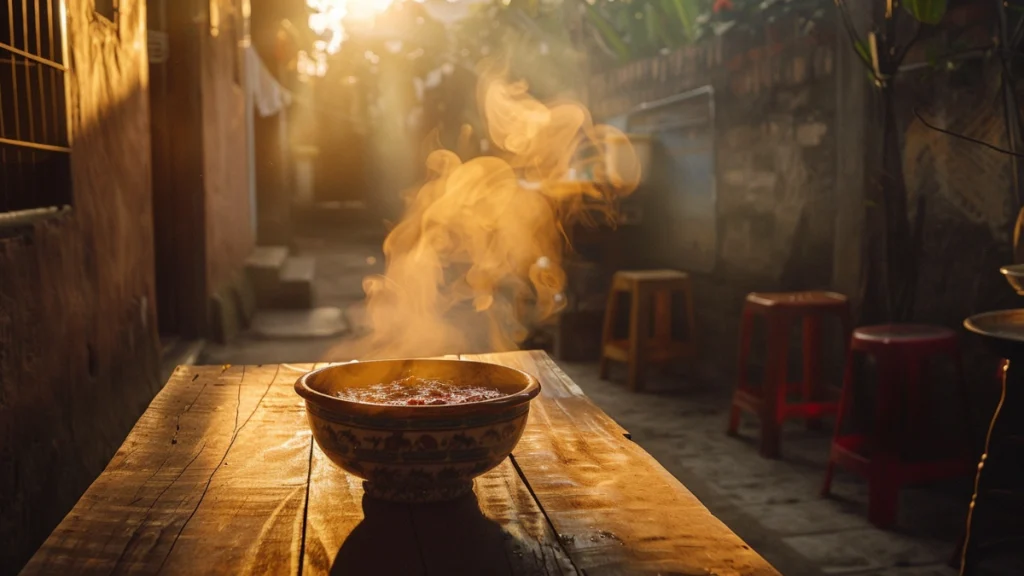
The steam rising from the bowl hit my face at 6:23 in the morning, and I knew immediately that everything I thought I understood about this dish was wrong. I was sitting on a plastic stool in a narrow alley in Oaxaca City, watching a woman named Dona Elvira stir a pot of mole negro that had been simmering since the previous afternoon. The color was so dark it looked like motor oil, but the smell was something else entirely. Chocolate, yes, but also charred chilies, warm spices, and something almost fruity that I couldn’t quite identify. I’d eaten mole at least a hundred times before that morning. Mexican restaurants in San Francisco, upscale spots in LA, even a couple of places in Mexico City that came highly recommended. But sitting there in that alley, watching a 73-year-old woman who learned the recipe from her grandmother, I realized I’d been eating a completely different dish all along.
This is what happens when you actually travel to where food comes from. You discover that the version you grew up eating, the version you thought was correct, is really just an interpretation. Sometimes it’s a good interpretation. Often it’s a watered-down, simplified version designed for a different palate, a different climate, different available ingredients. And occasionally, like with that mole in Oaxaca, you realize the gap between what you knew and what actually exists is so vast that you have to start over from scratch.
I’ve spent the better part of fifteen years chasing these moments. Eating pho in Hanoi and comparing it to what I’d eaten in Los Angeles. Sampling ramen in Osaka, Fukuoka, Sapporo, and Tokyo to understand how a single dish could be so radically different within a single country. Sitting with Italian grandmothers in Emilia-Romagna and then again in Puglia, learning why their pasta traditions had almost nothing in common despite existing on the same peninsula. What follows is an attempt to share what I’ve learned about regional cuisine, not as a food historian or anthropologist, but as someone who simply went to these places and ate. A lot.
Table Of Contents
- The Mole Revelation: Why Oaxaca Changed Everything
- The Ramen Wars: How One Dish Became Four Hundred
- The Grandmother Test: What Italian Pasta Taught Me About Tradition
- The Pho Debate: How a Soup Divided a Nation (And My Marriage)
- What Nobody Tells You About Regional Cuisine
- Practical Lessons for the Hungry Traveler
- Closing Thoughts: The Endless Education
The Mole Revelation: Why Oaxaca Changed Everything
Let me be clear about something before I continue. I am not an expert on Mexican cuisine. I have eaten a great deal of it, traveled extensively through Mexico over eight separate trips spanning almost a decade, and read more books on the subject than most people would consider healthy. But I am not Mexican, and there are scholars and chefs who have devoted their entire lives to understanding what I only observe as an enthusiastic outsider. That said, I know what I’ve tasted, and I know what I’ve learned from the people who were generous enough to teach me.
Oaxaca has seven moles. This is the thing that blows most people’s minds when I tell them, because in the United States, we tend to think of mole as a single dish. Brown sauce with chocolate in it, served over chicken. But in Oaxaca, mole negro is just one of seven distinct sauces, each with its own flavor profile, color, and traditional application. There’s mole rojo, which is brick-red and slightly sweet. Mole coloradito, which is more rust-colored and has a hint of tomato acidity. Mole amarillo, which uses yellow chilies and has a completely different texture. Mole verde, which is herbaceous and bright. Mole chichilo, which is dark and slightly bitter, made with burned corn tortillas. And manchamanteles, which translates to “tablecloth stainer” because of its deep red color and the way it splatters when you eat it.
During my third trip to Oaxaca in 2019, I set out to eat all seven moles in a single week. This was, in retrospect, an insane idea. Not because of the quantity of food, although that was certainly a factor. My jeans fit noticeably tighter by day four. But because each mole is such a rich, layered experience that eating them back to back made my palate completely confused. By the fifth day, I couldn’t distinguish subtle differences anymore. My notes from that period are almost useless. “Dark. Rich. Good.” That’s what I wrote about three completely different moles.
What I should have done, and what I eventually did on a later trip, was space them out. One mole every two or three days, with simpler foods in between. This is actually how most Oaxacans eat them anyway. Mole is not everyday food. It’s celebration food, wedding food, funeral food. The preparation alone can take two to three days, and many families will make a large batch only a few times per year. When I visited Dona Elvira in that alley, she was making mole negro for a quinceañera happening that weekend. She’d started the chili preparation on Tuesday, begun toasting and grinding spices on Wednesday, and wouldn’t finish the actual cooking until Friday. The party was Saturday.
Here’s what nobody tells you about authentic mole negro. The chocolate is not the star. In the versions I’d eaten in the States, the chocolate was always front and center. Sweet, almost like dessert. But in Dona Elvira’s version, the chocolate was barely perceptible. It added depth and a slight bitterness that balanced the heat, but if you weren’t told it was there, you might not have identified it. The real stars were the chilies, specifically a combination of chilhuacles negros, mulatos, and pasillas, all of which she had dried herself using chilies grown by her son-in-law about forty minutes outside the city. These chilies gave the mole its characteristic dark color and its complex, almost smoky-sweet flavor that I still think about years later.
The other thing that struck me was the texture. American mole tends to be smooth, almost sauce-like. Dona Elvira’s had grain to it. You could feel the ground almonds and the charred tortilla fragments and what I later learned was ground plantain. It clung to the chicken in a way that smooth mole doesn’t, creating this almost paste-like coating that absorbed the meat’s juices and created something entirely different from the pourable sauces I was used to. She served it with rice cooked in a light tomato broth and handmade tortillas that her daughter was patting out fresh every few minutes in the back. The total cost of this meal, which I shared with two other travelers I’d met at my hotel, was 180 Mexican pesos. That was about $9 at the time, split three ways.
The Ramen Wars: How One Dish Became Four Hundred
If you want to understand regional variation in cuisine, there’s no better classroom than Japan’s ramen culture. I’ve eaten ramen in nine different Japanese prefectures over ten trips spanning twelve years, and I’m still learning. The dish that Americans think of as “ramen” barely exists in Japan. Or rather, it exists, but it’s just one interpretation among hundreds, and the people who make it are often trying to appeal specifically to tourists who expect a certain experience.
Let me walk you through a single day in Fukuoka, because that’s where I finally understood how deep these regional differences go. I arrived at Hakata Station at 8:47 in the morning after an overnight train from Tokyo. I’d been in Tokyo for a week, eating exclusively tonkotsu ramen, which is what most Americans think of as “the” ramen. Pork bone broth, creamy and opaque, thin straight noodles, sliced pork belly, maybe a soft-boiled egg. Tokyo’s tonkotsu is excellent, don’t get me wrong. But Tokyo-style tonkotsu is not the same as Hakata-style tonkotsu, even though they use similar ingredients.
By 9:15, I was at Shin Shin Ramen, a place that had been on my list for three years. They’d been open since 1963 and had developed a style that was unmistakably Hakata. The broth was thinner than what I’d been eating in Tokyo, almost watery-looking but incredibly intense in flavor. The noodles were so thin they looked like angel hair pasta, and they were cooked for maybe ninety seconds. The texture was firm, almost al dente, with a snap when you bit into them. And they served it with raw garlic cloves on a small dish, which you could crush yourself and add directly to the bowl. The pork was sliced thinner too, more like ham than the thick chashu cuts I’d gotten used to.
I ordered my noodles “kata,” which means firm, and the whole bowl cost 600 yen. About $5.50 at the time. I ate it in maybe four minutes, which is the pace locals seemed to maintain. Slurping loudly, barely pausing between bites. When I finished, I ordered “kaedama,” which is an extra serving of noodles to add to the remaining broth. This is a Hakata tradition that I’ve rarely seen done properly outside of Fukuoka. The fresh noodles arrive in a small metal strainer, you dump them into your existing broth, and you keep eating. The 150 yen extra for kaedama was possibly the best value I’ve ever gotten from a meal.
Now here’s what makes regional ramen so fascinating. That same day, I ate at three other shops. Each served tonkotsu ramen. Each was located within a fifteen-minute walk of the others. And each was unmistakably different. One shop, Nagahama Number One, made a broth that was even thinner than Shin Shin’s, almost like a pork-flavored tea. The cook there, a guy in his sixties who’d worked the counter for forty-one years, told me through a mix of broken English and my terrible Japanese that his grandfather had started the shop in 1952 and that they’d never changed the recipe. Another shop, Ichiran, which is now a major chain but originated in Fukuoka, served their ramen in individual booths where you couldn’t see the other customers or even the cook who handed you the bowl through a small window. Their broth was richer, more like the Tokyo style, and they gave you a form to fill out specifying exactly how you wanted your ramen prepared. Noodle firmness, broth richness, garlic amount, spice level. Each parameter had five options.
I’ve made this mistake before, assuming that regional cuisine meant one thing. But Fukuoka alone has probably fifty distinct ramen styles, and that’s just counting the shops that have been around for more than a decade. The newer shops are even more experimental, mixing regional traditions, adding foreign influences, or stripping the dish down to something their grandmothers would barely recognize. When I tell people that Japanese ramen is regional, they usually think I mean there’s a Tokyo style and an Osaka style and maybe a Sapporo style. The reality is that there are neighborhood styles, family styles, and individual chef styles that can differ as much from each other as pizza in Naples differs from pizza in Chicago.
Three weeks later, I was in Sapporo, and I had to completely recalibrate. Sapporo miso ramen uses a completely different approach. The broth is miso-based, obviously, but it’s also cooked with a lot of fat and often finished with butter. The noodles are thick and wavy, closer to what Americans might recognize from instant ramen packets. The toppings include corn and bean sprouts and sometimes even crab. It’s a warming, heavy dish designed for Hokkaido winters, where temperatures regularly drop below zero Fahrenheit. Eating a bowl of Sapporo miso ramen in August felt wrong, honestly. I was sweating through my shirt by the time I finished. But in February, which is when I returned two years later, it made perfect sense. The fat and the salt and the starch hit different when it’s negative fifteen outside and you’ve been walking through snow for an hour.
The Grandmother Test: What Italian Pasta Taught Me About Tradition
I lived in Italy for six months in 2017, and I’m still processing what I learned. The purpose of the trip was ostensibly to improve my Italian, which I can now confirm remains terrible despite half a year of immersion. But the real education happened in kitchens, where I’d managed to talk my way into cooking sessions with eight different grandmothers across four regions. I called this project the Grandmother Test, though I never used that name to their faces because it sounds slightly condescending and also because I couldn’t figure out how to translate it.
The premise was simple. I wanted to learn how to make fresh pasta from people who had been making it their entire lives, and I wanted to understand why their versions were different from what I’d learned in culinary school. Because here’s the thing: my Le Cordon Bleu training taught me a very specific approach to pasta. A certain ratio of eggs to flour. A particular kneading technique. Specific rest times and rolling thicknesses. And when I got to Italy, I discovered that approximately zero of the grandmothers I cooked with followed any of those rules.
My first session was with a woman named Nonna Lucia in Bologna. She was 81 years old and had been making tagliatelle every Sunday since she was fourteen. Her kitchen was tiny, maybe eight feet by eight feet, with a single window that looked out onto an interior courtyard. The counter was worn marble that had developed a slight dip in the middle from decades of rolling. She didn’t own a pasta machine. When I asked about ratios, she looked at me like I’d asked what color the sky was. “You use enough flour until the dough feels right,” she said through my friend Marco, who was translating. “Sometimes the eggs are bigger. Sometimes the flour is different. You adjust.”
This was both frustrating and liberating. Frustrating because I had spent years thinking of pasta as a precise science, something that could be replicated exactly if you just followed the instructions. Liberating because it meant that my years of minor failures, batches that were too dry or too sticky, weren’t really failures at all. They were just moments where I hadn’t adjusted correctly.
Nonna Lucia’s tagliatelle was nothing like the pasta I’d made in school. Her dough was softer, stickier, almost fragile-feeling when you handled it. She rolled it thinner than I thought possible, using a wooden rolling pin that her husband had made for her wedding gift in 1961. The pasta cooked in maybe ninety seconds, still slightly al dente but with a tenderness that surprised me. And the sauce, a simple ragu Bolognese that she’d been simmering since morning, clung to the noodles in a way that I’d never achieved with my more structured, more “correct” approach.
Two weeks later, I was in Puglia, learning to make orecchiette with a woman named Nonna Maria who was ninety-three and had approximately zero patience for my questions. Orecchiette is made without eggs, just semolina flour and water, and the technique is completely different from anything I’d learned. You roll small pieces of dough under your thumb, dragging them across a wooden board to create the characteristic ear-shaped curves. I made maybe two hundred attempts that afternoon. Maria threw away at least half of them, clicking her tongue disapprovingly each time. “Too thick,” she’d say in Italian I could actually understand. Or “wrong shape.” Or once, memorably, “this looks like something my cat would make.”
But here’s what I noticed. Maria’s orecchiette were not all uniform. Some were larger than others. Some had deeper cups. A few were almost flat. When I asked her about this, she shrugged and said something that Marco translated as “they all cook the same.” Which, I later realized, was the entire point. She wasn’t making exhibition pasta for a restaurant or a cooking show. She was making Tuesday lunch for her family, something she’d done thousands of times, and minor variations didn’t matter as long as the result was delicious.
The difference between Northern and Southern Italian pasta is something I could write an entire book about, and probably should. In the North, especially in Emilia-Romagna, eggs are used generously. The dough is rich and yellow, the texture silky. These are prosperous regions historically, where eggs and butter were readily available. In the South, particularly in Puglia, Calabria, and Sicily, eggs were a luxury. The pastas developed there, like orecchiette or cavatelli or busiate, use only semolina and water. The texture is more rustic, more chewy. They’re designed to hold thicker sauces, often vegetable-based or heavy with olive oil.
This is going to sound specific, but the economics of regional pasta varieties explain more about Italian food than almost anything else I learned. Why does carbonara exist in Rome? Because that’s where the American soldiers were stationed after World War II, and they brought bacon and powdered eggs, which local cooks adapted into something that worked with local techniques. Why is pesto Genovese specifically from Genoa? Because that’s where the basil grew best, in the terraced hillsides with exactly the right amount of sun and salt air. Why does Sicily have so many dishes with sardines and wild fennel and pine nuts? Because those were the cheap, available ingredients for working-class families living near the coast.
The Pho Debate: How a Soup Divided a Nation (And My Marriage)
I need to talk about pho, and I need to start with a confession. My wife Emma and I have been together for eleven years, and the closest we’ve ever come to a serious fight was about Northern versus Southern Vietnamese pho. She prefers Southern. I prefer Northern. We have agreed to disagree, but only after a heated discussion in Saigon that nearly ended with her eating dinner without me.
For those who don’t know, and I’m always surprised how many people don’t, pho is not a single dish. It’s more like a family of dishes that share some common elements but differ significantly depending on where you are in Vietnam. The version most Americans know is Southern-style, specifically Saigon-style. This is the pho with the big plate of accompaniments: bean sprouts, Thai basil, lime wedges, hoisin sauce, Sriracha. The broth is sweeter, often lighter in color, and the noodles are served in a larger portion. It’s vibrant and customizable and, I’ll admit, very delicious.
Northern pho, from Hanoi, is a completely different experience. The broth is the star, and the cooks take it very seriously. I’ve watched pho makers in Hanoi tend their pots for eighteen hours or more, constantly skimming, adjusting heat, adding bones at specific intervals. The flavor is cleaner, more intense, with a pronounced beef character that comes from using a specific combination of marrow bones and beef shank. The accompaniments are minimal, often just sliced scallion, a few leaves of cilantro, maybe some sliced chili. Hoisin and Sriracha are considered almost offensive to add. The noodles are thinner and served in smaller quantities. The idea is that you taste the broth, appreciate the broth, and don’t drown it in condiments.
During my first trip to Vietnam in 2014, I ate pho every single morning for thirty days straight. This was the trip that produced my first viral article, but it was also the trip that fundamentally changed how I think about regional food variations. I spent the first two weeks in Hanoi, eating at seventeen different pho shops, and then moved south to Ho Chi Minh City for the final two weeks, eating at another twelve. My methodology was simple. I ordered the standard beef pho at each location, took photos, took notes immediately after eating, and recorded the price.
The results surprised me. I expected to have a clear preference, but instead I found myself appreciating each style for what it was trying to accomplish. The Northern pho at Pho Gia Truyen, which has been operating in Hanoi’s Old Quarter since 1956, was a revelation. The shop is tiny, maybe six tables, and they serve exactly one thing. Beef pho. No variations. The broth arrives in a small bowl, barely enough to qualify as a full meal by American standards, but the flavor is so concentrated that you don’t need more. The beef is sliced thin and cooks in the hot broth as you eat. A bowl cost 50,000 Vietnamese dong at the time, about $2.25.
Meanwhile, the Southern pho at Pho Le in Saigon’s District 1 was almost the opposite experience. The bowl was enormous, easily twice the size of what I’d been eating up north. The broth was sweeter and slightly cloudy. The beef came in multiple preparations: rare slices, cooked flank, beef balls, even some tendon if you ordered the special. And the accompaniment plate was overflowing. Emma ordered her bowl, loaded it up with bean sprouts and basil and a healthy squeeze of lime and a spoonful of hoisin, and declared it the best pho she’d ever had. I looked at my bowl, which I’d been eating the Northern way with minimal additions, and felt like we were eating two completely different dishes.
Here’s what nobody tells you about this regional debate. Both styles are correct. Both styles are authentic. The Southern style developed among migrants who moved from the North in the 1950s after the country’s partition. They brought pho with them but adapted it to local tastes and local ingredients. The sweetness comes from adding a bit of rock sugar to the broth. The larger portions reflect Southern abundance and generosity. The accompaniments give control to the diner, letting them adjust each bowl to their preference. It’s not a degraded version of the original. It’s an evolution.
I returned to Vietnam three more times after that initial trip, twice to Hanoi and once more to Saigon. Each time, I learned something new. In Hanoi, I discovered that different shops specialize in different cuts of beef. Some are famous for their beef balls. Some for their rare slices. Some for their tendon. The serious pho enthusiasts in Hanoi have favorite shops for each component and will sometimes eat at multiple shops in a single morning. In Saigon, I learned that the Chinese-Vietnamese community has developed their own pho style, with different spices and sometimes even a different type of noodle. Nothing about this dish is simple or static.
What Nobody Tells You About Regional Cuisine
After eating this dish in dozens of cities across maybe thirty different countries, I’ve developed some theories about regional food that I rarely see discussed in travel writing. The first is that authenticity is almost always a moving target. The “traditional” version of any dish is usually just the version that was popular when someone’s grandmother was cooking it. Before that grandmother was born, there was another traditional version, and before that another. Food evolves constantly, absorbing new ingredients, new techniques, new influences. The pho that Vietnamese people eat today is not the pho that their great-grandparents ate, and that’s completely fine.
The second thing is that regional cuisine is often defined by poverty and constraint, not by abundance and choice. The most distinctive dishes usually emerged because people had to make do with what was available. Oaxacan mole uses chilies because those grew locally and were cheap. Pugliese pasta is eggless because eggs were expensive. Sapporo ramen has butter because Hokkaido has dairy farms but not the same access to seafood as coastal regions. When you understand why a dish developed the way it did, you understand something about the people who created it.
I’ve made this mistake before, and I’ll probably make it again. The mistake is assuming that the fanciest or most photogenic version of a dish is the best version. Some of the worst meals I’ve eaten on the road have been at expensive, Instagram-ready restaurants that cared more about presentation than taste. And some of the best have been at plastic table stalls where the cook was too busy to smile at me and the menu was handwritten on cardboard taped to the wall.
The third observation, and this one took me years to accept, is that sometimes the version you grew up with really is worse than the original. Not always. There are plenty of diaspora adaptations that are excellent on their own terms. But sometimes the version that traveled lost something essential along the way. The mole I ate in California lacked complexity because the chilies used were different and the technique was simplified. The pho in most American cities uses a thinner broth because authentic bone-simmering takes eighteen hours that most restaurants can’t afford. The ramen in Portland, my home base, is often excellent by Portland standards but wouldn’t survive comparison to even a mediocre shop in Osaka.
This isn’t snobbery, or at least I hope it isn’t. It’s just observation. The gap exists, and pretending it doesn’t helps no one. What matters is understanding why the gap exists and what, if anything, can be done about it. Sometimes the answer is simply that you have to travel to taste the real thing. Sometimes the answer is that a dedicated cook can get close using substitute ingredients. And sometimes, honestly, the answer is that it doesn’t matter. Food is about pleasure and nourishment and community. If the adapted version makes you happy, it makes you happy.
Practical Lessons for the Hungry Traveler
After fifteen years of eating my way through regional cuisines, I’ve developed some habits that consistently lead to better experiences. The first, and most important, is to ask locals where they eat breakfast. Not where they take visitors. Not the famous spot that shows up on every list. Where they personally go at 7am on a Tuesday when they’re hungry and in a hurry. These recommendations have led me to some of the best meals of my life, places I never would have found through research alone.
The second habit is to eat the same dish multiple times in different places before forming an opinion. My rule is a minimum of five versions over at least three days. This sounds excessive, but regional cuisine rewards this approach. You start to notice the variables. Is this shop’s broth better because of technique or ingredients? Is this version’s texture intentional or a mistake? By the fifth bowl, you’ve developed enough context to actually taste what you’re eating.
The third habit is to talk to the cooks whenever possible. Even with language barriers, even with translation apps, even with just pointing and smiling and making appreciative noises. Most cooks are proud of what they make and happy to explain it. I’ve learned more about mole from watching Dona Elvira’s hands than from any cookbook. I understood ramen better after a Fukuoka cook drew me a diagram of how he layers his broth. The human connection matters, and it often leads to information you can’t get any other way.
The fourth habit, and this one is hard, is to admit when you don’t like something. Not every regional specialty is going to be your favorite. I’ve eaten dishes that locals adore and that I found underwhelming, and that’s okay. My personal tastes are not universal arbiters of quality. But I also don’t pretend to love things I don’t love. Part of being an honest food writer is acknowledging when your reaction to a dish is not the reaction that the locals seem to have.
Finally, I carry a notebook everywhere. Actual paper. I write down what I eat, where I ate it, what time it was, what the weather was like, who I was with, and what I paid. I do this immediately, before the details fade. Looking back at these notes years later, I can reconstruct meals with surprising clarity. The steamy morning in Oaxaca. The slurping sounds of the ramen counter. The way Nonna Lucia’s kitchen smelled like flour and old wood. These details matter, and they’re gone if you don’t capture them.
Closing Thoughts: The Endless Education
Regional cuisine is a lifelong education that never really ends. Every time I think I understand a dish, I visit a new place and discover another variation I’d never considered. Every time I think I’ve found the definitive version, someone introduces me to a cook who does it differently and just as well. This is what makes food travel so addictive and so humbling. You can spend decades studying and eating and still barely scratch the surface.
The bowl of mole that Dona Elvira served me that morning in Oaxaca changed how I think about food. It taught me that the version I knew was just one branch of a much larger tree, a tree with roots going back centuries and branches spreading across continents. Every regional dish I’ve studied since has reinforced that lesson. There is always more to learn, more to taste, more to understand. And the moment you think you’ve figured it all out is the moment you’ve stopped paying attention.
For me, that’s the joy of it. Not arriving at conclusions, but remaining perpetually curious. Not declaring one version the best, but appreciating why each version exists. The next trip is already planned: Lebanon in spring, to study bread-making traditions along the coast. I’ll eat the same flatbread in fifteen different bakeries. I’ll take notes immediately after each meal. And I’ll probably discover, yet again, that everything I thought I knew was just the beginning.
If you want to really understand a regional cuisine, you have to go there. You have to eat there. You have to talk to the people who make the food and the people who eat it every day. There is no substitute for this kind of education, no book or documentary or restaurant that can replicate the experience of sitting on a plastic stool at 6am, steam rising from a bowl, learning that everything you thought you knew was wrong in the best possible way.