
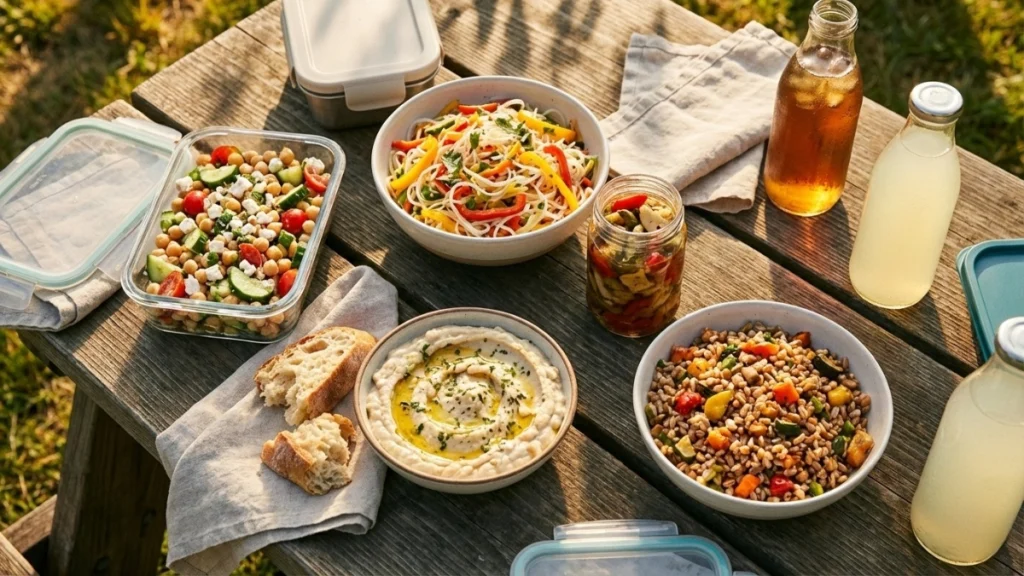
Heat-Stable Summer Picnic Recipes: What Actually Survives When Your Cooler Gives Up
Table Of Contents
- The Day Everything Went Wrong
- Understanding Why Heat Kills Most Picnic Food
- Recipe One: Mediterranean Chickpea Salad with Preserved Lemon Dressing
- Recipe Two: Sesame Ginger Rice Noodle Salad
- Recipe Three: Herbed White Bean Dip with Olive Oil
- Recipe Four: Marinated Vegetable Antipasto
- Recipe Five: Farro Salad with Roasted Vegetables and Balsamic Drizzle
- Tips I've Learned From Five Years of Heat-Stable Picnic Testing
- A Final Word On Changing My Relationship With Picnic Anxiety
- Frequently Asked Questions
- How long can picnic food sit out in hot weather before it becomes unsafe to eat?
- What can I use instead of mayonnaise in picnic salads?
- Why does mayonnaise spoil quickly at picnics?
- What are the best containers for transporting picnic food in hot weather?
- Can I make heat-stable picnic food the night before?
- How do I keep picnic food cold without a cooler?
- Learn About More Experiences
The Day Everything Went Wrong
I still remember the smell. It was August 2019, and I’d packed what I thought was the perfect picnic for a family beach day at Sauvie Island. Marcus had grabbed the cooler from the garage, I’d prepared a beautiful spread of deviled eggs, a creamy potato salad with plenty of mayo, and a dill dip with sour cream for the vegetable sticks. We arrived at the beach around 11am, spread out our blanket, and let the kids run wild toward the water.
By 1pm, when we finally sat down to eat, everything had turned. The deviled eggs had that slightly off smell that makes your stomach clench. The potato salad had separated into something unrecognizable. The dip looked okay but felt warm to the touch. I pulled out my instant-read thermometer, the same one I’d been using obsessively since getting my food safety certification the year before, and watched the display climb to 52 degrees. Fifty-two degrees. That’s twelve degrees into the danger zone, and who knows how long it had been sitting there.
We ate crackers and the one bag of potato chips I’d thrown in as an afterthought. The kids were hungry and confused about why I wouldn’t let them touch the “real” food. Marcus gave me that look, the one that says “I told you we should have just grabbed sandwiches from the deli.” I threw away probably forty dollars worth of carefully prepared food, and I cried a little in the car on the way home. Emma, who was only five at the time, patted my arm and told me the chips were really good anyway.
That disaster became my obsession. Over the next five years, I’ve tested over sixty recipes specifically designed for heat stability. I’ve ruined countless batches in pursuit of the perfect heat-proof picnic. And I’ve learned that avoiding mayonnaise and dairy isn’t just about being overcautious. It’s about enjoying your picnic without that nagging worry in the back of your mind, without pulling out a thermometer every thirty minutes, without wondering if the slight warmth of your potato salad is going to result in a miserable night for the whole family.
Here’s what I’ve discovered: the best heat-stable picnic food isn’t about deprivation or settling for less. It’s about working with ingredients that actually thrive in warm conditions, that taste better at room temperature, that you can genuinely look forward to eating even when your cooler’s ice packs have given up the ghost.
Understanding Why Heat Kills Most Picnic Food
Before I get into the recipes, I need to explain something I learned the hard way. Most of us have been conditioned to think of picnic food as sandwiches with mayo, creamy pasta salads, and maybe some cheese cubes. These foods were designed for indoor eating or quick consumption. They were never meant to sit in a cooler for four hours on a sunny day at Laurelhurst Park.
The problem with mayonnaise isn’t the mayo itself, actually. Commercial mayo is pasteurized and fairly stable. The real issue is that mayo-based dishes usually contain proteins like eggs, chicken, or tuna that become bacterial breeding grounds when mixed with moisture and fat and left in the temperature danger zone. That zone, in case you’re wondering, sits between 40 and 140 degrees Fahrenheit. Your cooler, especially if it’s been opened repeatedly by enthusiastic kids looking for juice boxes, can easily climb into that range within a couple hours on a hot day.
Dairy has similar issues. Fresh mozzarella balls swimming in their liquid? They’re a time bomb on a summer day. Cream cheese spreads? I’ve watched them separate and develop that grainy texture that makes everyone lose their appetite. Yogurt-based dips? Even Greek yogurt, which I love for its stability in the fridge, gets weird and watery when it fluctuates between cold and warm.
During summer 2021, I ran an experiment that really drove this home. I packed two coolers identically with the same ice pack setup, four packs on bottom and two on top. One cooler held traditional picnic food: chicken salad with mayo, a creamy coleslaw, and cubed cheddar cheese. The other held heat-stable alternatives: a marinated white bean salad, an oil-dressed Asian noodle dish, and aged manchego instead of fresh cheese. I took both coolers to Forest Park, one of my favorite testing locations because the trail to the picnic area involves a twenty-minute uphill hike that really shakes up your containers.
I checked temperatures every hour for six hours. By hour three, the traditional cooler had two items in the danger zone. By hour five, everything except the cheddar was above 45 degrees. The heat-stable cooler? At hour six, the coldest item was 42 degrees and the warmest was 48. Still not perfect, but significantly safer, and more importantly, everything still tasted good. The noodle salad had actually improved as the flavors melded together.
Recipe One: Mediterranean Chickpea Salad with Preserved Lemon Dressing
This is my desert island picnic recipe. If I could only bring one dish to a summer picnic for the rest of my life, this would be it. I’ve made it probably forty times since perfecting the recipe in 2020, and it’s survived conditions that would destroy most other foods.
The beauty of this salad is that every single ingredient actually benefits from sitting at room temperature. Chickpeas don’t get mushy the way pasta can. The olive oil-based dressing doesn’t separate or spoil. The vegetables I use, specifically Persian cucumbers, cherry tomatoes, and red onion, maintain their structure for hours. I’ve eaten this salad after it sat in my car (not the cooler, the actual car) for two hours on an 82-degree day. It was completely fine. Delicious, even.
Here’s how I make it, and please pay attention to the details because they matter more than you’d think.
Start with two cans of chickpeas, and drain and rinse them thoroughly. I know rinsing seems obvious, but I’ve tested this with unrinsed chickpeas and the residual starchy liquid makes the whole salad gummy after a few hours. Spread the rinsed chickpeas on a clean kitchen towel and let them dry for about ten minutes while you prep everything else. Dry chickpeas means the dressing actually coats them instead of sliding off.
For the vegetables, I use one pint of cherry tomatoes halved, two Persian cucumbers diced into half-inch pieces, half a medium red onion sliced thin, and a quarter cup of pitted Kalamata olives roughly chopped. I’ve tested this with grape tomatoes instead of cherry tomatoes, and cherry wins every time. They’re sturdier, less likely to burst in transport, and maintain their texture for up to eight hours. Grape tomatoes tend to get wrinkly and sad looking after about four hours.
Now here’s the thing about the dressing that took me six batches to figure out. Most Mediterranean salad recipes call for lemon juice, olive oil, and maybe some garlic. The problem is that fresh lemon juice changes over time. It gets bitter. It intensifies in ways that aren’t always pleasant. What actually works is preserved lemon, the Moroccan kind that you can find in jars at most grocery stores now, or even at Trader Joe’s where I do most of my shopping.
Mince about a tablespoon of preserved lemon rind, discarding the pulp. Mix it with a quarter cup of good olive oil, a tablespoon of red wine vinegar, a minced garlic clove, a teaspoon of dried oregano, half a teaspoon of cumin, and salt and pepper to taste. The preserved lemon provides acidity that stays consistent for hours. The red wine vinegar adds brightness without the instability of fresh citrus. And the cumin, which I added after Emma suggested it when she was seven, ties everything together in a way I can’t fully explain.
Toss everything together, but here’s the key: don’t add the fresh herbs until you’re ready to pack. I use about two tablespoons of fresh mint and another two tablespoons of fresh parsley. Chopped fresh herbs added too early turn dark and slimy. Added right before packing, they stay vibrant for about four to five hours.
When I tested this salad at Sauvie Island Beach last July, a redemption trip of sorts, it sat in my soft-sided Coleman cooler from 10am until we ate at 2pm. The outside temperature hit 88 degrees. The salad was at 56 degrees when I served it, which sounds warm but is actually fine for this recipe since there’s nothing in it that bacteria love to colonize. The chickpeas were still slightly firm. The cucumbers had absorbed some dressing and tasted even better than they did when fresh. Liam, my impossibly picky seven-year-old, ate an entire bowl. He specifically said he liked “the squishy bean things,” which is high praise from a child who once refused to eat pasta because it was “too slippery.”
This recipe serves about six as a side dish, though I’ve found it more realistically serves four if people are hungry. Cost runs about fourteen dollars if you’re buying everything, though preserved lemons can be pricy at around eight dollars a jar. That jar lasts through about six batches of this salad, though, so the per-batch cost is closer to ten dollars.
Recipe Two: Sesame Ginger Rice Noodle Salad
I resisted rice noodles for years. They seemed fussy. They stick together. They require precise cooking. Then I spent a week in Vietnam before the kids were born and watched street vendors serve room-temperature noodle dishes that had been sitting out for who knows how long, and everyone was fine. That trip changed my perspective on what foods are actually risky and what foods just seem risky because American food culture is weird about temperature.
Rice noodles, cooked and dressed properly, are remarkably stable. The key is in how you handle them immediately after cooking, and I learned this the hard way after three batches of congealed noodle bricks.
Use a 14-ounce package of rice vermicelli or pad Thai noodles. Bring a large pot of water to a boil, remove it from heat, and add the noodles. Let them soak for exactly the time specified on your package, usually four to six minutes. Set a timer. I have ruined noodles by letting them go even two minutes over, resulting in a mushy mess that falls apart completely.
While the noodles soak, prepare a large bowl with cold water and about a tablespoon of toasted sesame oil. The moment those noodles are done, drain them, plunge them into the oiled cold water, and swish them around with your hands. This stops the cooking immediately and coats every strand with oil so they don’t stick. Drain again and toss with another tablespoon of sesame oil. I cannot overstate how important this process is. Skip any step and you’ll be serving a noodle blob.
The dressing is where this dish really shines for picnics because it’s entirely oil and acid-based, no dairy, no eggs, nothing that wants to spoil in your cooler. In a jar with a tight lid, combine a quarter cup of toasted sesame oil, three tablespoons of rice vinegar, two tablespoons of soy sauce (use tamari if you need gluten-free), a tablespoon of maple syrup, a tablespoon of fresh ginger grated on a microplane, two minced garlic cloves, and a teaspoon of sriracha or sambal oelek if you like heat. Shake it vigorously for thirty seconds. This dressing tastes better after sitting for an hour than it does freshly made, which makes it perfect for picnic prep.
For vegetables, I add one large carrot shredded on a box grater, one red bell pepper julienned thin, four green onions sliced, half a cup of shelled edamame, and a quarter cup of fresh cilantro. If you’re serving cilantro haters, and Liam is emphatically one of them, leave it out or swap for fresh mint. I also add a quarter cup of roasted peanuts for crunch, but I pack these separately and sprinkle them on just before serving because they get soggy if mixed in too early.
Combine the noodles, vegetables, and about three-quarters of the dressing in a large container. I use my favorite Sistema container with the snap-lock lid because it seals completely and survives the bumpy drive to Mount Tabor Park without leaking. Toss everything together, then pack the remaining dressing separately to add before serving if the salad seems dry.
I’ve tested this at temperatures up to 91 degrees. The highest food temperature I recorded after five hours was 64 degrees in a cooler that had definitely seen better days. The noodles had absorbed some dressing and were slightly softer than at prep time, but they still tasted great. The vegetables retained their crunch. Nothing smelled off or looked questionable.
One thing I learned after making this for Emma’s end-of-year school picnic: kids go absolutely crazy for these noodles. I made a triple batch for thirty kids and came home with an empty container. Several parents asked for the recipe, which always makes me slightly nervous because I want to shout “please follow the noodle cooling steps exactly or you’ll have a disaster” but I also don’t want to seem unhinged.
This recipe costs about sixteen dollars to make and genuinely serves eight as a side dish. It’s one of the rare cases where the serving size is actually accurate, maybe because noodles are filling in a way that other salads aren’t.
Recipe Three: Herbed White Bean Dip with Olive Oil
I developed this dip after realizing that hummus, while heat-stable itself, often gets served with pita bread that turns soggy or crackers that soften in humid weather. I wanted something creamy and satisfying that could handle whatever container situation arose, whatever bread or cracker disaster unfolded.
White beans make a slightly smoother dip than chickpeas, and they’re more neutral in flavor, which means the herbs really shine. The complete absence of dairy means this dip can sit at room temperature for hours without any food safety concerns. I’ve served it at outdoor parties where it sat on a table, uncovered, for three hours on a warm Portland evening. It tasted exactly the same as when I set it out.
Drain and rinse two 15-ounce cans of cannellini beans. Reserve about a quarter cup of the liquid from one can before draining, just in case you need it for texture. In a food processor, combine the beans with a quarter cup of extra virgin olive oil, three tablespoons of fresh lemon juice (fresh is fine here since you’re using it immediately), two garlic cloves, half a teaspoon of salt, and about twenty cracks of black pepper. Blend until completely smooth, scraping down the sides every thirty seconds or so. If the texture seems too thick, add reserved bean liquid a tablespoon at a time until it’s creamy and scoopable.
Now add the herbs. I use a quarter cup of fresh parsley leaves, two tablespoons of fresh dill, and one tablespoon of fresh chives. Pulse about ten times until the herbs are finely chopped but not pureed. You want visible green flecks throughout, not a uniformly green dip. Taste and adjust salt. This dip needs more salt than you think because beans absorb it.
Transfer to a container, drizzle with another tablespoon of olive oil, and if you’re feeling fancy, sprinkle with a few red pepper flakes and some flaky sea salt. The oil layer on top helps prevent oxidation and keeps the surface from drying out.
For serving, I bring sturdy dippers that can handle abuse. Sliced sourdough baguette, lightly toasted the night before and packed in a paper bag, stays perfect for hours. Raw vegetables like carrot sticks, bell pepper strips, and radishes hold up better than any cracker I’ve tested. If you must bring crackers, whole wheat or seed-based ones with sturdy construction work best. Those thin water crackers that seem so elegant? They dissolve into sadness within an hour of exposure to air.
Real talk: I made this dip for a family reunion at Laurelhurst Park two summers ago, and my aunt, who is a wonderful person but firmly believes that no dip is complete without sour cream, was skeptical. She watched me set it out with genuine concern on her face. By the end of the afternoon, she’d eaten about half the container herself and admitted that maybe dairy-free dips weren’t as terrible as she’d assumed. She even took a photo of my handwritten recipe card, which is the highest compliment anyone in my family can give.
This dip costs about eight dollars to make and serves roughly ten to twelve people, depending on how aggressive your dippers are. It keeps in the refrigerator for up to five days, though I’ve never actually tested that because it always gets eaten within two.
Recipe Four: Marinated Vegetable Antipasto
This recipe emerged from my frustration with vegetable trays at picnics. Raw vegetables are fine, I suppose, but they’re also boring and unsatisfying. They require a dip, which means another container to pack and worry about. And kids, at least my kids, view raw carrots and celery as a punishment rather than a food.
Marinated vegetables solve every problem. They’re flavorful enough to eat on their own. They actually improve as they sit in their marinade. They’re impossible to spoil in any realistic picnic scenario because the acid in the marinade creates an environment where bacteria can’t thrive. And somehow, magically, both Emma and Liam will eat marinated vegetables when they won’t touch raw ones.
Start by preparing your vegetables. I use a combination of one pint of cherry tomatoes halved, one jar of marinated artichoke hearts drained and quartered, one 12-ounce jar of roasted red peppers drained and sliced into strips, one Persian cucumber cut into half-moons, half a cup of pitted mixed olives, and a quarter cup of pickled pepperoncini rings. You can absolutely adjust this based on what you like and what’s available. I’ve made versions with raw fennel sliced thin, blanched green beans, and even canned palm hearts.
The marinade is simple but requires good ingredients. Combine a third cup of extra virgin olive oil with two tablespoons of red wine vinegar, one tablespoon of balsamic vinegar, one minced garlic clove, a teaspoon of dried Italian seasoning, half a teaspoon of salt, and plenty of black pepper. Whisk until it emulsifies slightly.
Combine all the vegetables in a large container with a secure lid. Pour the marinade over everything and toss gently to coat. At this point, you can refrigerate overnight or just pack it up and go. Honestly, this is one of the few recipes where making it ahead actually improves it. The vegetables absorb the marinade, the flavors meld together, and everything becomes more intensely delicious.
I tested this recipe at what I consider my personal picnic stress test: a six-hour day at the beach with 85-degree heat, sandy children constantly opening and closing the cooler, and a cooler that I’d accidentally left in the hot car the night before so the ice packs weren’t fully frozen. By hour five, the antipasto was at 62 degrees. Still completely delicious. Still completely safe. The tomatoes had softened slightly but in a pleasant, concentrated way. The artichokes and peppers, already cooked, were unchanged. The cucumber had absorbed some marinade and tasted almost like a pickle.
Marcus, who is not generally enthusiastic about vegetables, ate this straight from the container with a fork while standing in the shallow water watching the kids. He said, and I quote, “I’d eat this at home.” From Marcus, this is the equivalent of a Michelin star.
This recipe costs around fifteen dollars if you’re buying jarred artichokes and roasted peppers, which aren’t cheap. You can reduce the cost by roasting your own peppers and using frozen artichoke hearts thawed and roasted, but honestly, the convenience of jarred ingredients is worth the extra few dollars for a picnic. It genuinely serves eight to ten as a side or appetizer.
Recipe Five: Farro Salad with Roasted Vegetables and Balsamic Drizzle
Grain salads are my secret weapon for picnics because they’re filling, they’re crowd-pleasing, and they hold up like nothing else. But the grain matters. Rice gets mushy. Quinoa gets weird and bitter. Couscous turns into a solid block. Farro, that ancient wheat grain with a satisfying chewy texture, survives anything.
I came to farro reluctantly. It seemed fancy and inaccessible when I first encountered it at a friend’s dinner party years ago. Then I found it in bulk at the regular grocery store for about four dollars a pound and realized it was actually more economical than many other grains. It takes about thirty minutes to cook, which is longer than rice or pasta, but the result is so much more stable that it’s worth the time investment.
Cook one and a half cups of farro according to package directions, usually in salted boiling water for about 25 to 30 minutes until tender but still chewy. Drain and spread on a sheet pan to cool. Don’t rinse it. I made the mistake of rinsing farro once and it washed away all the natural starch that helps the dressing cling to the grains. Just spread it out and let it come to room temperature naturally, about fifteen minutes.
While the farro cools, roast your vegetables. I use one medium zucchini cut into half-inch dice, one red bell pepper diced, one small red onion cut into wedges, and about a cup of halved cherry tomatoes. Toss everything with two tablespoons of olive oil, a teaspoon of salt, and half a teaspoon of pepper. Spread on a sheet pan and roast at 425 degrees for about 25 minutes, stirring once halfway through. You want them caramelized and slightly charred at the edges but not burned. Let these cool completely too. Hot vegetables will wilt any greens you add later.
The dressing is straightforward: whisk together a quarter cup of olive oil, two tablespoons of balsamic vinegar, a tablespoon of Dijon mustard, one minced garlic clove, and salt and pepper to taste. The Dijon acts as an emulsifier and adds a pleasant sharpness that cuts through the sweetness of the roasted vegetables.
Combine the cooled farro, cooled roasted vegetables, and about a cup of arugula in a large bowl. Arugula holds up to dressing much better than baby spinach, which wilts almost immediately. Toss with most of the dressing, reserving a couple tablespoons for serving. Add half a cup of pine nuts or roughly chopped walnuts for crunch, and if you want a protein element, a drained can of chickpeas works beautifully here.
I’ve tested this salad extensively because it’s become our default “we need to bring something substantial” picnic dish. At a birthday party at Mount Tabor Park last September, it sat out on the picnic table from noon until 4pm. The temperature never dropped below 70 degrees. By the time we were cleaning up, I took one last bite to test it, as I always do. It was room temperature, slightly more cohesive than when I’d first tossed it, and genuinely delicious. The arugula had wilted a bit, which I actually prefer. The farro was tender but still had that satisfying chew. Not a single grain had become mushy.
One note from testing: this salad does not refrigerate well for multiple days. Something about the balsamic and the vegetables causes everything to get soggy after about 36 hours in the fridge. Make it the morning of your picnic or the night before at the absolute earliest. Fresh farro salad beats day-old farro salad by a significant margin.
This recipe costs about eighteen dollars and serves eight generously. If you’re serving it as a main dish for vegetarians, expect it to serve more like five or six.
Tips I’ve Learned From Five Years of Heat-Stable Picnic Testing
Temperature monitoring changed everything for me. I know it seems obsessive, but understanding exactly what happens inside your cooler gives you confidence. Spend twenty dollars on a digital thermometer with a probe you can leave inside the cooler, checking it every hour for one full picnic. You’ll learn exactly when your specific cooler in your specific conditions starts to fail, and you can plan accordingly.
Container selection matters more than I ever expected. Glass containers hold cold longer than plastic. Wide, shallow containers warm up faster than tall, narrow ones. Containers that seal completely protect food from the temperature fluctuations that happen every time someone opens the cooler. I’ve standardized on Sistema snap-lock containers for most things and wide-mouth mason jars for dressings and dips. Both seal well and survive transport without leaking.
Ice pack positioning is an art. I put frozen packs on the bottom of the cooler, food in the middle, and more frozen packs on top. Cold sinks, so having packs only on the bottom means the top layer of food warms up much faster. I also freeze a water bottle or two to pack in the cooler. They serve double duty as extra ice and drinking water once they thaw.
Don’t underestimate the impact of your car ride. A cooler in a hot trunk will warm up dramatically faster than one in an air-conditioned backseat. If you’re driving more than twenty minutes, put the cooler where you can feel the air conditioning reaching it. This single change extended my food safety window by nearly two hours during testing.
Pre-chill everything. Your cooler, your containers, even your ingredients if possible. A cold cooler filled with cold food and cold ice packs stays cold much longer than a room-temperature cooler filled with room-temperature food. I put my cooler in the garage the night before a summer picnic (our garage stays around 60 degrees) and refrigerate all containers overnight, then pack everything cold in the morning.
Separate dressings and toppings until serving when possible. Many foods that degrade quickly at warm temperatures are fine if they’re added at the last minute. Dressings that would make salads soggy after hours of contact can be added on-site. Crunchy toppings like nuts and seeds stay crunchy if packed separately. Fresh herbs can be added just before eating to maintain their bright color and flavor.
A Final Word On Changing My Relationship With Picnic Anxiety
Before I developed these recipes and this approach, I dreaded summer picnics. The stress of food safety, the fear of making people sick, the constant checking and worrying. It took the joy out of something that should be purely joyful.
Now I look forward to every single picnic. I pack my cooler with confidence. I don’t obsessively check temperatures every thirty minutes anymore, though old habits die hard and I still check at least once. I know that if we get delayed, if the cooler gets opened too many times, if we end up staying longer than planned, my food will be safe and delicious.
Last week, we had an impromptu picnic at Laurelhurst Park. I grabbed containers from the fridge that were already prepped from earlier testing, the chickpea salad and some leftover farro salad from the night before. Marcus threw in some crackers and a jar of olives. We were out the door in ten minutes. The kids played until sunset. We ate at the picnic table as the evening cooled down, and everything was perfect.
Liam asked if we could have picnics every day. Emma said the chickpea salad was “actually really good, Mom.” Biscuit stole exactly one cracker when nobody was looking, which is restraint for him. Marcus squeezed my hand and said thanks for the food.
That’s what I wanted. Not Instagram-perfect picnic spreads that stress me out to prepare. Not gourmet dishes that require a degree in food science to transport safely. Just good food that survives real life, that my family actually wants to eat, that lets me enjoy the picnic instead of worrying about it.
The recipes in this article are the culmination of five years of testing, dozens of failures, and a genuine passion for solving a problem that had defeated me for years. I hope they help you have the kind of summer picnics you deserve. The kind where you can actually relax, where you’re not checking temperatures every few minutes, where you can watch your kids play without that nagging worry about what’s happening inside your cooler.
Make the chickpea salad first. It’s the most forgiving, the most versatile, and the most likely to become your new favorite. Then branch out from there. Try the noodles for something different. Make the white bean dip for your next outdoor party. Experiment with the vegetable antipasto when you want something that feels a little fancy without any additional effort.
And if you see a slightly frantic-looking woman at a Portland park with a thermometer, a notebook, and three different versions of the same salad laid out in front of her, wave hello. It’s probably me, still testing, still learning, still trying to figure out what works. That’s the fun part, honestly. There’s always another recipe to perfect, another condition to test, another disaster to learn from.
Happy picnicking. May your coolers stay cold, your chickpeas stay firm, and your families stay happy.
Frequently Asked Questions
How long can picnic food sit out in hot weather before it becomes unsafe to eat?
The general rule from my food safety training is that perishable foods shouldn’t sit in the temperature danger zone (between 40 and 140 degrees Fahrenheit) for more than two hours. On days when it’s above 90 degrees, that window shrinks to just one hour. However, the recipes I’ve shared in this article are specifically designed to be safe for much longer because they don’t contain the proteins and dairy that bacteria love. My chickpea salad and marinated vegetable antipasto have survived six-plus hours in my testing without any safety concerns. The key difference is what’s actually in the food, not just how long it’s been sitting out.
What can I use instead of mayonnaise in picnic salads?
I’ve tested dozens of mayo alternatives over the years, and my favorites are olive oil-based vinaigrettes, tahini thinned with lemon juice, and mashed avocado mixed with lime juice (though avocado browns quickly so add it on-site). For pasta and grain salads, a simple combination of olive oil, acid like vinegar or citrus, garlic, and herbs creates a dressing that actually improves as it sits. The sesame-ginger dressing in my rice noodle recipe is another fantastic option that holds up beautifully in heat. Mustard-based dressings also work wonderfully because the vinegar and mustard act as natural preservatives.
Why does mayonnaise spoil quickly at picnics?
Here’s the thing that surprised me when I took my food safety certification: commercial mayonnaise itself is actually quite stable because it’s pasteurized and acidic. The real problem is what we mix it with. When mayo combines with proteins like chicken, eggs, or tuna, plus the moisture from vegetables, it creates the perfect environment for bacterial growth. The mayo essentially becomes a delivery system for bacteria to thrive in warm temperatures. That’s why a jar of unopened mayo can sit in your pantry, but your chicken salad turns dangerous after a couple hours in the sun. I stopped blaming the mayo and started understanding the whole picture.
What are the best containers for transporting picnic food in hot weather?
After testing probably twenty different container types, I’ve settled on glass containers with snap-lock lids and my Sistema plastic containers for most picnic foods. Glass holds cold temperatures longer than plastic, which I confirmed by packing identical salads in both and checking temperatures hourly. Wide-mouth mason jars work great for dips and dressings but aren’t ideal for salads because they’re hard to serve from. Avoid containers with loose-fitting lids because every time air exchanges, your food warms up faster. I also keep dressings and crunchy toppings in separate small containers until serving time, which requires more containers but produces much better results.
Can I make heat-stable picnic food the night before?
Absolutely, and for some recipes it actually makes them better. My marinated vegetable antipasto tastes significantly more flavorful after sitting overnight because the vegetables absorb the marinade. The chickpea salad holds up perfectly when made 12 to 24 hours ahead, just add the fresh herbs right before packing. The white bean dip improves overnight as the garlic mellows. The one exception in my lineup is the farro salad, which gets a bit soggy after 36 hours, so I make that the morning of or the night before at the earliest. Rice noodles should also be made same-day because they absorb too much dressing overnight and lose their texture.
How do I keep picnic food cold without a cooler?
If you’re trying to skip the cooler entirely, focus on foods that genuinely don’t need refrigeration. Everything in this article falls into that category. The chickpea salad, marinated vegetables, and white bean dip are all safe at room temperature for hours because they’re acid-based with no dairy or problematic proteins. If you want to keep things pleasantly cool without a full cooler setup, I’ve had success wrapping containers in a damp kitchen towel inside an insulated shopping bag. Freezing your drinks the night before and packing them around the food containers also helps. But honestly, the best strategy is choosing recipes that taste good at any temperature, which is exactly why I developed these five.