
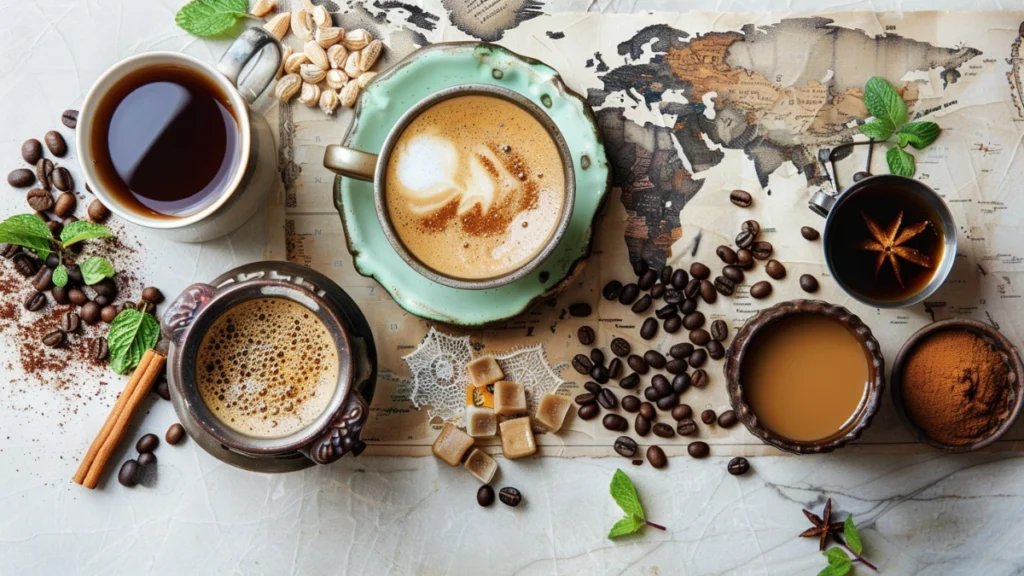
Travel Beverage Guides: Coffee & Local Brews
Table Of Contents
- Finding the World's Best Cups and Discovering Drinks You Never Knew Existed
- Understanding International Coffee Culture: It Is Not What You Think
- Finding the Best Coffee in Any City: My Methodology
- Beyond Coffee: The Local Drinks That Most Travelers Miss
- The Art of Sampling: How to Approach Unfamiliar Beverages
- Regional Deep Dives: Where to Find the Best Beverages
- Practical Considerations: Staying Safe and Healthy
- Conclusion: What Beverages Teach Us About Place
- FAQ: Common Questions About Beverage Travel
- How much should I budget daily for beverages while traveling?
- What is the best time of day to visit coffee shops in foreign countries?
- How do I order coffee if I do not speak the local language?
- Are specialty coffee shops or traditional coffee houses better for experiencing local culture?
- What should I do if a local drink tastes very strange to me?
- How do I find beverages that are not mentioned in any guidebook?
Finding the World’s Best Cups and Discovering Drinks You Never Knew Existed
The coffee arrived in a tiny ceramic cup, no bigger than my thumb, and the woman who served it looked at me like I was about to fail a test. It was 6:23 in the morning in Addis Ababa, Ethiopia, and I was sitting on a wooden stool in a cramped room filled with the smoke of roasting beans. The entire coffee ceremony had taken 45 minutes already. The beans were roasted over charcoal in front of me, ground by hand in a wooden mortar, and brewed three times in a clay pot called a jebena. When I finally raised that cup to my lips, the woman who had prepared it, a 67-year-old named Almaz, watched my face with the intensity of a chef waiting for a Michelin inspector’s verdict.
That first sip changed how I think about coffee forever. It was nothing like the dark roast I grabbed from my Portland coffee shop most mornings. This was bright, almost tea-like, with floral notes that reminded me of jasmine and a clean finish that lingered for minutes. I had been drinking coffee for 20 years and realized in that moment that I had never actually tasted where coffee comes from.
I have spent the better part of a decade chasing beverages around the world. Not just coffee, though that obsession runs deep, but the local drinks that most travelers walk right past. The fermented rice waters of Southeast Asia. The herb-infused cold drinks of Mexico City’s street vendors. The thick, spiced drinking chocolates of Oaxaca that bear no resemblance to the powdered packets I grew up with. Each destination has its own drinking culture, its own rituals, its own flavors that you simply cannot replicate at home no matter how many specialty ingredients you order online.
This guide is everything I have learned about finding exceptional beverages abroad. It is the result of drinking my way through 47 countries, making countless mistakes, suffering through plenty of mediocre cups, and occasionally finding something so perfect that I restructured entire trips around going back for more. I will share my methodology for tracking down the best coffee in any city, explain why local non-alcoholic drinks deserve as much attention as the food, and give you the specific knowledge you need to drink like a local rather than a tourist.
Understanding International Coffee Culture: It Is Not What You Think
Here is what nobody tells you about coffee culture: it varies more dramatically from country to country than almost any other food or beverage tradition. The way Italians drink coffee would horrify most Americans. The way Americans drink coffee would confuse most Ethiopians. And the way Vietnamese coffee is prepared would probably give an Italian barista a minor heart attack. None of these approaches is wrong. They are just different, shaped by history, climate, economics, and local taste preferences that developed over centuries.
I learned this lesson the hard way in Rome during my first serious food trip in 2014. I walked into a coffee bar near the Pantheon, feeling confident from my years of ordering at specialty shops back home, and asked for a large latte to go. The barista, a man in his sixties named Paolo, looked at me with a mixture of pity and confusion. He explained, through a combination of broken English and expressive hand gestures, that Italians do not drink milk-based coffee after 11 in the morning because it interferes with digestion. They do not take coffee to go because coffee is meant to be consumed in two or three sips while standing at the bar. And they certainly do not order large sizes because a proper espresso is 25 to 30 milliliters, not the 16-ounce cups I was used to.
I felt foolish, but Paolo was kind about it. He made me a proper espresso, showed me how to drink it in three sips, and charged me 1.10 euros. That single interaction taught me more about Italian coffee culture than any guidebook ever could. Over the next six months living in Italy, I drank espresso at the bar almost every morning, learned to order a caffè corretto when I wanted a splash of grappa in my afternoon shot, and discovered that the best coffee bars are often the ones that look the most worn down, with ancient machines and bartenders who have been pulling shots for 40 years.
The Italian approach to coffee stands in complete contrast to what I found in Ethiopia three years later. Coffee in Ethiopia is not a quick pick-me-up. It is a social ritual that can last two hours or more. The ceremony I described at the beginning of this article is performed daily in homes and coffee houses across the country. Almaz explained to me, through her daughter who translated, that the three rounds of coffee served during a ceremony each have names and meanings. The first is called abol and is the strongest. The second, tona, is made from the same grounds and is milder. The third, baraka, which means blessing, is the weakest but considered the most spiritually significant. Leaving before the third cup is considered rude.
I made that mistake once. During my second week in Addis, I had a meeting scheduled and tried to leave after the second cup. The host, a textile merchant I was interviewing for an article, looked genuinely hurt. My translator pulled me aside and explained that by leaving early, I was essentially saying his hospitality was not worth my time. I cancelled my meeting, stayed for the third cup, and spent an extra hour learning about his family’s coffee farm in the Sidamo region. That conversation led to a visit to the farm three days later, which became one of the best articles I have ever written.
Vietnamese coffee represents yet another approach entirely. When I first visited Ho Chi Minh City in 2016, I was confused by the metal contraptions sitting on top of every coffee cup in the city. These are called phin filters, and they work through a slow drip process that takes four to six minutes per cup. The coffee grounds sit in the metal filter, hot water is poured over them, and the brew drips slowly into a cup that usually contains a thick layer of sweetened condensed milk at the bottom.
I initially dismissed this as a novelty, a tourist gimmick that could not possibly produce serious coffee. I was wrong. The slow extraction pulls different compounds from the beans than a faster brewing method, resulting in a coffee that is simultaneously stronger and smoother than what I was used to. The condensed milk, which seemed excessive at first, makes perfect sense in the context of Vietnamese coffee history. Fresh milk was difficult to store in the tropical climate before widespread refrigeration, so the French colonial influence merged with local practicality to create this unique preparation.
My favorite cup of Vietnamese coffee came from a tiny shop in District 3 called Cafe Cô Ba. The owner, a woman in her seventies who everyone just called Cô Ba, has been making coffee the same way since 1972. Her shop has six plastic stools, no air conditioning, and a menu consisting of exactly three items: black coffee, milk coffee, and egg coffee. The egg coffee, a specialty of Hanoi that she learned from a northern relative, involves whipping egg yolk with condensed milk until it forms a meringue-like foam that sits on top of the coffee. It sounds strange. It tastes like coffee-flavored tiramisu and changed my understanding of what coffee could be.
Turkish coffee demands its own explanation because the brewing method and drinking culture are unlike anything else I have encountered. The coffee is ground to an almost powder-like consistency, far finer than espresso, and brewed in a small pot called a cezve or ibrik. The grounds are not filtered out. They settle to the bottom of the cup and create a thick, muddy layer that you are absolutely not supposed to drink. I learned this the hard way in Istanbul when I tipped the cup back to get the last drops and ended up with a mouthful of bitter sludge that took three glasses of water to wash away.
What makes Turkish coffee special is not just the preparation but the entire ritual surrounding it. In traditional settings, the coffee is served with a small glass of water to cleanse the palate and a piece of Turkish delight for sweetness. The host will often ask how you take your sugar, and this choice is made before brewing because the sugar is added to the pot, not the cup. The options are sade for no sugar, az for a little, orta for medium, and sekerli for sweet. I prefer orta, which provides enough sweetness to balance the coffee’s natural bitterness without overwhelming it.
During a trip to Istanbul in 2019, I spent an entire week visiting different coffee houses in the Kadikoy neighborhood on the Asian side of the city. My favorite was a place called Fazil Bey, which has been operating since 1923 and uses the same family recipe that the founder developed almost a century ago. The coffee there is served in small porcelain cups with intricate painted designs, and the owner’s grandson, a man named Emre who has been working there since he was 14, explained that each cup is hand-painted by his aunt in a workshop behind the shop. The coffee cost 35 Turkish lira, about two dollars at the time, and came with a small dish of lokum made from rose water and pistachios. I went back four times during that week.
Finding the Best Coffee in Any City: My Methodology
After drinking coffee in more than 40 countries, I have developed a system for finding exceptional cups in unfamiliar cities. This methodology has served me well everywhere from Tokyo to Medellin, and while it requires some effort, the payoff is worth it. You will spend your trip drinking great coffee instead of settling for whatever is convenient.
The first step happens before I even leave home. I spend three to four hours researching coffee culture in my destination city. This research has three components: understanding the local coffee tradition, identifying specialty coffee shops that respect that tradition, and finding the neighborhood where serious coffee drinkers actually go. For the first component, I read everything I can find about how locals drink coffee. What time of day? With food or alone? Standing or sitting? Sweet or bitter? This context shapes my expectations and helps me avoid the kind of cultural mistake I made in Rome.
For the specialty shop research, I use a combination of sources. Google Maps reviews are helpful but must be filtered carefully. I ignore any review that mentions Instagram or aesthetics and focus on reviews that discuss taste, preparation method, and bean sourcing. I also check specialty coffee forums and websites like Sprudge, which covers the global coffee industry and often highlights notable shops in different cities. Instagram can be useful if you search location tags and look for posts from accounts that appear to be serious coffee enthusiasts rather than general travel influencers.
The neighborhood research is equally important. In most cities, there is a cluster of good coffee shops in certain areas, and knowing these areas saves enormous amounts of time. In Tokyo, the Shimokitazawa neighborhood has an unusually high concentration of excellent kissaten, traditional Japanese coffee houses, within a 10-minute walking radius. In Melbourne, the inner-city neighborhoods of Fitzroy and Collingwood are where the specialty coffee scene is most developed. In Mexico City, the Roma Norte and Condesa neighborhoods have the highest density of quality coffee shops. I plot these locations on a map before arriving and plan my accommodations accordingly.
Once I arrive in a city, my coffee exploration follows a specific pattern. On the first morning, I visit the most highly recommended specialty shop on my list, but I treat it as a baseline rather than a final destination. I order whatever the barista recommends, take notes on the flavor profile, and ask questions about their sourcing and roasting. This conversation often yields recommendations for other shops I should visit, shops that might not show up in English-language searches because they cater primarily to locals.
After establishing that baseline, I seek out traditional coffee experiences that predate the specialty coffee movement. In Italy, this means finding an old-school bar where the espresso machine is older than I am. In Turkey, it means a traditional coffee house where men play backgammon and the coffee is made on a sand-filled tray heated over a flame. In Japan, it means a kissaten with a master who has been hand-dripping coffee for 50 years. These traditional spots often serve coffee that is technically less precise than specialty shops but offers cultural context and flavor profiles you cannot find anywhere else.
The third phase of my exploration involves getting off the tourist track entirely. I ask locals where they drink coffee. Not where tourists should go, but where they personally go on a regular Tuesday morning. Hotel concierges are useless for this because they will recommend the same places every guidebook mentions. I ask taxi drivers, shop owners, and people I meet in the traditional coffee spots. The best recommendation I ever received came from a barber in Bogota who sent me to a tiny coffee window in the La Candelaria neighborhood that served a single-origin cup from his cousin’s farm in Huila. It cost 3,000 Colombian pesos, less than a dollar, and was among the best cups I have ever had.
I keep detailed notes throughout this process. Each coffee entry in my notebook includes the date, time, shop name, exact address, what I ordered, the price, and my sensory impressions. I note the acidity level, body, sweetness, any specific flavor notes I can identify, and how the coffee made me feel 30 minutes after drinking it. That last point matters more than you might think. Some coffees give me jitters and a racing heart. Others provide clean, sustained energy without any crash. Over years of note-taking, I have learned that my body responds better to lighter roasts from high-altitude growing regions, information that helps me make better choices when facing an unfamiliar menu.
Beyond Coffee: The Local Drinks That Most Travelers Miss
Coffee obsession is understandable because coffee is universal. But focusing only on coffee means missing entire categories of beverages that are equally interesting and often more revealing of local culture. In my experience, the non-alcoholic drinks that locals consume daily, the ones that never make it into guidebooks, offer some of the most surprising and delicious discoveries of any trip.
Take Mexico’s aguas frescas as an example. These fresh fruit waters are sold at every market, taqueria, and street corner across the country, yet most tourists order a Coke or a beer and never give them a second glance. My first real introduction to aguas frescas came at a market stall in Oaxaca City where a woman named Doña Maria had been making the same recipes for 38 years. She had four giant glass barrels on her counter, each filled with a different agua fresca: jamaica made from hibiscus flowers, tamarindo made from tamarind pods, horchata made from rice and cinnamon, and limon made from lime juice.
I asked Doña Maria which one I should try, and she looked at me for a moment, assessing something, then poured a small sample of the jamaica. It was nothing like the hibiscus tea I had tried in the United States. This was deeply floral, tart enough to make my mouth water, and refreshing in a way that made instant sense in the 35-degree heat of the Oaxacan afternoon. She had simmered dried hibiscus flowers for hours, she explained, then sweetened the liquid with piloncillo, an unrefined cane sugar that added caramel notes the processed white sugar never could. The glass cost 15 pesos, about 75 cents, and I drank four of them over the next hour while eating tlayudas at the neighboring stall.
Over subsequent trips to Mexico, I became slightly obsessed with tracking down exceptional aguas frescas. The horchata in Mexico City’s Mercado de la Merced is made with both rice and melon seeds, giving it a nuttier flavor than versions from other regions. In Guadalajara, I found a stand that makes agua de pepino, a cucumber lime drink that sounds bizarre but tastes incredibly clean. In Yucatan, I discovered agua de chaya, made from a leafy green vegetable similar to spinach, blended with pineapple and lime. Each region has its own variations, its own techniques, its own ingredients that make no sense until you taste them in context.
The Middle East offers an entirely different beverage landscape that goes far beyond Turkish coffee. During a three-week trip through Jordan, Lebanon, and Egypt in 2021, I became fascinated with the region’s approach to cold drinks. In Amman, I found a juice shop called Abu Firas that has been operating in the same location since 1956. The specialty there is a drink made from carrots, oranges, and a small amount of strawberry, blended fresh to order and served in a tall glass for the equivalent of about two dollars. The owner, the grandson of the original Abu Firas, showed me how they use a specific variety of carrot that is sweeter than what you would find in American supermarkets. The result is a drink that tastes like dessert while providing what feels like a genuine nutritional boost.
In Lebanon, the drink that captured my attention was jallab, a traditional beverage made from grape molasses, rose water, and sometimes date syrup. Finding good jallab requires patience because many places now use artificial syrups and shortcuts. A shop in Beirut’s Mar Mikhael neighborhood, recommended by a Lebanese food writer I had been corresponding with, made their jallab from scratch using grape molasses they imported from a specific village in Syria. The drink was served over crushed ice with pine nuts and golden raisins floating on top. It was simultaneously sweet, floral, and smoky, with a complexity that surprised me given the simple-looking presentation. I went back three times during my five days in Beirut.
Egypt introduced me to karkade, a hibiscus drink similar to Mexico’s agua de jamaica but prepared differently. Where Mexican jamaica is typically served cold and relatively sweet, Egyptian karkade can be served hot or cold and often has less sugar, allowing the hibiscus flower’s natural tartness to dominate. At a coffee house in Cairo’s Khan el-Khalili market, an old man named Hassan served me a cup of hot karkade at 10 in the morning when I had asked for tea. He explained, through a younger relative who translated, that karkade is better than tea for the heat because it cools the body from inside. I was skeptical but drank it anyway, and whether from placebo effect or genuine physiological response, I did feel cooler walking through the market afterward.
Southeast Asia might have the most diverse landscape of non-alcoholic beverages I have encountered anywhere. Vietnam alone has dozens of unique drinks beyond the famous coffee. During one trip to Hanoi, I became temporarily addicted to tra da, the sweet iced tea that is served free at most restaurants and available for about 5,000 dong, roughly 20 cents, at street stalls everywhere. It is simple, just green tea brewed strong and sweetened with sugar, served over ice in a small plastic cup. But on a hot Hanoi afternoon, after walking for hours through the Old Quarter, tra da provided the exact refreshment I needed. I probably drank 15 cups during that week.
Thailand has its own tea culture that most tourists never explore because they are too busy ordering Singha or Chang beer. Thai tea, the orange-colored sweet drink served at many restaurants, is well known, but the traditional tea preparations are far more interesting. In Chiang Mai’s morning market, I found a stall selling a preparation called cha yen that used a specific type of Ceylon tea, boiled in a cloth bag for several minutes, then mixed with condensed milk and evaporated milk before being poured over ice. The woman making it, who appeared to be in her eighties, moved with the efficiency of someone who had performed this ritual thousands of times. The tea cost 25 baht, less than a dollar, and tasted like nothing I could recreate at home despite multiple attempts.
Indonesia deserves special mention for its jamu tradition, herbal tonics that have been part of Javanese culture for centuries. In Yogyakarta, I visited a jamu gendong seller, a woman named Ibu Siti who carried her jamu in glass bottles balanced on a bamboo pole across her shoulders. She had seven different formulas, each designed for different purposes: one for energy, one for digestion, one for skin health, one for immunity, and so on. I tried her kunyit asam, a turmeric and tamarind mixture that was aggressively bitter and almost medicinal but left me feeling genuinely energized for the rest of the afternoon. She charged 5,000 rupiah, about 35 cents, and seemed pleased that a foreigner was interested in her drinks.
The Art of Sampling: How to Approach Unfamiliar Beverages
Trying new drinks in foreign countries requires a different approach than eating unfamiliar food. With food, you can often tell from appearance and smell whether something will appeal to you. Beverages are more mysterious. A murky brown liquid might be delicious or terrible, medicinal or refreshing, and you often cannot tell until you have taken a sip.
My approach to sampling unfamiliar beverages has evolved through trial and error, including several experiences I would rather forget. In Malaysia, I once ordered a drink that looked like a pleasant milkshake but turned out to be cendol, which contains pandan-flavored jelly noodles, coconut milk, and palm sugar. The taste was fine, interesting even, but the texture of those chewy green worms sliding down my throat was genuinely unsettling the first time. If someone had explained what I was drinking before I took that first sip, I would have been prepared for the experience rather than fighting the urge to spit it out.
Now, before ordering any unfamiliar beverage, I ask three questions. First, what is in it? Not in a suspicious or hesitant way, but with genuine curiosity. Locals are usually happy to explain their drinks to interested foreigners, and understanding the ingredients helps set expectations. Second, how is it typically consumed? Some drinks are meant to be sipped slowly over an hour. Others should be downed quickly. Some are standalone beverages while others traditionally accompany specific foods. Third, is there anything about the texture I should know? This last question has saved me from multiple unpleasant surprises.
I also make it a point to watch locals drink before I order. This seems obvious but requires patience that many travelers do not have. At a tea house in Morocco, I spent 20 minutes watching how Moroccans drank their mint tea before ordering my own. I noticed that they poured the tea from a height, creating a foam on top. I noticed they typically took three servings, each from the same pot, with the flavor changing as the mint steeped longer. I noticed they drank slowly, over conversation, rather than gulping the tea down. When I finally ordered and received my pot, I was able to participate in the ritual rather than just consuming the liquid.
The temperature of beverages matters more than most travelers realize, and getting it wrong can ruin the experience. Hot drinks served lukewarm lose their intended impact. Cold drinks that should be ice-cold but arrive room temperature taste flat and unrefreshing. When I receive a beverage at the wrong temperature, I politely ask for it to be remade. This might seem demanding, but locals hold their drinks to these standards, and accepting a subpar version means missing the point entirely.
I learned this lesson with Mexican chocolate in Oaxaca. The traditional chocolate caliente is meant to be served hot enough that steam rises from the cup, which releases the aromatics from the cinnamon and spices. A lukewarm chocolate, which is what I received at a tourist-oriented cafe my first day, tastes muddy and underwhelming. The next day, at a local market stall where the chocolate was served properly, the difference was transformative. Same ingredients, radically different experience, all because of temperature.
Finally, I have learned to try things multiple times before forming a judgment. My first cup of Turkish coffee was terrible because I did not understand the preparation and drank the grounds. My second cup, from a better shop, was average. My third cup, from Fazil Bey in Istanbul with Emre explaining the tradition, was excellent. If I had stopped after that first cup, I would have written off an entire coffee culture based on my own ignorance. Some beverages require three or four tries before you understand them.
Regional Deep Dives: Where to Find the Best Beverages
Let me share specific recommendations from the regions I know best, places and drinks that have stayed with me long after the trips ended.
Japan’s kissaten culture deserves dedicated exploration for any serious coffee drinker. These traditional coffee houses, which emerged in the early 20th century, represent an approach to coffee completely disconnected from the specialty coffee movement. At a kissaten in Tokyo’s Jinbocho neighborhood called Saboru, the owner, a man in his seventies who introduced himself only as Master, spent 12 minutes preparing a single cup of pour-over coffee. He weighed the beans on an old mechanical scale, ground them in a hand grinder that looked like it predated World War II, and poured water in a spiral pattern so slow and controlled that I thought he might be moving in slow motion. The resulting coffee was unlike anything from a modern specialty shop. It was deeply brown, almost opaque, with a roasted character that reminded me of chocolate and toasted nuts. The cup cost 700 yen, about six dollars, and came with a small cookie and a handwritten receipt that Master brushed with calligraphy.
Colombia, despite being one of the world’s largest coffee producers, historically exported most of its best beans and served mediocre coffee at home. This has changed dramatically in the past decade. In Medellin, a shop called Pergamino sources exclusively from small Colombian farms and roasts their beans in-house. The owner, a man named Juan David who left a career in finance to open the shop, gave me a tasting flight of four different Colombian coffees, each from a different region of the country. The differences were startling. The Huila coffee was bright and citrusy. The Narino was more balanced with caramel notes. The Antioquia had a heavier body with chocolate flavors. The Cauca was floral and tea-like. I had been drinking Colombian coffee my entire life without realizing how diverse the country’s production actually is.
For traditional Japanese beverages beyond coffee, Kyoto offers experiences unavailable anywhere else. At a centuries-old tea house called Ippodo, I participated in a formal matcha preparation that lasted 45 minutes and cost 1,500 yen. The tea was prepared by a woman who had trained for 15 years before being allowed to serve customers. She whisked the matcha powder with hot water in a bowl until it formed a bright green foam, then presented it to me with both hands and a small bow. The matcha was intensely vegetal, almost savory, with a natural sweetness that emerged in the aftertaste. She also served a seasonal wagashi sweet, a small confection made from sweet bean paste and designed to complement the tea’s bitterness. I understood, after that experience, why Japanese tea ceremony is considered an art form.
Morocco’s tea culture centers on mint tea, but the quality varies enormously between tourist-oriented cafes and local tea houses. The best mint tea I found was in Fes, at a hole-in-the-wall place near the Bab Boujloud gate that I only located because a carpet seller I had been bargaining with took me there after we failed to agree on a price. The tea maker, an old man with hands stained from decades of handling tea, used a specific ratio of green tea to fresh mint that he would not disclose. He also added a small amount of orange blossom water, which I did not realize until my third cup. The tea was intensely sweet, almost dessert-like, but the mint provided enough freshness to balance the sugar. He served three cups from the same pot, each poured from a dramatic height, and refused my offer to pay, explaining through the carpet seller that guests do not pay for tea.
South Korea has developed a sophisticated cafe culture that goes far beyond the americanos that dominate many Asian coffee scenes. In Seoul’s Ikseon-dong neighborhood, I found a traditional tea house called Cha Masineun Tteul that specializes in Korean teas I had never heard of. The owner, a woman named Ms. Kim who had studied traditional tea culture for 20 years, prepared a tea from roasted corn called boricha that was nutty and slightly sweet without any actual sweetener. She also introduced me to yuja-cha, a citrus tea made from preserved yuja fruit that is traditionally consumed in winter for its supposed cold-fighting properties. The preparation involved spooning a thick yuja marmalade into a cup and dissolving it with hot water. It tasted like sunshine and honey and made me forget the grey Seoul afternoon outside.
Practical Considerations: Staying Safe and Healthy
I need to address the practical side of drinking beverages abroad because ignoring it would be irresponsible. The reality is that not all drinks are safe for travelers, and getting sick from contaminated water or ice can ruin a trip entirely. I have made mistakes in this area and learned from them.
The ice question comes up constantly, and my answer has evolved over time. In most major cities in Southeast Asia, the ice in established restaurants and coffee shops comes from commercial facilities and is safe. The tubular ice cubes with holes through the center, which are standard throughout Thailand and Vietnam, are produced in clean factories and pose minimal risk. I have consumed this ice daily for weeks across multiple trips without issue. However, crushed ice from unknown sources or ice in very rural areas deserves more caution. When in doubt, I ask for drinks without ice or order sealed bottled beverages.
Water for brewing matters too, especially for coffee and tea. In countries where tap water is not potable, reputable shops use filtered or bottled water for their preparations. I pay attention to whether shops have visible filtration systems or use bottled water for their brewing. A coffee shop that uses tap water in a country where the water is questionable is not a shop I trust with my stomach.
Street vendors require more careful assessment but should not be avoided entirely. Some of the best beverages I have ever consumed came from street stalls. The key is observation. Is the vendor popular with locals? Does the stall appear clean? Is there high turnover, meaning the beverages are not sitting for hours? A busy juice stall with a line of local customers is probably safe. An empty stall with pre-made drinks sitting in the sun is not.
I carry activated charcoal tablets on every trip, not because I expect to get sick but because it provides peace of mind that allows me to be more adventurous. The one time I did experience significant digestive issues from a beverage abroad, which happened after drinking a questionable lassi in India, the charcoal helped reduce the severity. This is not medical advice, just personal experience.
Heat and hydration deserve attention too. In tropical climates, the urge to drink only coffee can lead to dehydration that manifests as headaches and fatigue. I make it a point to alternate coffee with water or hydrating local drinks. The aguas frescas in Mexico, coconut water in Southeast Asia, and fresh juices throughout the Middle East serve this purpose well while also providing interesting tasting experiences.
Conclusion: What Beverages Teach Us About Place
I started this guide with a story about coffee in Ethiopia because that experience crystallized something I had been sensing for years: beverages are not just refreshment. They are cultural artifacts as revealing as architecture or music or language. The way people drink, what they drink, and when and how they prepare it reflects their history, their climate, their values, and their daily rhythms in ways that food sometimes does not.
When you sit in a Roman coffee bar at 7:30 in the morning and drink an espresso in three sips while standing next to an accountant and a construction worker and a schoolteacher, all of you performing the same ritual before starting your days, you understand something about Italian life that no museum can teach you. When you spend an hour watching an Ethiopian coffee ceremony, watching the same process that has been performed in those highlands for centuries, you understand something about time and patience and hospitality that cannot be explained in words. When you drink a Vietnamese coffee prepared in a phin filter by a woman who learned the method from her mother who learned it from hers, you taste the continuation of tradition in the cup.
I have been chasing these experiences for almost a decade now, and I am no closer to being finished than when I started. Every country I visit reveals new beverages I did not know existed. Every conversation with a local drink maker teaches me something I could not have learned otherwise. Every bad cup of coffee in a tourist trap reinforces the value of seeking out the real thing.
My advice for anyone starting this journey is simple: pay attention. Pay attention to what locals are drinking. Pay attention to the rituals and contexts surrounding those drinks. Pay attention to the people making them and the stories they can tell. The best coffee I have ever had was not in a famous shop reviewed by every travel publication. It was in a tiny place recommended by a barber, made by someone who had been doing it for 40 years and would not dream of doing it any other way. The best agua fresca was at a market stall where a woman named Maria had been making the same recipe for 38 years.
These experiences are available to anyone willing to look for them. You do not need special access or connections or even particular expertise. You need curiosity, patience, and the willingness to try something that might taste strange the first time. You need to accept that you will make mistakes, order the wrong thing, miss opportunities, and occasionally end up with a mouthful of coffee grounds. But you will also find drinks that change how you think about flavor, experience rituals that stay with you for years, and meet people who are happy to share their culture with someone genuinely interested in learning.
That is what I have found in my years of chasing beverages around the world. Not just good coffee, though there has been plenty of that. But connection, culture, and an ever-expanding understanding of how people live and what they value. The cup in your hand, whatever it contains, is a window into all of that, if you know how to look.
FAQ: Common Questions About Beverage Travel
How much should I budget daily for beverages while traveling?
My beverage spending varies dramatically by destination, but I typically allocate between 15 and 30 dollars per day specifically for drinks, separate from meals. In Southeast Asia, where excellent coffee costs one to two dollars and fresh juices are similarly cheap, I come in at the lower end. In Japan or Scandinavia, where quality coffee can cost six to eight dollars per cup, I hit the higher end. This budget allows me to try multiple beverages per day without worrying about cost, which I consider essential for genuine exploration. That said, some of the best drinks I have ever had cost less than a dollar, so price does not necessarily correlate with quality.
What is the best time of day to visit coffee shops in foreign countries?
This depends entirely on the country’s coffee culture, which is why pre-trip research matters so much. In Italy, the best time is between 7 and 9 in the morning when locals stop for their first espresso. The bars are busy but efficient, and you experience coffee culture as it actually exists. In Turkey, late afternoon is traditional coffee time, when people gather to drink and socialize. In Vietnam, early morning before the heat sets in is when the serious coffee drinkers are out. The worst time in almost every country is mid-afternoon during the tourist lunch rush, when shops are crowded with visitors who are not particularly interested in the coffee itself.
How do I order coffee if I do not speak the local language?
Pointing and smiling gets you surprisingly far. I also learn the word for coffee and a few key modifiers in every language before arriving. In Spanish-speaking countries, knowing “solo” for black coffee and “con leche” for coffee with milk covers most situations. In Italy, memorizing “espresso,” “cappuccino,” and “macchiato” is sufficient for basic ordering. For more complex situations, I use a translation app to prepare phrases in advance rather than typing during the interaction, which feels impersonal. Most coffee shop workers are accustomed to language barriers and will work with you. Showing genuine interest and appreciation goes further than perfect pronunciation.
Are specialty coffee shops or traditional coffee houses better for experiencing local culture?
Both serve different purposes, and focusing exclusively on one means missing half the story. Specialty coffee shops, particularly those run by local owners rather than international chains, show you how a country’s coffee culture is evolving. You meet young entrepreneurs who are often eager to discuss sourcing, roasting, and preparation. Traditional coffee houses show you where the culture came from. You meet older customers who have been drinking at the same spot for decades and can tell you stories about how things used to be. I always visit both types, usually starting with specialty shops to establish a quality baseline and then seeking out traditional spots for cultural depth.
What should I do if a local drink tastes very strange to me?
First, confirm that the strange taste is how the drink is supposed to taste, not an indication of spoilage or incorrect preparation. Ask someone local or watch other customers’ reactions. If the drink is indeed intended to taste that way, I recommend giving it time. Our palates are conditioned by what we have consumed before, and truly unfamiliar flavors can register as unpleasant on first encounter even when they are perfectly good. I make myself finish at least half of any strange-tasting drink before deciding whether I like it. Some of my favorite beverages now, including Vietnamese egg coffee and Mexican agua de chaya, tasted deeply wrong on the first sip. By the third sip, my perception had shifted entirely.
How do I find beverages that are not mentioned in any guidebook?
The most reliable method is asking locals what they drink every day, not what they think tourists would enjoy. I frame the question specifically: “What do you drink in the morning?” or “What is your favorite thing to drink when you finish work?” These questions yield different answers than “What should I try?” I also pay attention to what people around me are drinking at markets, in coffee shops, and on the street. If I see a beverage repeatedly that I do not recognize, I point to it and ask what it is. This approach led me to discover jamu in Indonesia, tejuino in Mexico, and countless other drinks that have never appeared in any guidebook I have read.