
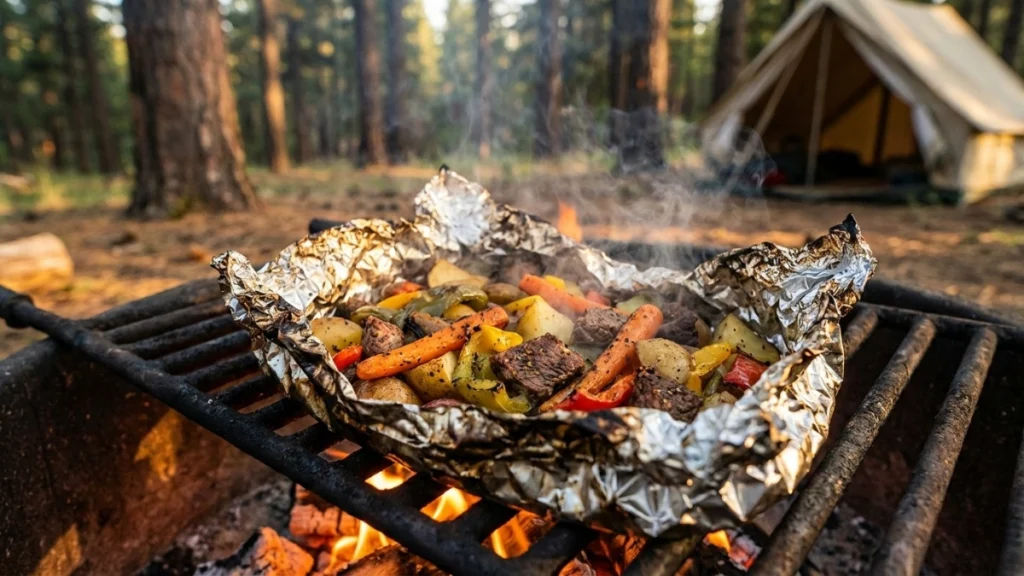
Foil Packet Camping Dinners: Everything I’ve Learned From 47 Attempts Over 6 Years
The first foil packet I ever made at camp ended up in the fire pit. Not metaphorically. I mean it literally fell through the grate, split open on the coals, and sent potato chunks scattering into the ash like tiny edible grenades. This was at a crowded campground near Crater Lake in 2018, and I had an audience of about eight fellow campers who watched me fish burnt vegetables out of the embers with a stick while Marcus tried very hard not to laugh. He failed.
That disaster taught me more about foil packet cooking than any recipe blog ever could. I learned that foil thickness actually matters, that packets need structural integrity, that you cannot just throw a loosely wrapped bundle onto coals and expect magic. Since then, I have made somewhere around 47 foil packet meals across 14 different campsites, in temperatures ranging from 28 degrees in a November snowstorm in the San Juan Mountains to 94 degrees during a brutal July trip in Utah. Some of those packets were genuinely excellent. Some were edible. Three were complete failures that I will detail here because those failures contained the most valuable lessons.
Foil packet cooking is one of those methods that sounds deceptively simple. Wrap food in foil. Put it on heat. Wait. Eat. In reality, the technique requires understanding heat distribution, moisture management, ingredient layering, and timing in ways that take actual practice to master. I am going to walk you through everything I have figured out, including the mistakes that led to those breakthroughs, the recipes I return to again and again, and the honest limitations of this cooking method that nobody seems to mention.
Table Of Contents
- Why Foil Packets Became My Go-To Camp Dinner Method
- The Foil Question: Heavy-Duty Is Not Optional
- Heat Source Options: Coals, Grates, and Campfires
- The Layering Principle: Vegetables on Bottom, Always
- Recipe One: The Packet That Saved a Rainy Night at Olympic Peninsula
- Recipe Two: Sarah's Vegetarian Packet That Actually Has Flavor
- The Cheese Problem and How to Solve It
- Recipe Three: The 47th Packet, My Best Salmon Yet
- What Goes Wrong: Honest Failures and How to Avoid Them
- Weight Considerations for Backpackers
- Cleanup and Leave No Trace Principles
- Seasoning Strategies That Travel Well
- Recipe Four: The Breakfast Packet Nobody Believes Works
- Temperature Control: The Skill That Takes Time to Develop
- Preparing Packets at Home: Pros and Cons
- Recipe Five: The Cold Weather Packet That Keeps You Warm
- The Limitations Nobody Talks About
- My Testing Methodology for These Recipes
- Looking Ahead: What I Am Testing Next
- What I Want You to Take Away
- Frequently Asked Questions
Why Foil Packets Became My Go-To Camp Dinner Method
I did not start out as a foil packet converter. For years, I was firmly in the one-pot meal camp, convinced that my GSI Pinnacle set could handle any dinner I threw at it. Then came a five-day backpacking trip in the North Cascades where I was cooking for six people, including two who could not eat gluten and one who was vegetarian. Making a single pot meal that worked for everyone felt impossible. On night three, out of desperation, I suggested everyone customize their own foil packets with a shared base of vegetables and whatever protein they had packed. It worked. Not just functionally, but actually tasted good. Jake, who usually inhales his food and complains that cooking takes too long, actually sat there savoring his packet and asked what I had done differently. I had done nothing differently. I had simply let foil do what foil does best: create a sealed environment where ingredients steam and roast in their own juices.
That trip converted me. Since then, foil packets have become my default dinner method for groups, for dietary restriction situations, and for any camp meal where I want hands-off cooking time. The beauty of a well-made foil packet is that once it hits the heat source, you are free. Free to set up tents, filter water, argue with Marcus about whether Luna needs her sweater yet, or just sit and watch the light change over the mountains. You are not standing over a stove stirring. You are not worrying about burning the bottom of a pot. You just wait.
The Foil Question: Heavy-Duty Is Not Optional
Let me address the single most important factor in foil packet cooking before we go any further. Regular aluminum foil will betray you. I am not being dramatic. I have watched thin foil tear, split, and leak its contents onto coals at least four separate times. The standard foil you might use to cover leftovers at home simply cannot handle the structural demands of camp cooking.
Heavy-duty aluminum foil is the baseline requirement. I use Reynolds Heavy Duty, though I have also had success with the Kirkland brand from Costco. The foil needs to be thick enough to fold without tearing and sturdy enough to survive being flipped with tongs or a spatula without puncturing. For particularly heavy or sharp-edged ingredients, like bone-in chicken or chunky potatoes, I double-wrap. This means using two sheets of heavy-duty foil per packet, which feels like overkill until you remember my Crater Lake incident.
In my testing, a single sheet of heavy-duty foil works for vegetables, ground meat, and fish. Anything with bones, anything over 1.5 pounds total weight, or anything you plan to cook for longer than 25 minutes should get the double-wrap treatment. I started tracking this in my camp food journal after ruining a gorgeous salmon packet in the Three Sisters Wilderness because the bones poked through during flipping. That was an expensive lesson, both financially and emotionally.
Heat Source Options: Coals, Grates, and Campfires
The heat source you use will fundamentally change how your foil packet cooks, and this is something I did not fully appreciate until I had experimented extensively with all three main options.
Campfire coals produce the most intense and direct heat. When I place packets directly on a bed of coals that have burned down from a hardwood fire, I get cooking temperatures somewhere between 400 and 500 degrees on the bottom of the packet. This creates excellent browning and caramelization on one side, but it also means you need to flip the packet at least once, usually twice, to cook evenly. My average cook time on coals is 15 to 20 minutes for a vegetable packet and 25 to 35 minutes for a protein-heavy packet. The challenge with coals is that they are unpredictable. Some spots are hotter than others. The coal bed shrinks as it burns. I have learned to rotate packets a quarter turn every five minutes and to keep a close eye on any smell of burning.
A campfire grate positioned four to six inches above the coals gives you more even heat and reduces the risk of burning. This is my preferred method when I have a grate available. The temperature is lower, more like 350 to 400 degrees, so cook times increase by about five to eight minutes compared to direct coal contact. The tradeoff is worth it for peace of mind. I can actually walk away for ten minutes without panicking.
A camp stove with a cast iron skillet or griddle is the most controlled option and the one I use most often on backpacking trips where I cannot count on having a fire. I preheat my battered 10-inch cast iron over medium heat on my MSR WhisperLite, then place the foil packet directly on the hot surface. This method takes the longest, usually 30 to 40 minutes, but the even heat distribution means I almost never burn anything. The downside is that you lose the smoky flavor you get from an actual fire.
I have tried using my Jetboil for foil packets exactly once. It did not go well. The flame is too concentrated and the cooking surface too small. Some tools are not meant for certain jobs.
The Layering Principle: Vegetables on Bottom, Always
Here is where most foil packet recipes fail people. They tell you to throw everything into the foil and seal it up without explaining the physics of what happens inside that sealed pouch. Let me break this down based on what I have observed over dozens of packets.
The bottom of your foil packet receives the most direct heat. Whatever touches that bottom layer will cook fastest and potentially burn if unprotected. Soft, wet vegetables like onions, bell peppers, and zucchini release moisture as they cook, which creates steam that protects them from burning and helps cook everything above them. This is why vegetables should almost always form the bottom layer of your packet.
I learned this principle the hard way during a trip to the San Juan Mountains in 2019. I had placed chicken breasts directly on the bottom of my packets with vegetables on top, thinking the chicken needed the most heat. What I got was rubbery, dry chicken bottoms with perfectly cooked vegetables. Marcus took one bite, looked at me with that expression he gets when he is being diplomatically honest, and said maybe next time we could try it differently. The next night I reversed the order. Sliced onions and peppers on the bottom, chicken on top, same seasonings. The difference was remarkable. The chicken came out juicy, the vegetables were caramelized, and Marcus had seconds.
My standard layering order from bottom to top is: hardy vegetables like onions and root vegetables, then softer vegetables like peppers and zucchini, then protein, then any additional seasonings or butter. This arrangement puts the ingredients that need the most cooking closest to the heat while using the moisture from the vegetables to steam the protein above.
Recipe One: The Packet That Saved a Rainy Night at Olympic Peninsula
I call this one my emergency packet because I have made it in conditions ranging from ideal to genuinely miserable, and it has never once failed me. The night I developed it, we were camped at a site on the Olympic Peninsula in Washington, rain was coming down sideways, and I had exactly 12 minutes of propane left in my canister because I had miscalculated our fuel needs. I needed a dinner that could cook on coals under our tarp without requiring any stove intervention.
For each packet you will need roughly half a pound of ground beef or turkey, one medium potato sliced thin, half an onion sliced thin, one carrot sliced into coins, a tablespoon of olive oil, and salt and pepper. That is it. No fancy spices, no obscure ingredients, nothing that requires special preparation.
Start by laying out a sheet of heavy-duty foil about 18 inches long. Drizzle a bit of the olive oil in the center. Layer the potato slices first, overlapping them slightly, then scatter the onion slices on top. Add the carrot coins. Season this vegetable base with salt and pepper. Now take your ground meat and form it into a flat patty about three-quarters of an inch thick. Lay this directly on top of the vegetables. Add a bit more salt and pepper to the meat. Fold the foil over the contents, then fold the edges up and over themselves at least three times to create a secure seal. You want no gaps where steam can escape.
This packet takes 25 to 30 minutes on a bed of coals or over a grate, flipping once at the halfway mark. The potatoes on the bottom will get crispy edges where they contact the foil, the carrots will soften but keep some bite, and the meat juices will drip down into the vegetables as everything cooks. When you open the packet, and you should do this carefully because steam will escape, you will find something that genuinely tastes like a home-cooked meal.
I have made this packet at least 15 times since that rainy night. The weight for one packet is about 1.3 pounds, which is reasonable for a car camping trip though too heavy for backpacking in the quantities I like. The cost per packet is somewhere around four dollars depending on your meat prices.
Recipe Two: Sarah’s Vegetarian Packet That Actually Has Flavor
My friend Sarah has been vegetarian for eight years, and she has rightfully complained that most camp cooking assumes everyone eats meat. Vegetarian options often feel like afterthoughts, she told me once during a trip to the Three Sisters. Just throw some vegetables in a packet and call it dinner. Where is the protein? Where is the substance?
That conversation sent me on a multi-trip quest to develop a vegetarian foil packet that could stand on its own as a satisfying dinner. After five attempts over three different camping trips, I landed on a combination that Sarah has now requested repeatedly and that even the meat-eaters in our group have enjoyed.
The base is chickpeas, either canned and drained or rehydrated from dried if you are backpacking and watching weight. One standard can contains about 1.5 cups of chickpeas, which is enough for two generous packets. To this I add sweet potato cut into half-inch cubes, red onion in wedges, and a generous amount of cherry tomatoes sliced in half. The key to making this taste like more than just random vegetables is a spice mixture I prepare at home: smoked paprika, cumin, garlic powder, a pinch of cayenne, and salt. Two teaspoons of this mixture per packet completely transforms the flavor profile.
Layer the sweet potato cubes on the bottom of your foil since they take longest to cook. Add the chickpeas and onion wedges, then scatter the cherry tomatoes on top. Drizzle with two tablespoons of olive oil and sprinkle your spice mixture over everything. Fold and seal tightly.
These packets need longer cooking time than meat versions, about 35 to 40 minutes on coals or 45 minutes over a grate. The sweet potatoes take time to soften fully. I learned through testing that cutting them smaller than half an inch leads to mushiness, while larger pieces stay too firm. The cherry tomatoes burst during cooking and create a sauce that coats everything else.
Sarah gave this recipe a 9 out of 10, her highest rating for any camp meal I have made her. She docked one point because she wishes it included some kind of cheese component, which brings me to an important note about dairy in foil packets.
The Cheese Problem and How to Solve It
Cheese in foil packets is tricky. I have added cheese to packets and had it burn to the foil. I have added cheese and had it disappear into a greasy layer at the bottom. I have added cheese and had it barely melt. The inconsistency drove me crazy until I figured out the variables at play.
The issue is timing and placement. Cheese added at the start of cooking has too long to melt, pool, and potentially burn. Cheese placed directly on the foil will stick permanently. Cheese added on top of hot ingredients needs time to melt but not so much time that it separates and becomes greasy.
My solution is to add cheese during the last five minutes of cooking only. When I estimate my packet is about five minutes from done, I carefully open the top fold, add grated or sliced cheese directly onto the protein or vegetables, and reseal loosely. The residual heat and steam melts the cheese perfectly without giving it time to overcook.
For packets where I want cheese throughout, like a sort of camp-style nachos packet I make with tortilla chips and ground beef, I use a layer of tortilla chips as a barrier between the foil and everything else. The chips prevent direct contact and absorb excess moisture that would otherwise make the cheese weird.
Marcus pointed out after one of my cheese experiments that maybe I was overthinking this. Maybe cheese in camp food does not need to be perfect, he said, scraping burned cheddar off his foil. I disagree. If I am carrying ingredients into the backcountry, I want them to taste as good as possible.
Recipe Three: The 47th Packet, My Best Salmon Yet
Salmon in foil is a classic for good reason. The foil creates a steaming environment that keeps the fish moist while allowing it to cook through evenly. But most recipes I have seen treat the salmon as the only ingredient that matters, surrounding it with maybe a lemon slice and some dill. After making salmon packets at least a dozen times, I have developed a version that turns the whole packet into a complete meal.
For each packet I use a six-ounce salmon fillet, skin on if possible because the skin protects the flesh from direct heat. Under the salmon goes a bed of thinly sliced fennel and thinly sliced lemon. The fennel releases a subtle anise flavor that complements the fish beautifully, and the lemon slices prevent sticking while infusing the fish with citrus.
On top of the salmon I add asparagus spears, about five or six per packet, and a tablespoon of butter cut into small pieces. A sprinkle of salt, some black pepper, and a few sprigs of fresh dill if I can find it at the store before the trip. That is the complete packet.
The cooking time for salmon packets is shorter than you might expect. On a grate over coals, 15 to 18 minutes total. On my cast iron over the stove, about 22 minutes. The salmon is done when it flakes easily with a fork and has reached an internal temperature of 145 degrees. I always bring a small instant-read thermometer on trips where I am cooking fish because undercooked salmon at camp is a food safety issue I do not want to experience.
This recipe came together during a trip to a lakeside campsite near Bend last October. The fennel was an accident, something I had bought for a different recipe and forgot to use. When I added it to the salmon packet out of desperation to use it up, the combination clicked. Marcus, who generally does not care much about food aesthetics, actually commented that it looked restaurant quality when I opened the foil. Luna attempted to steal a piece of salmon, which I consider a positive review.
What Goes Wrong: Honest Failures and How to Avoid Them
I promised at the start of this article to detail my failures, and I am a woman of my word. Understanding what goes wrong with foil packets has been more educational than any successful meal.
The Crater Lake disaster I mentioned was primarily a structural failure. The foil was too thin, the fold was too loose, and I placed the packet on an unstable section of the grate. When I tried to flip it with my spatula, the whole thing slid through a gap and into the coals below. The lesson was threefold: use heavy-duty foil, fold edges multiple times for security, and ensure your cooking surface is actually stable before you place anything on it.
During a November trip to the San Juan Mountains, I made the mistake of not accounting for altitude. At over 10,000 feet, water boils at a lower temperature, which means the steam inside foil packets is less hot than at sea level. My packets, which I cooked for the same time I would have used at lower elevation, came out with half-raw potatoes and tough meat. I learned that high altitude cooking adds roughly 10 to 15 minutes to foil packet times, sometimes more. Now I start checking packets earlier than I think necessary and accept that mountain cooking simply takes longer.
The worst foil packet failure happened at Wind River Range in Wyoming during an unseasonably cold September. I had prepared packets at home and frozen them solid for the drive. What I did not consider was that the nighttime temperatures would drop into the teens, and by morning my frozen packets had not thawed at all. They were essentially ice blocks wrapped in foil. I tried to cook them anyway, and the result was burned outside with frozen centers. Completely inedible. We ended up eating granola bars for dinner that night while I stared at the packets in defeat. Now I pack pre-made packets in insulated cooler compartments and check their thaw status several hours before cooking.
One other common failure I have observed, both in my own cooking and in watching others at campsites, is overstuffing. There is a temptation to cram as much food as possible into each packet. More food, more satisfaction, right? In practice, overstuffed packets do not cook evenly. The ingredients in the center stay undercooked because heat cannot penetrate effectively, while the edges overcook or burn. I limit each packet to about 1.5 pounds of total ingredients, which usually means one portion of protein and a generous serving of vegetables. If someone wants more food, they get two packets.
Weight Considerations for Backpackers
Car camping allows for generous foil packet meals without much planning. You can bring fresh vegetables, multiple proteins, heavy condiments, and as much foil as you want. Backpacking is different. Every ounce counts, and foil packets are not inherently lightweight.
I have adapted my foil packet recipes for backpacking by focusing on dehydrated and dried ingredients. Instead of fresh potatoes, I bring instant mashed potato flakes that I rehydrate partially before forming the packet. Instead of fresh vegetables, I use dehydrated mixed vegetables purchased in bulk or made at home in my dehydrator. Instead of fresh meat, I bring summer sausage or pre-cooked bacon that does not require refrigeration.
A backpacking foil packet for one person weighs about 8 to 10 ounces including the foil itself. For a three-day trip, carrying foil packets for each dinner adds roughly 1.5 to 2 pounds to my base food weight. Whether this tradeoff is worth it depends on your priorities. Personally, I find the variety and satisfaction of a foil packet dinner worth the extra weight on shorter trips. For anything over five days, I switch to lighter freeze-dried options.
One weight-saving trick I have adopted is pre-cutting and pre-measuring all ingredients at home, then packing them together in a single freezer bag. When it is time to cook, I just dump the bag contents onto my foil sheet, add oil, and seal. This eliminates carrying extra containers, utensils for measuring, and reduces the chance of forgetting an ingredient.
Cleanup and Leave No Trace Principles
Foil packets generate waste, and I take Leave No Trace principles seriously. The used foil cannot be burned completely. It cannot be buried. It must be packed out with your garbage.
After cooking, I let the foil cool completely, then fold it into the smallest possible square. Most packets, once compressed, fit into a space about three inches by three inches. I pack these into a dedicated garbage bag that I keep separate from my food storage. In bear country, this garbage bag goes in the bear canister with everything else because even burned foil retains food smells.
Cleaning the foil before packing it out is worth the effort. I scrape any remaining food bits back into my bowl to eat, then wipe the foil with a paper towel or a leaf to remove grease. This reduces odors and prevents the garbage bag from becoming a sticky mess.
For the cooking surface, whether a grate or my cast iron, I scrape off any burnt residue while it is still warm but not hot. A handful of collected ash mixed with a little water makes an effective abrasive scrub for cast iron. I learned this trick from a trail crew supervisor back in the North Cascades who probably forgot more about camp cooking than I will ever learn.
Seasoning Strategies That Travel Well
Pre-mixed seasonings have been a revelation for my foil packet cooking. Instead of carrying multiple spice jars that inevitably leak or get lost in my pack, I prepare seasoning blends at home and pack them in tiny containers or folded parchment packets.
My basic all-purpose blend for foil packets contains garlic powder, onion powder, salt, black pepper, and a tiny bit of brown sugar. The brown sugar helps with caramelization on vegetables and adds a depth of flavor that plain salt and pepper cannot achieve. Two teaspoons of this blend seasons one generous foil packet. For a week-long trip with foil dinners planned, I pack about five tablespoons of the blend, which weighs less than an ounce.
For variations, I have developed a taco blend with chili powder, cumin, and oregano that works wonderfully with ground beef packets. An Italian blend with dried basil, oregano, thyme, and fennel seeds complements chicken and vegetable packets. A smoky blend with smoked paprika and chipotle powder transforms simple potatoes into something special.
The color-coding system I use for my freezer bags at home has expanded to include seasonings. Blue bags are breakfast ingredients, red bags are dinner proteins and vegetables, green bags are snacks, and now small clear bags marked with colored tape indicate seasoning blends. Marcus thinks this level of organization is excessive. I think it prevents mistakes like the time I accidentally seasoned a fish packet with cinnamon sugar.
Recipe Four: The Breakfast Packet Nobody Believes Works
Foil packets are not just for dinner. I developed a breakfast packet during a cold morning at a dispersed campsite outside Crater Lake when I wanted something hot and filling but did not want to stand over my stove for 20 minutes in 35-degree temperatures.
The base of this breakfast packet is pre-cooked hash brown potatoes, either shredded from a bag or diced and parboiled at home before the trip. About a cup of potatoes per packet. On top of the potatoes I add diced bell pepper, maybe a quarter cup, and a handful of shredded cheese. Then I crack two eggs directly onto the top of everything. A bit of salt and pepper finishes it.
Sealing this packet requires care because you do not want to break the egg yolks until cooking. I make a loose dome shape with my foil, leaving enough headroom for the eggs, then seal the edges very carefully. The packet goes on medium-hot coals or over a grate for about 20 to 25 minutes. When done, the eggs should be set but still slightly soft in the yolks, the cheese melted throughout, and the potatoes crispy on the bottom.
Jake, my photographer friend who is always impatient for perfect morning light, was skeptical when I first made this for our group. Twenty minutes for breakfast, he complained, is twenty minutes I could be shooting. Then he tasted it. He has requested it on every trip since and even started making it at home on his backyard fire pit.
The trick with breakfast packets is managing expectations about the eggs. They will not look like traditionally fried eggs or scrambled eggs. They will look a bit like baked eggs you might get at a fancy brunch place. The texture is different but still delicious. I have had people tell me these packets taste better than traditional camp breakfast because everything cooks together and the flavors meld in a way separate ingredients cannot achieve.
Temperature Control: The Skill That Takes Time to Develop
If there is one aspect of foil packet cooking that cannot be learned from an article alone, it is reading heat. Every fire burns differently. Every coal bed has hot spots and cool zones. Every grate sits at a slightly different height. I have been doing this for six years and I still sometimes misjudge.
What I can share are the signs I watch for. When I first place a packet on the heat, I listen. Within two to three minutes, I should hear a gentle sizzling from inside the packet. If I hear aggressive sputtering immediately, the heat is too high and I need to move the packet to a cooler spot. If I hear nothing after five minutes, the heat is too low or my coal bed has died down too much.
Smell is another indicator. As vegetables caramelize and proteins cook, a wonderful savory aroma should start escaping through the foil seals. This usually happens around the ten-minute mark for most packets. A sharp or acrid smell means something is burning and the packet needs to be moved or flipped immediately.
Touch, while requiring caution, can also provide information. Using a thick glove or folded bandana, I gently press the top of the packet. The foil should feel tight from steam pressure inside. If the packet feels loose and deflated, either the seal has leaked or there is not enough moisture inside. I have learned to add an extra tablespoon of liquid, whether water, broth, or oil, to any packet that will cook longer than 20 minutes. This ensures enough steam to prevent drying.
Marcus has made fun of me for standing over foil packets like they are some kind of science experiment, watching, smelling, poking. He prefers to set a timer and forget about it. His approach works fine for car camping with generous margins for error. For backpacking trips where I have limited food and cannot afford failures, my more attentive method pays off.
Preparing Packets at Home: Pros and Cons
Making foil packets before a trip saves significant time at camp but comes with tradeoffs worth understanding.
The advantages are obvious. At home, you have counter space, running water, proper knives, and all the time you need. You can measure ingredients precisely, add marinades that need hours to penetrate, and freeze packets solid for transport. On my winter camping trips, I often bring packets frozen, using them as an additional ice source in my cooler that transforms into dinner by evening.
The disadvantages are less obvious until you experience them. Pre-made packets cannot be adjusted based on appetite or preferences. If you arrive at camp hungrier than expected, you are stuck with the portions you prepared days earlier. Pre-made packets also limit freshness. Vegetables cut three days before eating will not have the same texture as vegetables cut that afternoon. And as I learned in Wyoming, frozen packets require proper thawing management.
My compromise is to prep components at home but assemble packets at camp. I will slice vegetables, cook ground meat, mix seasonings, and pack everything in separate bags. At camp, I have flexibility in how much of each component goes into a given packet. This approach takes maybe five extra minutes at camp compared to fully pre-made packets but gives me the adaptability I prefer.
For truly time-sensitive situations, like arriving at camp after dark or cooking for a large group, fully pre-made packets are worth the tradeoffs. I have fed eight people in 40 minutes using pre-made packets that just needed to hit the grill. Trying to assemble eight individual packets in the dark would have taken twice as long with worse results.
Recipe Five: The Cold Weather Packet That Keeps You Warm
After the Wind River Range disaster with frozen packets, I became determined to develop a recipe specifically suited for cold weather camping. This recipe emphasizes caloric density, ease of preparation with cold hands, and tolerance for variable cook times.
The base is fully cooked and crumbled Italian sausage, which I prepare at home and freeze in measured portions. One portion is about six ounces of cooked sausage. To this I add canned white beans, drained and rinsed at home then packed in a bag. About half a cup of beans per packet. The vegetable component is kale, which I tear into pieces and pack raw. Kale holds up to transport better than most greens and wilts perfectly in the steamy packet environment.
Seasoning is minimal: olive oil, a bit of red pepper flakes for warmth, and salt. The sausage provides most of the flavor. Layering order is beans on bottom, sausage in the middle, kale on top. Drizzle the oil and seasonings over everything before sealing.
This packet is forgiving of timing variations. I cooked it in 20 minutes over high heat and 45 minutes over dying coals, and both results were good. The beans and sausage are already fully cooked, so the packet really only needs enough time for the kale to wilt and everything to heat through. This makes it ideal for conditions where managing heat precisely is difficult, like the windy, snowy night in the San Juans where I first tested it.
Each packet weighs about a pound and provides roughly 650 calories with a good balance of protein, fat, and carbohydrates. After eating one of these on that cold November night, I felt genuinely warm for the first time since leaving the car.
The Limitations Nobody Talks About
I have spent a lot of time celebrating foil packets, but honesty requires acknowledging what they cannot do.
Foil packets are not great for recipes requiring crispy textures throughout. Yes, the bottom layer gets some caramelization where it contacts the hot foil, but the top layers are essentially steamed. If you want crispy chicken skin or evenly browned meat, a skillet will serve you better.
Foil packets also struggle with delicate fish other than salmon. I have tried making foil packets with tilapia and cod, and both times the fish fell apart into flakes that mixed with the vegetables into a sort of fish hash. Not bad exactly, but not what I was aiming for. Firmer fish like salmon, halibut, and mahi-mahi hold their shape better.
The method generates waste that must be packed out. For backpacking trips where weight out matters as much as weight in, carrying used foil can be annoying. I have tried reusing foil for multiple meals, but food residue makes this impractical and potentially unsafe from a food hygiene perspective.
Finally, foil packets take longer than stove-top cooking for most meals. If your priority is speed, a pot of pasta or instant rice will beat any foil packet. I cook foil packets when I value the hands-off time more than I value raw speed.
My Testing Methodology for These Recipes
I mentioned at the start that I test recipes multiple times before sharing them. For the five recipes in this article, here is specifically how I tested.
The emergency ground beef packet was tested eight times across four trips between May and October 2024. Conditions included sea level camping at the Oregon coast, 5,000 feet at sites near Bend, and 9,500 feet in the San Juan Mountains. Variables I tracked included cook time at each elevation, fuel consumption when using my MSR stove, and taste ratings from Marcus, Sarah, Jake, and myself on a 10-point scale.
Sarah’s vegetarian packet went through five iterations. The first version used black beans and was too mushy. The second version tried firm tofu but the texture was weird after steaming. The third version with chickpeas was better but under seasoned. The fourth version added the spice blend but was too spicy for Sarah’s preference. The fifth version, which is what I shared here, balanced everything correctly.
The salmon packet exists in my records as tested 12 times, though the fennel addition only joined in the last four tests after that happy accident in October.
The breakfast packet has been made 11 times, always in temperatures below 50 degrees because that is when I most crave hot breakfast. Jake has made it independently three times using my instructions and reported consistent results.
The cold weather sausage packet has six tests, all in temperatures below freezing. My coldest successful test was at 18 degrees in January of this year during a snow camping trip that Marcus still says was a terrible idea.
Looking Ahead: What I Am Testing Next
Foil packet cooking continues to interest me because the technique is simple enough to be approachable yet has enough variables to keep rewarding experimentation.
Currently I am working on a dessert packet. The concept is sliced apples or peaches with a crumble topping that somehow manages to stay crispy. So far my attempts have resulted in either burnt sugar or mushy topping, and I have not cracked the code yet. I suspect the solution involves cooking the fruit first, then adding the topping for just the last few minutes, but I need warmer weather to test more.
I am also exploring foil packets for larger groups. The current recipes top out at about eight people before prep time becomes unreasonable. I am wondering whether larger packets, designed for sharing family-style rather than individual portions, might work better for group trips. Initial tests suggest that heat penetration becomes an issue with packets over two pounds.
Marcus suggested trying foil packets with his camp oven, using the oven’s even heat distribution to solve some of the inconsistent cooking problems. I am skeptical but willing to test it once the weather improves.
What I Want You to Take Away
That first foil packet that fell into the fire at Crater Lake feels like ancient history now. I have learned so much since then about heat management, ingredient layering, timing, and all the small details that turn foil packet cooking from a gamble into a reliable technique.
If you are new to foil packets, start with the emergency ground beef packet. It is forgiving, uses common ingredients, and will teach you the basic principles. Pay attention to your foil quality, your fold technique, and your heat source. Make the recipe three times before you decide whether you like the method. The first attempt will probably have room for improvement. The third attempt, armed with lessons from the first two, will likely surprise you.
For experienced outdoor cooks looking to expand your foil packet repertoire, I hope the specific recipes and testing data here give you useful starting points. Adapt them to your tastes, your gear, and your preferred camping style. The joy of camp cooking is that there is no single right answer. There is only what works for you, in your conditions, with your equipment.
Luna has stolen food from my foil packets exactly twice in the six years I have been perfecting this technique. Both times were my fault for leaving packets unattended at dog-nose height. She has excellent taste in camp food, which I choose to interpret as a compliment to my cooking.
Next time you are sitting at a campsite, watching a foil packet steam over coals while the light fades through the trees, I hope you experience the same satisfaction I feel. Good food makes the wilderness feel more like home. And after enough practice, foil packets can produce genuinely good food with surprisingly little effort. Your first attempt might be messier than mine. Keep going anyway. Learning is part of the adventure.
Frequently Asked Questions
How long do foil packets take to cook on a campfire?
Cook times vary based on your heat source, ingredients, and elevation, but in my testing across dozens of trips, most foil packets take between 20 and 40 minutes. Vegetable-only packets on a hot coal bed cook in about 15 to 20 minutes. Packets with ground beef or chicken need 25 to 35 minutes. Denser ingredients like whole potatoes or thick cuts of meat push toward 40 minutes or longer. At higher elevations, add 10 to 15 minutes to these estimates. I learned this the hard way at 10,000 feet in Colorado when my packets came out with rock-hard potatoes after cooking them for my usual sea-level timing. The best approach is to start checking at the 20-minute mark and use sound, smell, and a gentle press on the packet to gauge doneness.
Can you prepare foil packets ahead of time at home?
Absolutely, and this is one of my favorite meal prep strategies for camping trips. I assemble complete packets at home, wrap them tightly, and either refrigerate them for trips under three days or freeze them solid for longer adventures. Frozen packets double as ice packs in your cooler and thaw throughout the day. The key is allowing enough thaw time before cooking. I aim for packets to be fully thawed at least two hours before dinner. My one caution comes from a Wyoming trip where overnight temperatures dropped into the teens and refroze my packets solid. Now I store pre-made packets in the insulated section of my cooler and check them mid-afternoon to ensure they are ready for evening cooking.
What type of foil works best for campfire cooking?
Heavy-duty aluminum foil is non-negotiable for foil packet camping dinners. Standard kitchen foil is too thin and will tear, puncture, or split open when you flip the packet or move it around the fire. I have watched thin foil fail at least four times, including my infamous Crater Lake incident where an entire dinner fell through the grate into the coals. I use Reynolds Heavy Duty or the Kirkland brand from Costco. For packets containing bone-in meat, sharp vegetable edges, or anything cooking longer than 25 minutes, I double-wrap with two sheets. The extra layer costs pennies and has saved countless meals from disaster.
How can you tell when a foil packet dinner is fully cooked?
I rely on three sensory checks developed over six years of foil packet cooking. First, listen for a gentle sizzling inside the packet, which indicates active cooking and proper moisture levels. Second, smell for savory aromas escaping through the foil seals, usually detectable around the 10 to 15 minute mark. Third, use a gloved hand or folded bandana to gently press the top of the packet. It should feel tight and pressurized from steam buildup. For meat-containing packets, I carefully open one corner and insert an instant-read thermometer. Chicken should reach 165 degrees, beef and pork 145 degrees minimum, and fish 145 degrees. When uncertain, I always cook a few minutes longer rather than risk undercooked protein at camp.
Can you cook foil packets on a camp stove instead of a campfire?
Yes, and this is actually my most common method on backpacking trips where campfires are not permitted or practical. I preheat my cast iron skillet over medium heat on my MSR WhisperLite, then place the foil packet directly on the hot surface. Cook times run longer with this method, typically 30 to 40 minutes compared to 20 to 25 minutes over direct coals. The tradeoff is much more consistent and controllable heat. I flip the packet every 10 minutes for even cooking. My Jetboil does not work well for this purpose because the flame is too concentrated and the cooking surface too small, so stick with a broader stove setup if you go this route.
What vegetables work best in foil packet dinners?
Hardy vegetables that hold their shape during cooking work best as the bottom layer of your packet. Onions, bell peppers, potatoes, carrots, and zucchini are my most-used options. I slice potatoes thin, about a quarter inch, so they cook through in the same time as the protein. Softer vegetables like cherry tomatoes and mushrooms should go in the middle or top layers since they release moisture quickly and can become mushy if overcooked. I avoid leafy greens except for kale, which wilts nicely without turning to mush. After testing probably 30 different vegetable combinations, my favorite reliable mix is sliced onions, diced bell peppers, and carrot coins. This trio provides good flavor, holds up to varying cook times, and creates enough moisture to steam everything above it.