
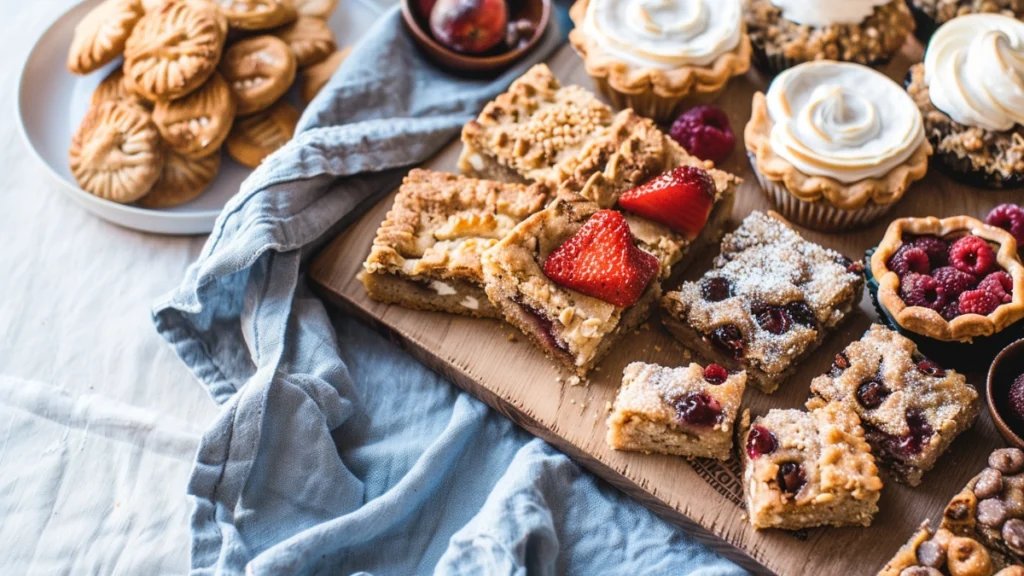
Handheld Picnic Desserts: Cookies, Bars, and Small Pastries That Actually Survive the Journey
The Great Brownie Disaster of Last Summer
I still remember standing in the parking lot of Sauvie Island Beach last July, staring into my cooler at what used to be a beautiful pan of fudgy brownies. The temperature had climbed to 91 degrees by noon, and despite my best efforts with ice packs, those brownies had transformed into a chocolate soup situation that required a spoon. Which I did not bring. Because the entire point of picnic desserts is that you shouldn’t need utensils.
My daughter Emma looked at me with the kind of disappointment only a ten year old can muster. My son Liam, who is seven and notoriously picky, actually seemed relieved because he could now avoid the “weird nuts” I’d added (walnuts, which are apparently offensive to second graders). My husband Marcus diplomatically suggested we stop for ice cream on the way home, which we did, but the defeat lingered.
That afternoon sparked a three month obsession with figuring out exactly which desserts can handle the reality of picnic conditions. Not the fantasy version where everything stays perfectly cool and you eat within an hour of arrival. The real version, where kids forget to close the cooler lid, where you park in full sun because it’s the only spot left, and where dessert doesn’t get touched until three hours after you arrive because someone insisted on one more game of frisbee.
I made over forty batches of various cookies, bars, and small pastries between August and October. I tested them in my backyard on mild days and at Forest Park on hot ones. I deliberately left things in my car for an hour to simulate worst case scenarios. I even enlisted my neighbor’s kids as taste testers because Emma and Liam’s opinions, while valuable, aren’t exactly representative of all children.
What I learned surprised me. Some of my go to recipes failed miserably under picnic conditions, while a few unexpected options became new favorites. The recipes that follow have earned their place in my regular rotation because they actually work when conditions aren’t perfect. And let’s be honest, conditions at a picnic are never perfect.
Table Of Contents
- Why Handheld Desserts Matter More Than You Think
- Brown Butter Oatmeal Cookies with Dried Cherries
- Tahini Blondies with Chocolate Chunks
- Lemon Cornmeal Cookies
- Chocolate Espresso Shortbread
- Apple Hand Pies
- Almond Butter Crispy Treats
- Coconut Macaroons
- Cardamom Orange Biscotti
- What I've Learned About Packing and Transport
- Making Ahead and Storage Notes
- Final Thoughts
Why Handheld Desserts Matter More Than You Think
Here’s the thing about picnic desserts that took me years to fully appreciate: they need to function as both food and packaging. When you’re sitting on a blanket at Laurelhurst Park with sticky fingers from watermelon and no table in sight, the last thing you want is something that requires a plate, a fork, and careful attention to keep from falling apart.
The ideal picnic dessert meets several criteria that I didn’t fully understand until I started testing systematically. It needs to hold its shape at temperatures up to about 85 degrees without becoming a mess. It needs to taste good at room temperature, not just fresh from the oven. It needs to survive being jostled in a bag or cooler during transport without crumbling into sad pieces. And ideally, it should actually improve or at least maintain quality after a few hours, rather than degrading.
Traditional baked goods often fail at least one of these tests. Cream filled anything is obviously out unless you’re eating within an hour. But even seemingly sturdy options like chocolate chip cookies can turn into greasy puddles if the chocolate content is too high or the butter ratio isn’t right. I learned this the hard way with a batch of triple chocolate cookies that looked gorgeous at home and arrived at our beach picnic as chocolate smears in a Ziploc bag.
The recipes I’m sharing here have all passed what I call the “four hour rule” in my testing. That means they’ve successfully survived four hours in a cooler or insulated bag, been transported at least twenty minutes in a car, and remained edible and enjoyable at serving time. Some of them have actually passed the six hour mark, which I note where applicable.
Brown Butter Oatmeal Cookies with Dried Cherries
Let me start with the cookie that changed my entire approach to picnic baking. I’ve made oatmeal cookies for years, but they always seemed to either get too soft in humid conditions or too dry and crumbly after a few hours. The version I landed on after eight different test batches uses brown butter, which does two important things: it adds a nutty depth of flavor that actually intensifies over time, and it creates a slightly sturdier texture than regular melted butter.
The dried cherries were Emma’s suggestion after she tried a version with raisins and declared them “boring.” She wasn’t wrong. The tartness of the cherries cuts through the sweetness in a way that makes these cookies appealing even to adults who normally skip dessert. Marcus, who usually limits himself to one cookie, consistently eats three of these.
For the dough, I start by browning one cup of unsalted butter in a saucepan over medium heat. This takes about six to eight minutes, and you need to watch it carefully because there’s a fine line between brown butter and burnt butter. I’ve crossed that line more times than I’d like to admit, usually because I got distracted by something Liam needed. Once the butter turns golden and smells nutty, I pour it into a large bowl and let it cool for about fifteen minutes. If you skip this cooling step, you’ll scramble your eggs when you add them. Ask me how I know.
To the cooled brown butter, I add three quarters cup of packed brown sugar and half a cup of granulated sugar. The ratio matters here. I tested a version with all brown sugar and while the flavor was deeper, the cookies spread too much and got thin and crispy, which sounds fine until you try to transport them and they shatter into pieces. The granulated sugar helps them hold their shape better.
I beat in two large eggs one at a time, then add two teaspoons of vanilla extract. For the dry ingredients, I whisk together one and a half cups of all purpose flour, one teaspoon of baking soda, one teaspoon of cinnamon, and three quarters teaspoon of salt. I add this to the wet ingredients and mix until just combined, then fold in three cups of old fashioned oats and one cup of dried tart cherries.
The critical step that most recipes skip is chilling the dough. I refrigerate it for at least two hours, and honestly overnight is better. The cookies made with unchilled dough spread too thin and had a greasier texture. The chilled dough version came out thicker and chewier, with better structure for transport.
I bake these at 350 degrees for eleven to twelve minutes. They’ll look slightly underdone when you pull them out, which is intentional. They firm up as they cool, and if you bake them until they look done in the oven, they’ll be too hard by the time they cool completely.
My testing showed these cookies actually taste better on day two than day one. The brown butter flavor develops and the texture somehow improves. They held up beautifully at four different picnics, including one at Mount Tabor Park where we had to hike up a fairly steep trail with them bouncing around in my backpack. Not a single broken cookie. I packed them in a rigid container with parchment paper between layers, which seems to be the key.
The yield is about thirty cookies, which seems like a lot until you realize how fast they disappear. At Emma’s soccer team picnic last month, I brought two dozen and came home with zero.
Tahini Blondies with Chocolate Chunks
I need to be honest about something: I didn’t expect to like these as much as I do. Tahini in desserts felt trendy in a way that made me skeptical. But after a friend raved about tahini brownies, I decided to experiment, and the blondie version turned out to be one of the most transport friendly bar cookies I’ve ever made.
The tahini does something magical to the texture. It creates a slight density that helps the blondies hold their shape without making them heavy or dry. It also adds a subtle savory note that balances the sweetness in a really appealing way. Liam, my notoriously picky eater, actually likes these, which is saying something because he usually rejects anything that looks “weird” (his words).
For these, I start by whisking together half a cup of well stirred tahini with half a cup of melted unsalted butter. The tahini needs to be well stirred because it separates in the jar, and if you just scoop from the top, you’ll get a weird texture. I learned this the hard way on batch number two, which came out greasy and strange.
To the tahini mixture, I add one cup of packed light brown sugar and mix until smooth, then beat in two large eggs and one and a half teaspoons of vanilla extract. In a separate bowl, I whisk one cup of all purpose flour with half a teaspoon of baking powder and half a teaspoon of salt. I fold the dry ingredients into the wet until just combined, then add one cup of chopped dark chocolate. I specifically use a bar chocolate that I chop myself rather than chocolate chips because the irregular shapes create pockets of chocolate throughout rather than neat little dots.
This batter goes into a parchment lined eight by eight inch pan at 350 degrees for twenty five to twenty eight minutes. The top should look set but a toothpick inserted in the center should come out with a few moist crumbs. Overbaking is the enemy here. I overbaked my first batch by just three minutes and they were noticeably drier and less fudgy.
The cooling is important. I let these sit in the pan for at least an hour before cutting, and ideally I refrigerate them for thirty minutes first. The cold blondies cut much more cleanly than room temperature ones, and the chocolate chunks don’t smear everywhere.
For transport, I cut them into sixteen squares and wrap each one individually in parchment paper. This sounds fussy, and it is, but it means no stuck together pieces and no chocolate transferring from one blondie to another. At a recent family picnic at the coast, I brought these in my Coleman soft sided cooler with two ice packs, and after four hours they were still perfect. The chocolate had softened slightly but hadn’t melted, and the texture was exactly right.
One note on the tahini flavor: if you’re worried about it being too pronounced, don’t be. It’s subtle. Several people at our last picnic asked what made these blondies taste different, and when I said tahini, they were surprised. It reads more as “interesting depth of flavor” than “I can taste sesame.”
Lemon Cornmeal Cookies
These came about because I needed a citrus option that wouldn’t involve any frosting or glaze. Most lemon cookies I’ve made require a powdered sugar drizzle or cream cheese frosting, neither of which survives heat well. I wanted pure lemon flavor in a sturdy, portable cookie.
The cornmeal was my solution to the texture problem. It adds a subtle crunch and a structural integrity that regular flour alone doesn’t provide. It also gives the cookies a slightly rustic appearance that I find charming, though Liam initially refused to try them because they “looked like they had sand in them.” (He eventually tried one and now requests them regularly, which is a victory I’m still celebrating.)
I cream together one cup of softened butter with three quarters cup of granulated sugar until light and fluffy, about three minutes with my stand mixer. Then I add the zest of two large lemons. This is where I learned an important lesson: the zest amount matters a lot. My first batch used one lemon’s worth of zest and tasted pleasantly lemony. But when I doubled it, the flavor really popped. After sitting for a few hours in a cooler, the one lemon version tasted bland, while the two lemon version had actually intensified.
I add one large egg and two tablespoons of fresh lemon juice, mix until combined, then add one and three quarters cups of all purpose flour, half a cup of fine cornmeal, half a teaspoon of baking powder, and a quarter teaspoon of salt. The dough comes together and looks crumbly but holds when pressed.
I roll the dough into one inch balls and place them on a parchment lined baking sheet. Then I press each one flat with the bottom of a glass dipped in sugar. This creates a nice sugary top and ensures even thickness for consistent baking.
They bake at 325 degrees for twelve to fourteen minutes. I pull them when the edges are just barely golden. They’ll seem soft when they come out, but they firm up significantly as they cool. Let them sit on the baking sheet for five minutes before transferring to a cooling rack.
These cookies have the longest shelf life of anything I tested. At five days in an airtight container at room temperature, they were still excellent. At seven days, they were slightly less fresh but still perfectly good. For picnic purposes, this is huge because you can make them earlier in the week and not stress about timing.
In my transport tests, they held up better than any other cookie in my lineup. The cornmeal seems to make them resistant to humidity, which is a problem in Portland’s unpredictable weather. I’ve brought these to picnics where a light drizzle started mid afternoon, and while other items got sad and soft, these remained crisp.
Chocolate Espresso Shortbread
I originally developed this recipe for a holiday cookie exchange, but it turned out to be one of my best picnic options. Shortbread has inherent advantages for outdoor eating: it’s sturdy, it doesn’t require any frosting or filling, and the high butter content means it doesn’t dry out quickly. Adding cocoa and espresso creates a sophisticated flavor that appeals to adults while still being approachable for kids who like chocolate.
The espresso might concern you if you’re packing these for a picnic with children. I worried about this too. But the amount is small enough that it enhances the chocolate flavor without adding noticeable coffee taste or any meaningful caffeine. My kids eat these without any issues, and they don’t like coffee flavored things generally.
For the dough, I start with one cup of softened butter beaten with half a cup of powdered sugar until smooth and creamy. Then I add one teaspoon of vanilla extract and one tablespoon of instant espresso powder dissolved in one teaspoon of hot water. The dissolving step is important. If you add the espresso powder directly, you get little crunchy bits throughout, which isn’t terrible but isn’t ideal either.
I sift together one and three quarters cups of all purpose flour, a quarter cup of Dutch process cocoa powder, and a quarter teaspoon of salt, then add this to the butter mixture. The dough will look crumbly at first but comes together as you continue mixing. I press it into a disk, wrap it in plastic, and refrigerate for at least an hour.
Rolling out shortbread dough can be tricky because it’s so butter heavy that it warms up quickly and gets sticky. I roll it between two sheets of parchment paper to a thickness of about a quarter inch, then transfer the whole thing (parchment and all) to a baking sheet and refrigerate for another fifteen minutes. This step makes cutting so much easier.
I cut these into rectangles, about two inches by one inch, because the shape is easier to eat neatly than round cookies. You can cut them into whatever shape you like, but rectangles pack more efficiently in containers, which matters when you’re trying to fit everything into a cooler.
They bake at 325 degrees for fifteen to eighteen minutes. Shortbread is done when it looks matte and set, not shiny. Underbaking results in a soft, almost raw center, while overbaking makes them bitter. I sacrificed several batches to find the sweet spot.
The texture of these is what makes them special. They’re crisp but not hard, and they sort of dissolve on your tongue in that way that good shortbread does. The chocolate flavor is deep without being overwhelming, and the espresso adds a complexity that people notice even if they can’t identify it.
For transport, these are nearly indestructible. I packed them in a tin with no padding between layers and they arrived intact after a forty five minute drive to a friend’s house in the hills. The only caveat is that they shouldn’t sit directly on ice packs because the cold makes them too hard. Room temperature transport is fine for these, which simplifies packing considerably.
Apple Hand Pies
These require more effort than the cookies and bars, and I want to be upfront about that. The prep time is closer to an hour than the twenty minutes some hand pie recipes claim, and you need to plan ahead because the dough requires chilling time. But the result is worth it, and these have become the most requested item when I bring picnic desserts to group events.
The crust is a standard pie dough, which I make from scratch but you could absolutely use store bought if you’re short on time. I’ve tested both, and while homemade has better flavor and texture, the Pillsbury refrigerated pie crust worked fine when I was in a pinch. For homemade, I pulse two and a half cups of all purpose flour with one tablespoon of sugar and one teaspoon of salt in my food processor, then add one cup of very cold cubed butter and pulse until the mixture looks like coarse crumbs. I drizzle in ice water one tablespoon at a time, pulsing after each addition, until the dough just comes together. This usually takes about six to eight tablespoons of water.
I divide the dough in half, form each half into a disk, wrap in plastic, and refrigerate for at least an hour. This is non negotiable. Warm dough tears and sticks and generally makes you want to throw the whole project in the garbage.
For the filling, I peel and dice four medium apples (I use Honeycrisp or Granny Smith) into small pieces, about half inch cubes. Bigger pieces don’t cook evenly and make the pies lumpy. I cook the apples in a saucepan with three tablespoons of butter, a third cup of brown sugar, one teaspoon of cinnamon, a pinch of nutmeg, and a pinch of salt over medium heat until the apples are tender but not mushy, about eight to ten minutes. Then I add one tablespoon of flour and stir to combine. This thickens the filling slightly so it doesn’t leak out of the pies during baking. I let this cool completely before assembling.
I roll out each dough disk to about an eighth inch thickness and cut out circles using a four inch round cutter. You’ll get about sixteen circles total. I place a heaping tablespoon of filling on one half of each circle, fold the dough over, and crimp the edges with a fork. Then I cut two small slits in the top for steam to escape.
I brush each pie with egg wash (one egg beaten with a tablespoon of water) and sprinkle with coarse sugar. They bake at 400 degrees for eighteen to twenty two minutes, until golden brown all over.
Here’s what I learned about transporting these: they need to cool completely, and I mean completely, before packing. If there’s any residual warmth, condensation forms in the container and the crust gets soggy. I let them cool for at least two hours at room temperature, then pack them in a single layer in a rigid container lined with paper towels.
These are best eaten within about six hours of baking. After that, the crust loses its crispness. They’re still edible at the eight hour mark, but noticeably less good. For a morning picnic, I bake them the night before and store them uncovered at room temperature overnight. The exposure to air keeps them crisp.
The filling can be made up to three days ahead and refrigerated, which helps spread out the work. The dough can also be made two days ahead. On baking day, you’re just assembling and baking, which takes about forty five minutes total.
Almond Butter Crispy Treats
I hesitated to include these because they’re not exactly baking. But they’ve been so successful at every picnic that leaving them out felt wrong. Plus, they’re one of the few nut butter based desserts that actually holds up in warm weather, which makes them valuable.
Traditional rice crispy treats made with butter and marshmallows tend to get gooey in heat. The butter softens, the marshmallow gets sticky, and you end up with a mess that clings to everything including your fingers, the container, and anyone who touches them. Switching to almond butter and using a slightly different technique solves this problem almost entirely.
I melt three tablespoons of coconut oil in a large pot over medium heat, then add one cup of almond butter and half a cup of honey. I stir until everything is smooth and combined, then remove from heat and add six cups of crispy rice cereal. I also add half a cup of mini chocolate chips at this stage, which seems like they would melt and cause problems but they actually hold their shape pretty well.
I press this mixture firmly into a parchment lined nine by thirteen inch pan. The key word here is firmly. I use another piece of parchment on top and press down with my hands, then use a flat bottomed measuring cup to really compact everything. The more compressed these are, the better they hold together during transport.
I refrigerate the pan for at least an hour before cutting into bars. They need to be cold to cut cleanly. Once cut, I store them in the refrigerator until I’m ready to pack them. For the picnic itself, they go in the cooler, and I’ve found they’re best eaten while still slightly cool. At room temperature on an 80 degree day, they’ll start to soften after about two hours.
The flavor profile here is more sophisticated than regular rice crispy treats. The honey adds a floral sweetness, the almond butter brings nuttiness and protein, and the chocolate chips provide little pops of richness. Marcus, who usually considers rice crispy treats “kid food,” actually requests these now.
One batch makes about twenty four bars, and they disappear fast. At Liam’s birthday picnic last year, I made a double batch thinking I’d have leftovers. I did not have leftovers.
Coconut Macaroons
I never thought of macaroons as picnic food until I brought some as an afterthought to a beach day and discovered they were one of the few things that survived the sandy, windy conditions completely intact. The dense, chewy texture means they don’t crumble, and unlike many cookies, they don’t rely on butter for structure, so heat isn’t a major enemy.
My recipe is simple but I’ve tweaked it over time for better results. I combine four cups of sweetened shredded coconut with two thirds cup of sweetened condensed milk, two egg whites, one teaspoon of vanilla extract, and a quarter teaspoon of salt. The mixture should be moist but not wet. If it seems dry, I add a tablespoon more condensed milk. If it seems too wet, I add a bit more coconut.
I scoop the mixture into mounds using a cookie scoop, about one and a half tablespoons each, onto a parchment lined baking sheet. I try to pack each mound firmly so they hold together well.
They bake at 325 degrees for twenty to twenty five minutes, until the tops and edges are golden brown. The centers will still look a little pale, and that’s fine. They firm up as they cool.
Once completely cool, I dip the bottoms in melted dark chocolate. This step is optional, but I think the chocolate adds a lot. The slight bitterness of dark chocolate balances the sweetness of the coconut perfectly. I set them on parchment chocolate side down and let the chocolate set completely before packing. In warm weather, I put them in the refrigerator for about fifteen minutes to speed this up.
For transport, these are remarkably resilient. I’ve thrown them somewhat carelessly into bags and containers and they’ve been fine. The only thing to watch is making sure the chocolate bottoms don’t stick to whatever you pack them in. Parchment paper or cupcake liners work well for this.
They keep for about a week at room temperature in an airtight container, though they’re best within the first three or four days. The texture gets slightly drier over time, but they’re still good.
Cardamom Orange Biscotti
I almost didn’t include biscotti because I worried they might seem too fancy or difficult. But they’re actually one of the easiest cookies to make, and their twice baked nature gives them incredible durability for picnics. Plus, there’s something really satisfying about offering biscotti at an outdoor meal. It elevates the whole experience without requiring any extra effort at serving time.
The cardamom and orange combination came from a trip to a bakery in San Francisco that sold these flavors together. I’ve been obsessed ever since. The warmth of the cardamom pairs beautifully with the brightness of the orange, and both flavors hold up well over time without fading or becoming muted.
I start by whisking together two and a quarter cups of all purpose flour, one cup of sugar, one and a half teaspoons of baking powder, one teaspoon of ground cardamom, half a teaspoon of salt, and the zest of two large oranges. In a separate bowl, I beat three eggs with one teaspoon of vanilla extract and two tablespoons of fresh orange juice.
I add the wet ingredients to the dry and mix until a dough forms. It will be sticky and somewhat soft. I fold in one cup of sliced almonds, which add crunch and help the biscotti keep their structure.
I divide the dough in half and shape each portion into a log about twelve inches long and three inches wide on a parchment lined baking sheet. The logs should be fairly flat, not rounded, because they’ll puff up during baking.
The first bake is at 350 degrees for about twenty five minutes, until the logs are firm and lightly golden. I remove them from the oven and let them cool for ten minutes, then slice them diagonally into pieces about half an inch thick. I lay these flat on the baking sheet and bake again at 325 degrees for ten minutes, flip them, and bake another ten minutes. They should be dry and crisp when done.
Here’s where I made a mistake initially: I cut the slices too thick. Thick biscotti take longer to dry out in the second bake, and if you don’t bake them long enough, they’ll be soft in the middle and won’t have that characteristic crunch. Half inch thick is the sweet spot.
These are essentially indestructible once fully cooled. I’ve packed them in bags, boxes, and even loose in my backpack, and they’ve never broken. They’re designed to be dipped in coffee or tea, but they’re equally good on their own, and the sturdy texture means kids can gnaw on them without making a mess.
They keep for up to two weeks in an airtight container, though I doubt they’ll last that long. The flavors actually develop a bit over the first day or two, so making them in advance is actually preferable.
What I’ve Learned About Packing and Transport
After all this testing, I’ve developed some strong opinions about how to actually get these desserts from your kitchen to your picnic blanket intact. The recipe is only half the battle. How you pack and transport makes a huge difference in what arrives.
First, rigid containers are almost always better than bags for baked goods. The only exception is items that are extremely sturdy, like biscotti. Everything else benefits from the protection of hard sides. I use Sistema brand containers with snap lids, which seal well and stack neatly in my cooler. The investment is worth it.
Second, cooler placement matters. I put desserts on top of other items, never on the bottom where they can get crushed. I also avoid placing them directly against ice packs, which can make some items too cold and change their texture. A layer of insulation, even just a kitchen towel, helps.
Third, I pack items in single layers whenever possible. Stacking cookies three or four high means the bottom ones get squished. If you must stack, use parchment paper between layers and keep the stack to two layers maximum.
Fourth, timing your packing is important. Room temperature items should go in the cooler last, right before you leave. If you pack them too early, condensation can form inside the container as the temperature drops, making things soggy.
Making Ahead and Storage Notes
One of the biggest questions I get about picnic desserts is how far in advance they can be made. Here’s what I’ve found through my testing.
The cookies (brown butter oatmeal, lemon cornmeal, chocolate espresso shortbread) can all be made three to four days ahead and stored in airtight containers at room temperature. Some of them actually improve with a day of resting. The lemon cornmeal cookies have the longest life at about a week.
The tahini blondies should be made no more than two days ahead if you want optimal texture. After that, they start to dry out slightly. You can extend this by wrapping them very well and refrigerating, but then you need to bring them to room temperature before serving for best flavor.
The apple hand pies are best within six to eight hours of baking. If I need to make them ahead, I’ll prep the components (dough, filling) in advance and do the final assembly and baking the morning of the picnic.
The almond butter crispy treats keep for about five days refrigerated but are best within the first two or three. The coconut macaroons last about a week at room temperature.
The biscotti have the longest shelf life of anything here, staying good for two weeks or more.
Final Thoughts
After forty plus batches and countless picnics, I’ve come to believe that the best picnic dessert isn’t necessarily the fanciest or most impressive looking one. It’s the one that still tastes good after sitting in a cooler for four hours, that doesn’t require utensils or plates, that can handle being jostled around in a backpack, and that makes people happy when they eat it.
Every recipe in this collection has passed those tests. They’ve survived hot days at Sauvie Island, rainy afternoons at Laurelhurst Park, and crowded birthday gatherings where kids grabbed at food with sandy fingers. They’ve been approved by my picky son, requested by my adventurous daughter, and quietly consumed in large quantities by my husband who claims he doesn’t really like dessert.
More than that, they’ve made our family picnics better. There’s something about ending a meal outdoors with a homemade cookie or a perfect little hand pie that feels special, even when the setting is just a park blanket ten minutes from home.
I hope you’ll try at least one of these and experience that same satisfaction. And if something goes wrong, if a batch spreads too thin or a hand pie leaks or a macaroon refuses to hold together, know that you’re in good company. I’ve had plenty of failures on the way to these successes. The good news is that even imperfect homemade desserts usually taste better than store bought perfect ones. And at a picnic, with the sun on your face and good company around you, standards tend to relax anyway.
Pack your cooler, grab your blanket, and bring dessert. That’s really all there is to it.