
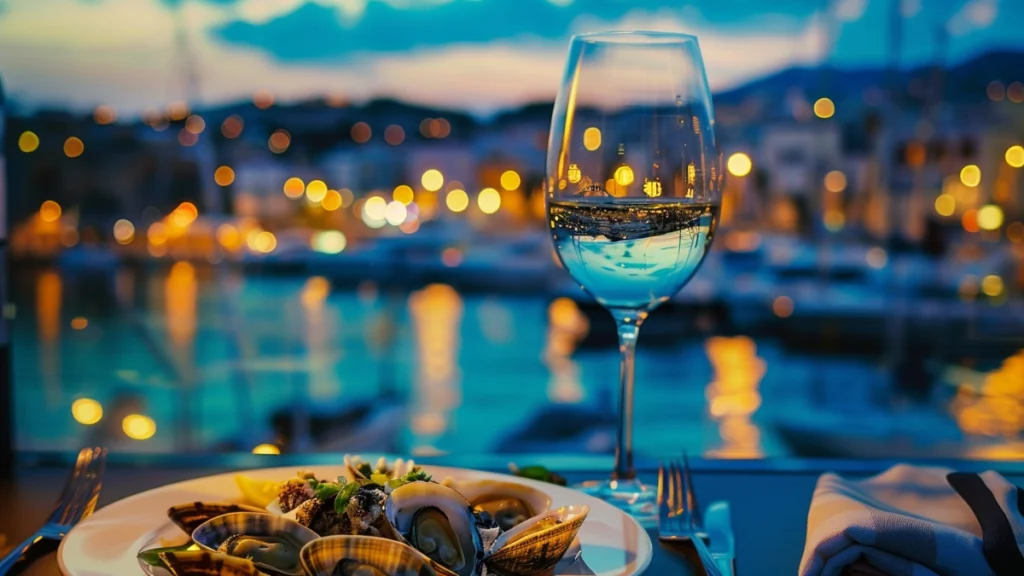
Gourmet and Fine Dining Travel Experiences: When Splurging Actually Makes Sense
The amuse-bouche arrived on a spoon carved from a single piece of aged oak. It was 7:43pm on a Thursday in Copenhagen, and I was sitting in a dining room that used to be a warehouse, now transformed into one of the world’s most celebrated restaurants. The tiny bite contained sea urchin, hazelnut, and something fermented that I couldn’t immediately identify. I closed my eyes. The ocean hit first, briny and cold, followed by the rich nuttiness of the hazelnut, and then this deep, almost mushroomy funk from whatever had been fermenting in the back kitchen for months. The whole experience lasted maybe four seconds.
That single spoon cost approximately $47 when you divided the prix fixe menu by its courses.
And here’s the thing: it was worth every cent.
I’ve been writing about food for nearly a decade now, and I’ll be honest with you. For most of that time, I’ve been a street food evangelist. I’ve written thousands of words about $3 bowls of pho in Hanoi, $2 tacos in Mexico City, and $5 hawker stall meals in Singapore. I still believe, fundamentally, that some of the best food in the world comes from grandmother’s carts and family-run holes in the wall where the menu hasn’t changed in forty years.
But I’ve also spent the last three years deliberately seeking out the opposite end of the spectrum. I’ve eaten at 23 Michelin-starred restaurants across 11 countries. I’ve dropped serious money on tasting menus that lasted four hours and wine pairings that cost more than my first car. I’ve sat in dining rooms where the staff outnumbered the guests and where courses arrived with explanations that took longer than the actual eating.
Some of those experiences were transcendent. Others were expensive disappointments dressed up in fancy tableware. This is what I’ve learned about when fine dining is worth the splurge, and when you’re better off finding a great taco truck.
Table Of Contents
- The Education of a Street Food Snob
- What Fine Dining Actually Offers (When It's Done Right)
- The Michelin Question: Stars, Hype, and Reality
- Five Fine Dining Experiences Worth the Splurge
- When Fine Dining Disappoints
- The Value Equation: When to Splurge and When to Skip
- Practical Tips for Fine Dining Travel
- What I Still Believe About Street Food
- Final Thoughts on the Splurge
- Frequently Asked Questions
The Education of a Street Food Snob
Let me back up for a moment. Three years ago, I was firmly in the camp of people who rolled their eyes at fine dining. I’d spent six months living in Italy, eating the best carbonara of my life for 12 euros at a trattoria with plastic tablecloths. I’d had revelatory meals at 6am noodle shops in Bangkok where the total bill came to 80 baht. The idea of spending $400 on dinner seemed absurd to me. Wasn’t it all just pretension and tiny portions?
My wife Emma was the one who pushed me to reconsider. She’d been photographing food alongside me for years, and she pointed out something that should have been obvious: I was making judgments about a category of food I’d barely experienced. I’d eaten at maybe three or four high-end restaurants in my entire life, all of them disappointing hotel dining rooms or overpriced steakhouses in American cities.
“You wouldn’t write about Thai food after eating at three bad Thai restaurants in Minneapolis,” she said. “Why are you writing off fine dining based on three bad experiences at hotel restaurants?”
She had a point.
So in the spring of 2022, I started what I now call my “expensive education.” I set aside a portion of every writing assignment’s budget specifically for high-end dining. When I traveled to Tokyo, I booked a counter seat at a two-Michelin-star sushi restaurant instead of just hitting the Tsukiji outer market. When I went to Paris, I saved up for a meal at a legendary bistro instead of just eating croissants and crêpes. When I visited San Sebastián, I splurged on a tasting menu at one of the Basque Country’s most celebrated kitchens.
What I discovered surprised me. And it changed how I think about food, value, and what we’re actually paying for when we sit down at a restaurant.
What Fine Dining Actually Offers (When It’s Done Right)
The first high-end meal that genuinely moved me was at a small restaurant in Kyoto. I’m not going to name it here because the reservation system is already impossible and I don’t want to make it worse. But I will tell you what happened.
I arrived at 5:55pm for a 6pm seating. The restaurant had eight seats, all at a counter facing the chef, a man in his early sixties named Tanaka-san who had been cooking kaiseki for over four decades. There was no menu. There were no choices. You sat down, and over the next two and a half hours, you ate what Tanaka-san had prepared that day based on what was available at the market that morning.
The meal cost 35,000 yen, roughly $240 at the time. Before I sat down, I was nervous about that number. By the time I left, I understood that I’d actually gotten a bargain.
Here’s what nobody tells you about great fine dining: it’s not about the ingredients, although those matter. It’s not about the technique, although that matters too. What separates a truly great high-end restaurant from an expensive mediocre one is intention. Every single element has been considered. The temperature of the plate. The angle at which the food is placed. The timing between courses. The weight of the chopsticks in your hand. The temperature of the sake. The way the chef watches your face as you take the first bite, not for validation, but to calibrate what comes next.
Tanaka-san served me a piece of grilled eel that evening that I still think about. It arrived on a ceramic plate that was slightly warm, not hot, warm, so the eel maintained its temperature without cooking further. The skin had been crisped over binchōtan charcoal until it shattered like glass when my chopsticks pressed into it. The flesh beneath was fatty and rich, almost custard-like. There was a sauce, something sweet and savory and complex, but applied with such restraint that it enhanced the eel rather than masking it.
I asked Tanaka-san, through my limited Japanese and some help from a bilingual guest beside me, how long he’d been perfecting this particular preparation. He smiled and held up four fingers. Forty years. He’d been grilling eel the same way, making tiny adjustments, for four decades.
That’s what you’re paying for at a great fine dining restaurant. Not just ingredients and technique, but accumulated wisdom. Thousands of hours of practice. A lifetime of refinement. When it works, you’re not just eating dinner. You’re experiencing the culmination of someone’s life’s work.
The Michelin Question: Stars, Hype, and Reality
I need to address the Michelin thing directly because it comes up constantly when people ask me about fine dining travel.
Here’s my honest assessment after eating at 23 starred restaurants: the Michelin system is a useful but imperfect guide. It’s better than nothing, certainly better than TripAdvisor reviews or Instagram popularity. But it’s also weighted toward a particular style of cooking, tends to favor French techniques even in non-French contexts, and can lag behind reality by years.
I’ve had one-star meals that were better than three-star meals. I’ve eaten at restaurants that lost their stars and actually improved. I’ve been to places that were clearly resting on their reputation, serving the same dishes they’d been lauded for a decade ago while the kitchen’s heart had moved on.
The most useful thing I can tell you about Michelin stars is this: treat them as a starting point, not a guarantee. A starred restaurant has been vetted by inspectors who take their job seriously. It probably won’t be actively bad. But whether it will be the transcendent experience you’re hoping for depends on factors the stars can’t capture: the specific chef working that night, the quality of ingredients that particular season, and frankly, whether the style of cooking resonates with your personal preferences.
My approach now is to research beyond the stars. I read local food blogs in the original language, using translation when necessary. I look for restaurants where chefs post about their work with genuine excitement rather than just marketing speak. I pay attention to where other chefs eat on their days off, information you can often find in interviews and social media. And I’m willing to try unstarred restaurants that serious food people recommend, because sometimes the best meals happen in places the Michelin inspectors haven’t found yet or don’t fit their criteria.
Five Fine Dining Experiences Worth the Splurge
Let me get specific. Over three years of expensive eating, these are the experiences that justified their price tags. I’m including what I paid, what made each one special, and what kind of traveler I’d recommend them to.
The Counter Sushi Experience in Tokyo
I’ve eaten sushi in Tokyo at least forty times across five different trips. Most of it has been excellent and affordable, the kind of neighborhood spots where a filling lunch costs 2,500 yen and the fish is impeccable. But my meal at a small eight-seat counter in Ginza, where I paid 45,000 yen for lunch, showed me what sushi could be at its absolute peak.
The chef, who had trained for over fifteen years before opening his own place, served me 20 pieces of nigiri over 90 minutes. Each piece arrived at the exact moment he determined optimal, the rice still warm from his hands, the fish at the precise temperature he wanted. The rice itself was a revelation. Slightly looser than what I was used to, seasoned with a red vinegar that had been aged for years, it dissolved on my tongue rather than requiring chewing.
What surprised me most was the aji, horse mackerel, a fish I’d always considered second-tier. At this counter, served with nothing but a brush of soy and a hint of grated ginger, it was complex and nuanced, fresh from Tsukiji that morning. The chef told me he’d selected that particular fish at 4am, recognizing from its eyes and skin that it would be exceptional.
I’d recommend this kind of experience to anyone who loves sushi and wants to understand what decades of specialization can achieve. But I’d also say this: if you’re not already a sushi enthusiast, the subtleties might be lost. Start with good neighborhood sushi, develop your palate, and then splurge on the counter experience when you’re ready to appreciate the differences.
The Basque Innovation in San Sebastián
San Sebastián has more Michelin stars per capita than anywhere else in the world, and after a week of eating there, I understand why. The Basque commitment to ingredients, technique, and hospitality is unmatched.
I ate at three starred restaurants during that trip. The one that stayed with me was a modern Basque kitchen where the tasting menu cost 220 euros before wine. It was a lot of money. It was also one of the most intellectually engaging meals I’ve ever had.
The chef was doing something I hadn’t encountered before: taking traditional Basque dishes, many of them humble peasant foods, and reimagining them with contemporary techniques while preserving their emotional core. A course that looked like a simple grilled vegetable turned out to be an elaborate construction involving 12 hours of preparation, but it still tasted like something your grandmother might have made, just elevated to a level of precision she couldn’t have imagined.
The kokotxas, cod cheeks in a green sauce, arrived in a bowl that looked almost rustic. But the sauce had been refined into something silky and intense, the fish cooked with a precision that left it just barely set in the center. When I asked about the technique, the server explained that the kitchen had spent eight months perfecting the temperature and timing, testing hundreds of variations before settling on this version.
I’d recommend San Sebastián’s high-end restaurants to anyone interested in how traditional cuisine can evolve without losing its soul. But I’d also suggest balancing those meals with pintxos crawls through the old town, where you can eat just as well for a fraction of the price.
The Omakase Experience in New York
Let me be clear about something: I’m generally skeptical of fine dining in New York. Rents are astronomical, and that gets passed on to diners. A lot of what you’re paying for is real estate, not food.
But there’s a small Japanese restaurant in Manhattan where I had an omakase dinner that changed my thinking. The meal cost $385 before tip, and the space seated only twelve people. The chef had trained in Tokyo for eight years before opening his own place, and he imported most of his fish directly from Japan.
What made this meal worth the New York premium was the quality control. Every element was as good as what I’d experienced in Tokyo, sometimes better because the chef wasn’t constrained by Japanese conventions about what could be served. He incorporated local ingredients, Hudson Valley duck, East Coast oysters, that a chef in Tokyo wouldn’t use, but prepared them with Japanese techniques that brought out nuances I’d never tasted before.
I’ve been back three times now. The consistency is remarkable. That matters in fine dining. It’s easy to have one great meal anywhere. Maintaining that level night after night, year after year, is what separates genuinely excellent restaurants from lucky ones.
The Farm-to-Table Immersion in Denmark
Copenhagen has become one of the world’s great food cities, and the approach there, hyperlocal, seasonal, fermentation-focused, has influenced restaurants everywhere. I spent four days eating my way through the city, including one meal that cost more than my plane ticket.
That expensive meal took place at a restaurant I won’t name, partly because reservations are already ridiculous and partly because the experience felt so personal that broadcasting it seems wrong. What I can tell you is that it lasted four hours, involved 18 courses, and included ingredients I’d never encountered before: fermented plums aged for two years, wild herbs foraged from specific beaches, fish cured using techniques that predated refrigeration.
The thing that struck me most was the coherence. Every dish told a story about this specific place at this specific time. The menu changed constantly based on what was available. The chef talked about the farmers and foragers by first name. When I asked where the carrots came from, the server didn’t just name a farm but described the soil conditions and how this year’s mild summer had affected the harvest.
Is this kind of experience worth $400 plus? For me, yes, but with a caveat. I appreciated it because I’d spent years developing a palate and an understanding of what contemporary Nordic cuisine was trying to achieve. If I’d walked in without that context, I might have found it confusing or pretentious. Great fine dining often requires you to meet it partway.
The Old Guard in Paris
Not all worthy fine dining is modern and experimental. Some of it is the opposite: classical techniques executed with precision by kitchens that have been doing the same things for decades.
I had this experience at a traditional Parisian restaurant, the kind of place with white tablecloths, formal service, and a menu that hasn’t changed much since the 1970s. The meal cost 280 euros, which is expensive by any standard but actually moderate for Paris fine dining. What I got was a masterclass in classical French cooking.
The dover sole meunière arrived tableside, deboned by a server who’d clearly done this thousands of times. The sauce was butter, lemon, parsley, nothing more, but executed so perfectly that I understood why this simple preparation has endured for centuries. The butter was brown but not burnt, nutty and rich. The lemon was bright but not acidic. The parsley was there for color and a whisper of freshness. Together, they created something that tasted both familiar and revelatory.
I’d recommend this kind of classical fine dining to anyone who wants to understand the foundations. Before you can appreciate what modern chefs are deconstructing and reimagining, it helps to experience the traditions they’re building on. And honestly, sometimes a perfectly executed classic is more satisfying than an experimental dish that’s trying too hard to be clever.
When Fine Dining Disappoints
I’ve painted a positive picture so far, but I need to be honest about the failures too. Not every expensive meal delivers. I’ve had plenty of disappointments, and understanding why can help you avoid similar mistakes.
The worst fine dining experience of my life happened in London at a restaurant with two Michelin stars. I paid 350 pounds for a tasting menu that felt like it had been designed by committee. The dishes were technically competent but emotionally empty. You could tell the kitchen was executing a concept rather than cooking from passion. The foie gras was perfectly seared but served at the wrong temperature. The lamb was cooked precisely but under-seasoned. The dessert was beautiful and boring.
What went wrong? I’ve thought about this a lot. I think the restaurant had grown too successful too quickly. The original chef had expanded into multiple locations, and this particular kitchen was running on autopilot. The recipes were followed, but the attention was elsewhere.
I’ve learned to watch for warning signs. Restaurants that have expanded rapidly often struggle with quality control. Places where the founding chef has stepped back but still gets the credit can coast on reputation. Menus that sound impressive but feel like they were written for awards committees rather than actual eaters are usually disappointing in practice.
I’ve also learned that ambiance and service, while important, can’t compensate for mediocre food. I once ate at a restaurant where the dining room was stunning, the service was impeccable, and every dish was just… fine. Not bad. Not good. Fine. At $300 per person, fine isn’t enough.
The Value Equation: When to Splurge and When to Skip
After three years of expensive eating, I’ve developed a framework for deciding when fine dining is worth the money. It comes down to four questions.
First, is this an experience I can’t replicate elsewhere? The best fine dining offers something you genuinely cannot get at a lower price point. The years of training, the rare ingredients, the precision timing. If a restaurant is charging high-end prices for food you could get at a neighborhood bistro, skip it.
Second, am I in the right mindset? Fine dining requires attention. If you’re jet-lagged, distracted, or rushing to make a show afterward, you won’t get your money’s worth. I now schedule important restaurant meals on days when I have nothing else planned, when I can arrive relaxed and stay as long as the experience requires.
Third, have I done my research? I never book a fine dining restaurant based on stars or hype alone. I read reviews from people whose tastes I trust. I look for recent feedback, not accolades from three years ago. I try to understand what makes this particular kitchen special before I commit.
Fourth, does this fit my current interests? I’m more likely to splurge on restaurants that align with what I’m excited about at the moment. When I was deep into understanding fermentation, the Copenhagen scene was worth every penny. When I wanted to learn about classical French technique, the old Parisian restaurant made sense. Eating at a restaurant just because it’s famous, without genuine curiosity about its approach, usually leads to disappointment.
Practical Tips for Fine Dining Travel
Let me share some things I’ve learned that might save you money, frustration, or both.
Book early, but not too early. The most sought-after restaurants require reservations months in advance. But I’ve found that booking exactly when the calendar opens often gets you undesirable time slots, the 5pm seating or the 10pm late night. Instead, I check back periodically for cancellations. People’s plans change, especially for expensive reservations they made on a whim. I’ve gotten tables at fully booked restaurants by checking their booking system at random times over several weeks.
Lunch is often better value than dinner. Many fine dining restaurants offer abbreviated tasting menus at lunch for significantly less money. At one Paris restaurant, the lunch menu was 180 euros while dinner was 340 euros. The lunch included fewer courses but the quality was identical. If you’re budget-conscious but want the experience, lunch seatings are your friend.
Ask about supplements carefully. Some tasting menus offer optional upgrades: truffles, caviar, premium wines. These can add hundreds of dollars to your bill. I’m not saying never do it, but be aware of what you’re agreeing to. I once nodded along to a server’s suggestion and realized later I’d added 120 euros to my meal for some truffle shavings I didn’t particularly want.
Consider the wine pairing, but calculate the value. Wine pairings can be wonderful, introducing you to bottles you’d never order by the glass. They can also be overpriced filler. I ask about the pairing before committing. How many wines are included? What regions are represented? If the pairing costs 150 euros but includes mostly entry-level bottles from well-known producers, I might order a single interesting bottle instead.
Don’t be afraid to ask questions. Fine dining service should be knowledgeable and approachable. If you don’t understand an ingredient or a technique, ask. If you have dietary restrictions, communicate them clearly when booking and again when you arrive. The best restaurants see questions as engagement, not annoyance.
Tip appropriately for your location. Tipping customs vary wildly. In the US, 20 percent or more is expected at high-end restaurants. In much of Europe, service is included, and additional tipping is optional. In Japan, tipping can be seen as insulting. Research before you go so you don’t accidentally offend or under-tip.
What I Still Believe About Street Food
I started this piece by acknowledging my history as a street food evangelist, and I want to return to that before closing. Three years of fine dining haven’t changed my fundamental belief that some of the world’s best food costs almost nothing. The 40 baht pad thai I ate at a street cart in Bangkok’s Chinatown last spring was, bite for bite, as delicious as dishes I’ve paid 50 times more for.
What’s changed is my understanding of what fine dining can offer when it’s done right. It’s not better than street food. It’s different. It’s a different kind of experience, a different kind of value, a different kind of pleasure.
The street food cart offers immediacy, authenticity, a connection to local food culture that no fine dining restaurant can replicate. The grandmother who’s been making the same dish for forty years, the vendors who know their regular customers by name, the experience of eating while perched on a plastic stool at 7am with truck exhaust mixing with charcoal smoke. That’s irreplaceable.
Fine dining offers something else: intention, refinement, the experience of eating food that represents someone’s life work at its highest expression. When you’re sitting at a counter watching a chef who’s spent decades perfecting a single craft, you’re witnessing something remarkable. It’s not the same as street food. It doesn’t need to be.
The mistake, I think, is treating these as competing options. They’re not. A great food travel experience might include a $3 breakfast at a market stall and a $300 dinner at a Michelin-starred restaurant. The contrast enriches both experiences.
Final Thoughts on the Splurge
I’m writing this from a hotel room in Lisbon, where tomorrow I have a reservation at a restaurant that will cost more than my flight here. I’ve been anticipating this meal for months, reading interviews with the chef, studying the philosophy behind the menu, preparing myself to appreciate what I’m about to experience.
Is it worth it? Ask me tomorrow night.
But here’s what I know after three years of expensive education: the best fine dining experiences have expanded my understanding of what food can be. They’ve shown me levels of craft and intention I didn’t know existed. They’ve given me reference points that make me appreciate both the extraordinary and the ordinary more fully.
They’ve also taught me that price alone guarantees nothing. The best meals of my life span a range from $2 to $500. What they share isn’t a price point. It’s care. Attention. Intention. The sense that someone gave a damn about what ended up on my plate.
When I recommend fine dining splurges to fellow travelers, I tell them this: don’t do it for the bragging rights or the Instagram photos. Don’t do it because some list told you it was the best restaurant in the world. Do it because you’re genuinely curious about what’s possible when a cook dedicates their life to a craft. Do it when you’re ready to pay attention, to be present, to treat a meal as an experience worth your full engagement.
And then the next morning, find the best market stall in the city and eat something wonderful for the price of a fancy coffee.
That’s the balance. That’s what I’ve learned. Food, at its best, is worth what we pay in attention, not just in money. The grandmother at the street cart and the chef at the three-star restaurant both deserve that attention. When we give it to them, regardless of the price tag, we get back something that no amount of money can buy: a moment of genuine connection through food.
My reservation in Lisbon is at 8pm. I’ll be early. I’ll be hungry. And I’ll be paying attention to every single bite.
Frequently Asked Questions
Is fine dining worth the money when traveling?
It depends entirely on what you’re looking for. After eating at over 20 Michelin-starred restaurants across 11 countries, I can tell you this: the best fine dining experiences offer something you genuinely cannot replicate at a lower price point. You’re paying for decades of culinary training, rare seasonal ingredients, and meticulous attention to every detail from plate temperature to timing between courses. However, not every expensive meal delivers on that promise. I’ve had $400 dinners that changed how I think about food, and I’ve had $350 meals that felt like overpriced mediocrity. The key is doing your research, understanding what makes a particular restaurant special, and going in with the right mindset to appreciate the experience fully.
How far in advance should I book fine dining restaurants for travel?
For the most sought-after restaurants, you’ll need to book two to four months ahead. Some places like certain Copenhagen or Tokyo establishments release reservations exactly 60 or 90 days out, and tables disappear within minutes. My strategy is to mark my calendar for when bookings open, but also check back regularly for cancellations. People’s plans change, especially for expensive reservations made impulsively. I’ve scored tables at fully booked restaurants by checking their booking system at random times throughout the week. Many restaurants also hold a few tables for walk-ins or same-day bookings, so it’s always worth calling directly if online availability shows nothing.
What should I wear to a Michelin-starred restaurant?
Dress codes have relaxed significantly over the past decade, but I still recommend smart casual as your baseline for most fine dining establishments. For men, that typically means trousers and a collared shirt, no tie required. For women, a nice dress or elegant separates work well. Some traditional European restaurants, particularly classic French establishments, still expect jackets for men. Meanwhile, many modern Nordic and Japanese restaurants have adopted a more relaxed approach where clean, presentable clothing is perfectly acceptable. When in doubt, check the restaurant’s website or call ahead. I’ve never regretted being slightly overdressed, but I have felt uncomfortable being the most casual person in the room.
How do I find the best fine dining restaurants when traveling abroad?
I spend 10 to 15 hours researching before visiting any city specifically for food. My process starts with local food blogs written in the original language, which I translate using browser tools. These writers know their cities far better than international publications. I also join Facebook groups for local food enthusiasts and expats, study Google Maps reviews in the local language looking for patterns, and pay attention to where professional chefs say they eat on their days off. Instagram can be useful but misleading since photogenic food isn’t always the best food. I’m looking for restaurants that get mentioned repeatedly by serious food people, not just places with beautiful plating. The Michelin guide is a decent starting point, but I treat it as one data source among many.
Is lunch better value than dinner at fine dining restaurants?
Almost always yes. Many high-end restaurants offer abbreviated tasting menus at lunch for 40 to 50 percent less than dinner prices. At one Paris restaurant, the lunch menu was 180 euros while dinner cost 340 euros. The food quality was identical since it’s the same kitchen and same chef. You simply get fewer courses. The atmosphere tends to be slightly more relaxed at lunch too, which some people prefer. The trade-off is that lunch seatings often have stricter time limits since they need to reset for dinner service. If you’re budget-conscious but want to experience a world-class kitchen, lunch reservations are the smartest approach. I’ve had some of my most memorable meals between noon and 2pm.
What’s the difference between a one-star and three-star Michelin restaurant?
According to Michelin’s official definitions, one star means “high-quality cooking worth a stop,” two stars indicate “excellent cooking worth a detour,” and three stars represent “exceptional cuisine worth a special journey.” In practical terms, three-star restaurants typically offer more elaborate tasting menus, higher staff-to-guest ratios, rarer ingredients, and more theatrical presentation. But here’s what I’ve learned from experience: the star count doesn’t always correlate with personal enjoyment. I’ve had transcendent meals at one-star restaurants that understood exactly what they wanted to be, and disappointing meals at three-star establishments that felt more focused on maintaining their rating than creating genuine joy. Use stars as a starting point for research, not as a guarantee of the experience you’ll have.