
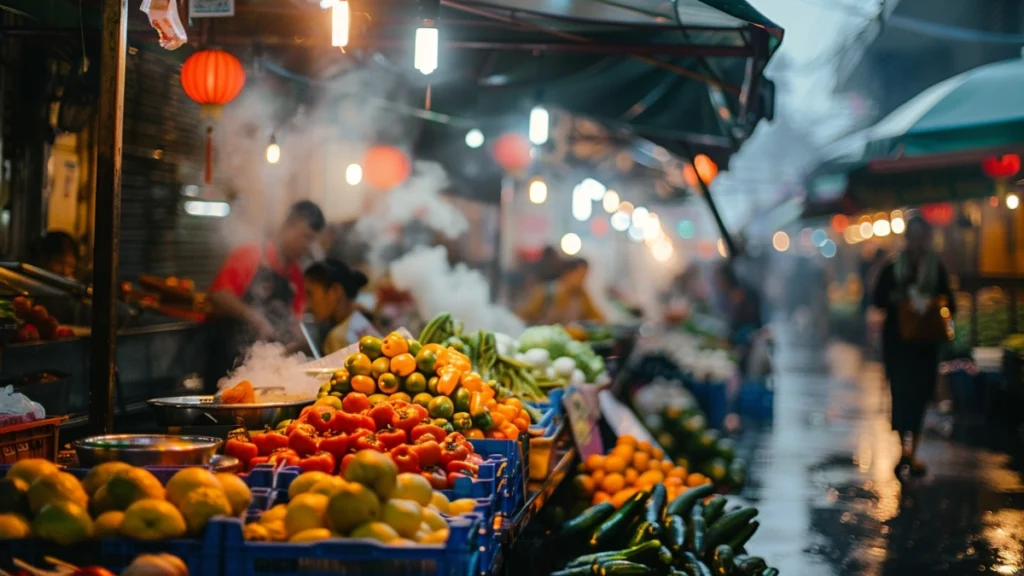
Culinary Travel Tours and Experiences: A Guide to Booking and Navigating Immersive Food Adventures Around the Globe
It was 5:47 in the morning when I found myself standing in the pitch-dark parking lot of a wet market in Chiang Mai, clutching a weak coffee and wondering if I’d made a terrible mistake. The cooking class I’d booked promised an “authentic market experience,” and the instructor, a 62-year-old woman named Khun Lek, had insisted we start before sunrise. “The good vendors sell out by 7am,” she’d told me the night before. “Tourists never see the real market.” She wasn’t wrong. By the time the sun crept over the mountains two hours later, I’d already learned more about Thai ingredients than I had in a decade of eating pad thai in American restaurants.
That morning changed how I approach culinary travel. I’d been writing about food for years at that point, visiting restaurants and street vendors across dozens of countries, but I’d largely avoided organized food tours and cooking classes. They felt touristy, overpriced, and sanitized. I was wrong about all three counts, though I’ve since learned that finding the exceptional experiences requires the same careful research I apply to hunting down the best bowl of pho in Hanoi or the perfect taco al pastor in Mexico City.
Over the past eight years, I’ve taken 47 food tours across 23 countries, enrolled in 31 cooking classes from Sicily to Oaxaca to Tokyo, and participated in more wine tastings, cheese workshops, and farm visits than I can accurately count. Some of these experiences were transformative. Others were complete wastes of money. The difference between the two often came down to research, timing, and knowing what questions to ask before I handed over my credit card information.
This is everything I’ve learned about navigating the world of culinary travel experiences, from booking your first cooking class in Barcelona to surviving a 14-hour food tour through the night markets of Taipei.
Table Of Contents
- Why Organized Food Experiences Are Worth Your Time
- How to Research and Book Food Tours That Don't Disappoint
- The Art of the Cooking Class: What Separates Transformative from Forgettable
- Timing Your Culinary Experiences for Maximum Impact
- Navigating Wine Tastings, Cheese Workshops, and Specialty Experiences
- What to Do When Food Experiences Go Wrong
- Building Relationships That Last Beyond Single Experiences
- The Economics of Culinary Travel Experiences
- A Few Final Thoughts on Making Culinary Travel Meaningful
- Frequently Asked Questions
- How far in advance should I book food tours and cooking classes?
- What should I do if I have dietary restrictions or food allergies?
- Are food tours worth it if I'm traveling solo?
- How do I know if a food tour is a tourist trap versus a legitimate local experience?
- Should I eat breakfast before a morning food tour?
- What's the appropriate way to tip food tour guides and cooking instructors?
- Learn About More Experiences
Why Organized Food Experiences Are Worth Your Time
Let me be clear about something: I spent years being a food snob about this stuff. I prided myself on finding hidden gems without help, on speaking enough of the local language to order off-menu, on having the kind of research skills that led me to grandmother’s kitchens and family-run market stalls. I looked at people on food tours with something approaching pity. They were missing the real experience, I thought. They were settling for the curated version.
Then I took a food tour in Tokyo with a guide named Takeshi, and I realized how much I’d been missing by going it alone.
Takeshi took our small group of six through the Tsukiji outer market at 6:30am, well before the tourist crowds arrived. He introduced us to a vendor named Yamamoto-san who’d been selling tamagoyaki for 43 years. We watched Yamamoto-san layer the sweet egg omelette in a rectangular pan, folding it with the precision of someone who’d made this dish 50,000 times. Takeshi translated the vendor’s explanation of why he uses a specific ratio of dashi to egg, why the pan temperature matters more than the cooking time, why he sources his eggs from a particular farm in Chiba Prefecture.
I could have found this vendor on my own. Maybe. I’d walked through Tsukiji a dozen times before. But I’d never stopped at this particular stall, never learned the story behind the technique, never understood why this tamagoyaki tasted different from the versions I’d eaten elsewhere in Tokyo. Takeshi’s local knowledge, his relationships with the vendors, his ability to translate not just language but cultural context, added layers to my understanding that solo travel simply couldn’t replicate.
Here’s what nobody tells you about good food tours: they’re not about access to food you couldn’t find yourself. They’re about access to knowledge and relationships that take years to build. A skilled guide can explain why the noodles in this region are thicker than the ones 50 kilometers north. They can introduce you to the third-generation owner of a dumpling shop who won’t give the time of day to random tourists but will happily demonstrate her pleating technique when the right person asks. They can navigate the unwritten social rules of ordering at a hawker center or market stall, ensuring you get the best version of the dish instead of the tourist-friendly version.
I still do plenty of solo food exploration. But I’ve learned to build at least one or two organized experiences into every extended trip, treating them as crash courses in local food culture that inform the independent eating I’ll do for the rest of my time in a destination.
How to Research and Book Food Tours That Don’t Disappoint
The quality gap between excellent food tours and terrible ones is wider than the Grand Canyon. I’ve paid $180 for a four-hour tour that changed how I think about Mexican street food, and I’ve paid $95 for a three-hour tour that took me to restaurants I could have found on TripAdvisor’s first page. The price tag tells you almost nothing about the experience you’ll have.
My research process starts about three weeks before I arrive in a new city, and it follows a specific pattern that’s saved me from countless disappointing experiences.
First, I ignore the major booking platforms for at least the first hour of my research. Sites like Viator and GetYourGuide can be useful eventually, but they tend to surface the most-booked tours rather than the best ones. High volume doesn’t equal high quality. Some of the best food experiences I’ve had came from small operators with barely functional websites who don’t bother listing on aggregator platforms because they’re already fully booked through word of mouth.
Instead, I start with local food blogs and forums. I search for “[city name] food tour” plus “local” or “authentic” or “guide” and look for results from actual food writers rather than affiliate marketing sites. I check Reddit communities for the destination. I search Facebook for food groups specific to the city. I look for recommendations from people who seem genuinely obsessed with the local food scene rather than people trying to sell me something.
When I find a tour operator that looks promising, I read every review I can find, but I read them with specific criteria in mind. I’m looking for reviews that mention the guide’s name and describe specific interactions. I want to see comments about unexpected discoveries or access to places the reviewer wouldn’t have found alone. I’m suspicious of reviews that read like marketing copy or that focus entirely on the food quality without mentioning the educational component.
The best indicator I’ve found is when reviewers mention that they went back to places from the tour on subsequent days. That tells me the tour introduced them to legitimate local favorites rather than spots that only cater to tour groups.
Once I’ve narrowed down my options to two or three operators, I email them directly with questions. This step eliminates about 40% of the tours I was considering because the operators either don’t respond or respond with generic copy-paste answers. A good tour operator will engage with specific questions about group size, the guide’s background, which vendors or restaurants you’ll visit, and how the experience differs from what you might find on your own.
I always ask about group size and almost always pay more for smaller groups. My sweet spot is four to six people. Any larger than eight, and you spend too much time waiting for everyone to order, take photos, and regroup. The social dynamics also shift; with twelve people, you’re on a tour, but with five people, you’re eating with new friends.
I ask about the guide’s personal connection to the food. The best tours are led by people who grew up eating this cuisine, who have family recipes they compare to restaurant versions, who can tell you where their grandmother used to shop and why that market has changed over the past 30 years. Guides who are professional tour operators first and food lovers second tend to deliver polished but hollow experiences.
Finally, I ask what we’ll eat and approximately how much. Vague answers like “a variety of local specialties” are red flags. Good operators can tell you exactly which dishes you’ll try, in what order, and why those particular dishes matter in the context of local food culture. They know how much food to expect because they’ve calibrated the tour over dozens of iterations.
The Art of the Cooking Class: What Separates Transformative from Forgettable
The first cooking class I ever took was in Tuscany, about 45 minutes outside Florence. It cost 150 euros for a full day, which seemed reasonable given that it included a market visit, five courses, and wine with lunch. What it actually delivered was three hours of standing around while an instructor demonstrated techniques we never got to practice ourselves, followed by a lunch of food that the instructor had mostly prepared before we arrived. I learned almost nothing, ate moderately well, and felt like I’d been processed through a tourist mill.
Three years later, I took a cooking class in Oaxaca with a woman named Sofia who charged $95 for a half-day session. We made mole negro from scratch, starting with toasting dried chiles over an open flame at 7am and finishing with a late lunch of the completed sauce over chicken. I burned my first batch of chiles. Sofia laughed, handed me more chiles, and told me about the time she burned an entire pot of mole the day before her daughter’s quinceañera. By the time we sat down to eat, my hands were stained with chile oil, my clothes smelled like smoke, and I understood things about mole that I’d never gleaned from recipes or restaurant meals.
The difference between these two experiences taught me what to look for in cooking classes, and I’ve refined my criteria over another 28 classes since.
Hands-on time is everything. I ask explicitly how much of the class involves me actually cooking versus watching demonstrations. A good class has you working with your hands for at least 70% of the time. Demonstrations are fine for complex techniques, but I want to feel the dough, smell the spices toasting, make mistakes and learn from them. If the class description emphasizes “watching our chef” or “enjoying the show,” I move on.
Class size matters even more for cooking than for tours. I won’t book a cooking class with more than eight students unless there are multiple instructors. With ten or twelve students and one teacher, you spend most of your time waiting for help or watching other people struggle with techniques you’ve already mastered. The best classes I’ve taken had four to six students and felt like cooking with friends rather than attending a lecture.
I prioritize classes taught in homes over those in professional cooking schools or purpose-built tourist kitchens. Home kitchens force improvisation. The instructor might not have the exact ingredient and will show you a substitution. The equipment will be the same stuff you’d find in any local household. The atmosphere encourages conversation about family recipes, regional variations, and the little shortcuts that home cooks use but professional chefs don’t mention.
Market visits before cooking classes add immense value when they’re done well. Khun Lek in Chiang Mai spent 90 minutes walking me through the market, explaining why she chooses one vendor’s galangal over another’s, how to identify the freshest shrimp paste, what the different types of palm sugar taste like and when to use each one. By the time we started cooking, I understood the ingredients at a level that made the cooking instruction click into place.
But I’ve also been on market visits that were essentially just walking through a market while the instructor pointed at things. “This is lemongrass. This is fish sauce.” No context, no explanation, no vendor interactions. Those visits waste time that would be better spent cooking.
I ask operators to describe exactly what the market visit involves. Who do we talk to? Will we purchase ingredients we’ll use in class? How long does it take, and what do we learn that we couldn’t learn by walking through the market ourselves?
Recipe takeaways matter more than I initially realized. After a cooking class in Bologna where we made fresh tagliatelle with a ragu that simmered for three hours, I asked for the recipe. The instructor laughed and said she didn’t write anything down because she’d been making it the same way for 40 years. I tried to recreate the dish at home, failed spectacularly, and had no way to troubleshoot because I couldn’t remember the exact ratios or timing.
Now I ask beforehand whether recipes are provided and in what format. The best classes give you detailed written recipes with weights and temperatures, not just ingredients lists with vague instructions. Some operators even send follow-up emails with photos and additional tips based on common questions from past students.
Timing Your Culinary Experiences for Maximum Impact
When you book a food tour or cooking class matters almost as much as which experience you choose. I’ve learned this lesson the hard way multiple times, showing up to a cooking class on my first day in a new city and wasting much of the educational value because I lacked the context to understand what I was learning.
My current approach is to schedule food tours early in a trip and cooking classes toward the end.
Taking a food tour on your first or second day gives you a foundation for everything that follows. A good guide will explain the food landscape, pointing out what to look for, which neighborhoods to explore, which dishes define the local cuisine, and which spots cater primarily to tourists. You’ll get a list of places to revisit on your own, armed with the context to understand what you’re eating and why it matters.
In Mexico City last year, I took a street food tour on my second morning that hit six different vendors across two neighborhoods. The guide, a local food blogger named Carlos, explained the hierarchy of taco fillings, the regional variations in salsa, the signs of a quality tortilla, and the difference between tourist-focused taco stands and the ones locals actually frequent. For the next eight days, I ate tacos with his voice in my head, noticing details I would have missed and avoiding mistakes I would have made.
Cooking classes work better later in a trip because they require you to have opinions about the food you’re learning to make. If you’ve never eaten authentic pad thai in Bangkok, a cooking class teaching you to make pad thai won’t have the same impact. You won’t know what you’re aiming for. You won’t be able to taste your practice version and identify what’s missing or what’s off.
After a week of eating your way through a destination, you arrive at a cooking class with a palate that’s been calibrated to the local flavors. You’ve eaten the dish you’re about to make at five different restaurants. You have opinions about chile heat levels and noodle textures and how much fish sauce is too much. The class becomes a conversation between what you’ve experienced and what you’re learning to create.
Time of day matters too, especially for food tours. Morning tours that hit markets and breakfast spots give you access to food that disappears by midday. Evening tours capture the energy of night markets and dinner service. I generally prefer morning tours because the food is freshest, the vendors are less harried, and the markets haven’t been picked over.
But afternoon tours can work well in cultures where the best food emerges later in the day. In Spain, a morning tapas tour would miss the point entirely; the good stuff doesn’t start happening until 8pm or later. In Singapore, the hawker centers are good any time but reach their peak energy around dinner. Match the tour timing to local eating patterns rather than your personal preference for early or late activities.
Navigating Wine Tastings, Cheese Workshops, and Specialty Experiences
Food tours and cooking classes get most of the attention in culinary travel, but some of my most memorable experiences have come from more specialized offerings: wine tastings in small-production vineyards, cheese-making workshops on working farms, olive oil tastings where the producer walked me through groves their great-grandfather planted.
These experiences require slightly different research strategies because quality varies even more dramatically than it does with general food tours.
For wine tastings, I avoid the large, famous wineries in favor of smaller producers who don’t appear in every guidebook. The big names have polished tasting rooms and professional staff, but the experience often feels like visiting a theme park version of wine country. You’re one of 200 people who will pass through that day, and the person pouring your wine has delivered the same scripted tasting notes 50 times already.
Small producers, especially those that require appointments, offer something entirely different. I’ve sat in cellars with winemakers who poured vintages they don’t normally open, explained the soil differences between their plots, and shared bottles of wine they make only for family consumption. These visits require more effort to arrange, often involving emails in the local language and flexibility around the producer’s schedule, but they deliver experiences that the tour bus circuit simply cannot match.
I find small producers through wine-focused forums, local sommelier recommendations, and by asking restaurants which lesser-known wineries they source from. When a wine list features producers I don’t recognize, I ask the sommelier why they chose those specific wines. Often this leads to recommendations and introductions that I couldn’t have found through any amount of Google searching.
For cheese and other artisanal food workshops, I look for experiences on working farms rather than tourist-focused demonstration facilities. The difference is immediately apparent. On a working farm, you see the animals whose milk becomes the cheese. You understand the seasonal rhythms that affect production. You might get pressed into service helping with an actual task rather than performing a sanitized version for the cameras.
In the Basque Country, I spent a morning at a sheep farm where the family had been making Idiazabal cheese for five generations. The farmer, a weathered man named Mikel, handed me a paddle and put me to work stirring the curd while he explained, in broken English supplemented by enthusiastic hand gestures, how the texture should feel when it’s ready to press. We ate cheese that had been aging for 18 months alongside cheese that was made that morning, and I tasted the difference in a way that no cheese shop experience could replicate.
The practical challenge with these specialty experiences is that they’re often not formally offered as tourist activities. The best ones require reaching out directly to producers, explaining your genuine interest, and being flexible about timing and format. I’ve had success by visiting local cheese shops or wine stores and asking who makes the products they’re most excited about, then contacting those producers directly.
What to Do When Food Experiences Go Wrong
Not every food tour or cooking class will meet your expectations, and knowing how to salvage a disappointing experience is a skill worth developing. I’ve had tours fall flat, cooking instructors who clearly didn’t want to be there, and specialty experiences that bore no resemblance to what was advertised. Here’s how I handle these situations.
First, I speak up early if something feels off. If a tour guide is taking you to places that seem overly touristy or a cooking instructor is rushing through explanations, politely asking for more depth or different stops can sometimes redirect the experience. Guides and instructors often calibrate their approach based on what they perceive their group wants. A group that seems content with surface-level information will get surface-level information. A group that asks probing questions signals that they want more.
In Bangkok, I was on a food tour that started at a restaurant I recognized from “best of” lists aimed at tourists. Nice enough place, but not what I’d signed up for. I mentioned to the guide that I was specifically interested in seeing where locals eat, even if it meant going to less polished locations. He paused, evaluated whether I was serious, and then said, “Okay, we change the plan.” The next three hours took us to a curry stall in a residential neighborhood and a noodle shop behind a gas station. He’d been holding back the good stuff because most of his clients preferred air conditioning and English menus.
If speaking up doesn’t help and the experience is genuinely bad, I document specific failures and request partial refunds afterward. I take notes during the experience about what was promised versus what was delivered. I’m specific in my follow-up communication: “The booking said groups of six maximum, but there were twelve people. The description promised visits to three markets, but we only went to one.” Vague complaints get dismissed. Specific, factual discrepancies often result in refunds or credits.
For truly egregious failures, I leave honest reviews that explain exactly what went wrong. I try to be fair, acknowledging when my expectations might have been unrealistic and focusing on objective problems rather than subjective disappointments. A review that says “this tour was terrible” helps no one. A review that says “the tour visited only tourist restaurants despite promising authentic local spots, the guide couldn’t answer basic questions about ingredients, and the group size was double what was advertised” gives future travelers useful information.
Building Relationships That Last Beyond Single Experiences
Some of my best food travel connections started as transactional tour or class bookings and evolved into ongoing relationships that have paid dividends across multiple trips.
The guide in Tokyo who took me through Tsukiji became someone I email before every Japan trip. He’s sent me to ramen shops I never would have found, introduced me to a sake brewery owner who spent an afternoon explaining fermentation science, and connected me with other food-obsessed travelers who’ve become valuable sources for recommendations in their own cities.
The cooking instructor in Oaxaca now sends me photos when the chile harvest comes in, and she’s invited me to participate in a family celebration the next time I’m in town. She’s also put me in touch with her sister in Puebla, who runs informal cooking sessions from her home that aren’t advertised anywhere.
These relationships develop when you treat food experiences as the beginning of a connection rather than a one-time transaction. I always ask for contact information at the end of good experiences. I follow up with thank-you emails that include specific things I learned or enjoyed. I share photos that I think the guide or instructor might appreciate. I ask if they’d recommend other experiences in cities I’m planning to visit.
Not everyone responds. Some guides and instructors view their work as purely transactional, which is completely fine. But a surprising number are delighted to stay in touch with people who share their passion for food. They’re often working in culinary tourism because they genuinely love their local food culture and want to share it with people who will appreciate it.
I keep a spreadsheet of every guide and instructor I’d work with again, along with their contact information, specialties, and notes about what made their experiences valuable. When I’m planning a return trip or know someone traveling to a destination I’ve covered, this list becomes invaluable.
The Economics of Culinary Travel Experiences
Let me talk about money for a moment, because I know that food tours and cooking classes can feel expensive relative to just eating your way through a destination on your own.
A good food tour typically costs between $60 and $200 per person, depending on the destination, duration, and what’s included. Cooking classes range from $50 for a basic half-day session to $300 or more for intensive, small-group experiences with respected instructors. Wine tastings and specialty experiences vary wildly, from $20 drop-ins at commercial wineries to $500 private experiences at elite producers.
Here’s how I think about the value proposition: I’m not just paying for food. I’m paying for curation, access, and education.
A four-hour food tour at $120 might include $40 worth of food that I could theoretically purchase myself if I knew where to go and what to order. But I’m also paying for the guide’s years of relationship-building with vendors, their knowledge of food history and technique, their ability to navigate language barriers and cultural nuances, and the efficiency of hitting eight excellent stops in four hours instead of spending two days trying to find them myself.
When I calculate the value, I compare the experience to what I would have spent on mediocre meals while figuring out a new food scene on my own. I also factor in the opportunity cost of time. Those two days I’d spend hunting for the best banh mi in Ho Chi Minh City have value. If a well-researched tour compresses that discovery process into a single morning, the remaining time becomes available for other exploration.
I also consider the lasting value of what I learn. A cooking class that teaches me to make a dish properly is a skill I’ll use for years. Understanding the differences between regional pasta shapes in Italy makes every future Italian meal more enjoyable. Learning to identify quality olive oil changes how I shop and cook at home.
That said, I’m selective about when these experiences are worth the premium. In destinations I’m visiting briefly, where I don’t have time for extended trial-and-error eating, organized experiences make tremendous sense. In places I’m spending weeks or months, I might take one foundational tour and then explore independently.
I also look for creative ways to reduce costs without sacrificing quality. Some cooking instructors offer discounts for morning sessions or off-peak days. Food tour operators sometimes provide reduced rates for multiple bookings or referrals. Specialty experiences at farms and producers are often priced more reasonably than formal tour operations because they’re not supporting marketing overhead.
A Few Final Thoughts on Making Culinary Travel Meaningful
After all these years of eating my way around the world, both independently and through organized experiences, I’ve come to see food travel as fundamentally about connection rather than consumption. The best meal I ate last year wasn’t the omakase in Tokyo or the pasta in Bologna. It was a bowl of noodle soup served to me by a woman named Mrs. Nguyen in a narrow alley in Hanoi, after I’d spent the morning learning about her grandmother’s recipe during a cooking class taught by her daughter.
The soup itself was excellent. But what made the meal meaningful was the story I’d learned about her family, the technique I’d watched her daughter demonstrate, the cultural context I’d absorbed from the guide who’d taken me to that neighborhood in the first place. I wasn’t just eating. I was participating in something.
Food tours and cooking classes, at their best, transform eating from a solitary pleasure into a shared experience that connects you to the people who grow, cook, and serve the food you’re enjoying. They give you the vocabulary to understand what you’re tasting and the relationships to keep learning long after you’ve returned home.
They’re also, frankly, a lot of fun. I still love solo food exploration, still get a thrill from finding a market stall that nobody else seems to know about, still enjoy the challenge of decoding a menu in a language I barely speak. But organized experiences have become an essential part of how I travel and eat, not a replacement for independent discovery but a complement to it.
If you take only one piece of advice from everything I’ve written here, let it be this: invest the research time. The difference between a mediocre food tour and a life-changing one often comes down to an extra two hours of reading reviews, sending emails, and asking the right questions. That investment pays dividends that far exceed the few hours you spend making it.
Now if you’ll excuse me, I have a cooking class to book. I’ve heard about a woman in Palermo who’s been teaching people to make caponata using her great-grandmother’s recipe, and the emails she’s sent in response to my questions suggest this is going to be worth every minute of the 14-hour flight to get there. I’ve already cleared my schedule for the three days after, because I know I’ll want to eat my way through every market she mentions. Some lessons are best learned by taking the first bite.
Frequently Asked Questions
How far in advance should I book food tours and cooking classes?
This depends entirely on the destination and the operator’s popularity, but my general rule is three to four weeks for most experiences and six to eight weeks for highly sought-after cooking classes or small-group tours in peak season. I learned this lesson painfully in Tokyo when I tried to book a ramen-focused tour two days before I wanted to take it. The operator I’d researched was fully booked for the next three weeks. In places like Barcelona, Rome, and Bangkok during high season, the best operators fill up fast because they intentionally keep group sizes small. That said, I’ve also had luck with last-minute bookings during shoulder seasons or by emailing operators directly to ask about cancellations. If you’re flexible on dates, mention that in your inquiry because guides often have random openings from schedule changes.
What should I do if I have dietary restrictions or food allergies?
Communicate early and be specific. I travel with friends who have serious allergies, and the difference between a safe experience and a dangerous one often comes down to how clearly restrictions are communicated before booking. Don’t just mention “nut allergy” in a booking form and assume it’s handled. Email the operator directly, explain the severity, and ask how they accommodate restrictions. Good operators will tell you exactly which stops can be modified and which dishes will be substituted. Some will even contact vendors in advance to confirm ingredients. I’ve seen cooking classes in Thailand completely rework their menu for a guest with shellfish allergies, but only because that guest had a detailed conversation with the instructor two weeks before arriving. If an operator seems dismissive of your restrictions or gives vague reassurances, that’s a red flag. Your safety matters more than any food experience.
Are food tours worth it if I’m traveling solo?
Honestly, solo travelers might get even more value from food tours than couples or groups. When I travel alone, food tours solve the practical problem of portion sizes. Street food and market eating work fine solo, but sit-down restaurants often serve portions meant for sharing, and you miss out on variety when you can only order one or two dishes. Tours let you taste eight or ten things in a single outing. There’s also the social element. I’ve met some of my favorite travel companions on food tours because the format naturally encourages conversation. You’re standing around eating together, commenting on flavors, sharing opinions about what you’ve tried elsewhere. The small group size means you actually get to know people. I still keep in touch with a couple I met on a taco tour in Mexico City four years ago, and we’ve since met up to eat together in Los Angeles and Austin.
How do I know if a food tour is a tourist trap versus a legitimate local experience?
Red flags I watch for include tours that advertise visits to “famous” restaurants you recognize from mainstream travel guides, itineraries that stay entirely within obvious tourist districts, and descriptions that emphasize convenience and comfort over authenticity. Phrases like “air-conditioned transport between stops” or “English menus available” suggest the tour prioritizes ease over genuine local experiences. On the positive side, look for tours that mention specific vendor names, guides with personal connections to the food scene like former chefs or local food bloggers, and itineraries that include neighborhoods tourists don’t typically visit. Reviews that mention learning something surprising or visiting places the reviewer never would have found alone are good indicators. I also trust my gut when emailing operators. If they respond with enthusiasm about their favorite stops and share personal opinions about the food, that passion usually translates to a better experience than operators who send templated responses.
Should I eat breakfast before a morning food tour?
This is going to sound specific, but I’ve refined my pre-tour eating strategy over dozens of experiences. For a morning tour starting around 9am or 10am, I eat something very small about two hours before, usually just coffee and a piece of fruit or a few crackers. You want enough in your stomach that you’re not desperately hungry and rushing through the first stop, but not so much that you’re full by stop three of eight. For afternoon tours, I skip lunch entirely or have something tiny around 11am. The biggest mistake I see people make is eating a full meal beforehand because they’re nervous about being hungry, then struggling to taste everything on the tour. Most good tours are calibrated to leave you satisfied but not stuffed by the end, assuming you arrive with a normal appetite. If you have a fast metabolism or get cranky when hungry, eat slightly more, but err on the side of arriving hungry rather than full.
What’s the appropriate way to tip food tour guides and cooking instructors?
Tipping norms vary dramatically by country and culture, and I always research this before arriving. In the United States, I tip food tour guides 15 to 20 percent of the tour cost, similar to restaurant service. In Europe, tipping is less expected but still appreciated, and I usually give 10 to 15 euros for a half-day experience. In Southeast Asia, tipping isn’t traditionally expected, but tourism has shifted norms in popular destinations. I typically offer 200 to 500 baht in Thailand or the equivalent elsewhere. For cooking classes, I tip instructors directly at the end of the class, usually around 10 to 15 percent of the class cost or a fixed amount that feels appropriate for the quality of instruction. The key is to tip in local currency and hand it directly to your guide or instructor rather than leaving it with an agency. I’ve heard too many stories of tips not reaching the people who earned them when left with intermediaries. When in doubt, ask a local or check destination-specific travel forums for current tipping expectations.